
You want brisket that makes people whisper, I get it. A smoker gives you deep, campfire perfume and that bark you can knock on, but it’s needy—like a toddler with charcoal. An oven? It’s your steady friend: even heat, juicy slices, zero drama. You trade smoke ring swagger for reliable tenderness. So, what matters more to you—bold flavor and texture, or set-it-and-relax confidence? Grab your foil, I’ll show you how to win either way.
Flavor Profile: Smoke Depth Vs Seasoned Roast
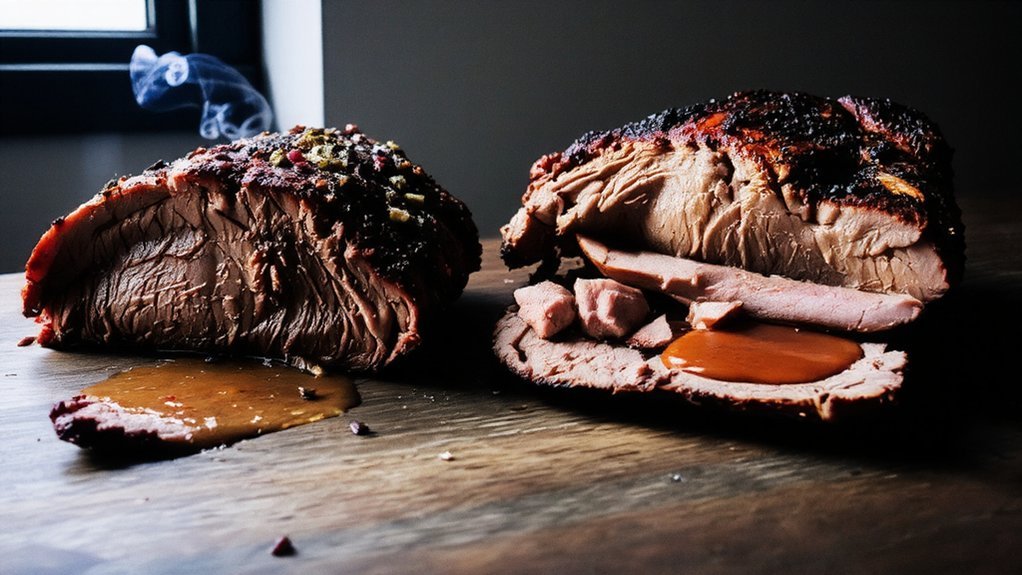
Even if you swear you can fake smoke in an oven, your nose knows the truth. You want to serve joy, not just meat, so let’s talk flavor. A smoker builds layers—whispers of oak, then a slow crescendo—until the smoky essence settles deep, like a hymn you hum all day. Salt and pepper bloom, fat renders sweet, the bite lingers. You plate it, folks lean in, eyes soften, mission accomplished.
Now, the oven? It’s honest and tidy. You’ll nail tenderness, and you can really dial in seasoning balance. Think herb-forward, buttery drippings, a roast that plays nice with sides. Still, it stops at the doorway of smoke. You’ll get comfort, not campfire. Serve both proudly, but label the promises. Your guests will taste the difference.
Bark and Smoke Ring: Formation and Appearance
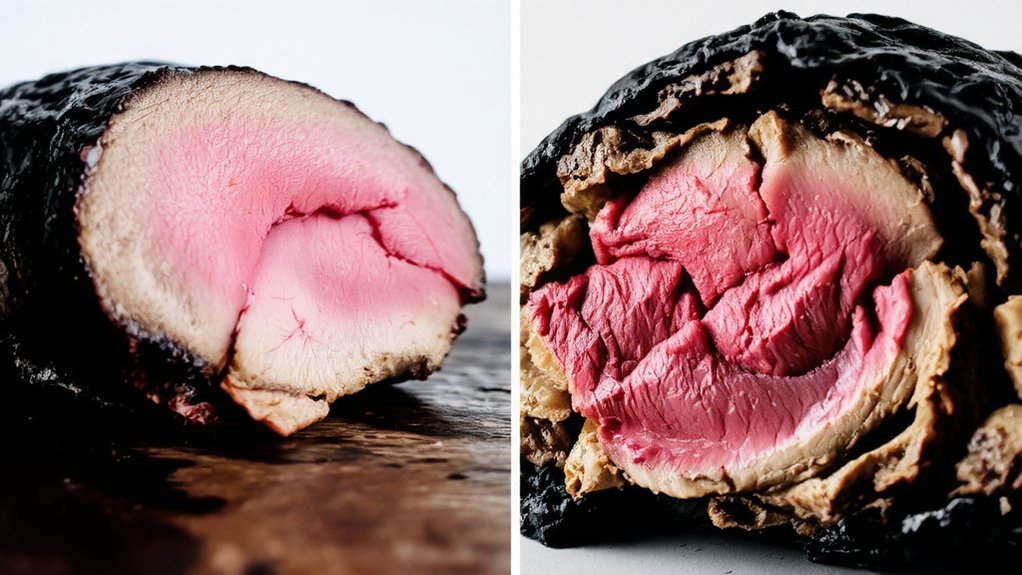
You’re chasing that mahogany bark and rosy smoke ring, so let’s talk bark chemistry—rub sugars caramelize, proteins brown, fat renders, and spices fuse into a crunchy shell that crackles like a good secret. Manage moisture and you manage texture: spritzing slows crust set, airflow dries the surface, and the fat cap bastes from within, giving you crisp edges with a juicy bite. And the smoke ring, yeah, that pink halo isn’t magic—it’s nitric oxide from smoldering wood binding with myoglobin while the meat stays cool, so temperature, oxygen, and clean smoke make or break the blush.
Bark Chemistry Factors
While the brisket hums along at low heat, the real magic happens on the surface—where rub, heat, moisture, and smoke collide to build bark and tease out that pink smoke ring. You manage a tiny chemistry lab, apron and all. Bark formation starts with salt pulling proteins to the surface, then sugar caramelizes, spices toast, and fat fries everything into a crust. That’s the seasoning impact in action—paprika browns, pepper bites, garlic blooms. In a smoker, combusting wood feeds phenols and nitric oxides; they cling, stain, and react, deepening color and ring. An oven? Steady heat drives Maillard reactions just fine, but no smoke molecules, no ring swagger. Either way, mind your rub, ride low heat, and let chemistry serve your guests.
Moisture and Texture
Because moisture is the puppet master, your bark and smoke ring dance to its rhythm. You manage brisket moisture, you steer appearance and bite. In a smoker, humid air slows surface drying, so the bark builds gradually, tight and craggily, with that mahogany snap. In an oven, drier heat can rush crusting, often thinner, sometimes hard, sometimes shy. I’ve blown a few barks myself—cranked heat, lost patience, served contrition.
Here’s your move: balance evaporation and seasoning. Let the surface dry enough to set, not so much it turns leathery. Spritz lightly, don’t soak. Keep airflow steady, not gale-force. You’ll taste texture differences immediately—supple slices, juicy fibers, a bark that shatters, then melts. Guests lean in, crumbs fly, compliments land. That’s service with smoke.
Smoke Ring Mechanics
Moisture set the stage, but the smoke ring steals the close-up—the pink halo every brisket flaunts when nitric oxide from smoldering wood meets myoglobin before heat finishes the job. You want that blush because it signals clean combustion, steady temps, and care. In a smoker, cool, humid air slows the surface warm-up, giving gases time for smoke absorption and flavor penetration. I tell folks, keep the pit gentle, the wood clean, the surface damp, and let chemistry flirt.
Now, bark. Salt draws moisture out, rub melts, sugars caramelize, proteins crust. That dark armor protects the ring, adds crunch, and smells like applause. In an oven, you’ll fake color, not the chemistry. Want the halo? Burn clean wood, spritz lightly, and don’t rush the stall.
Moisture Retention and Juiciness
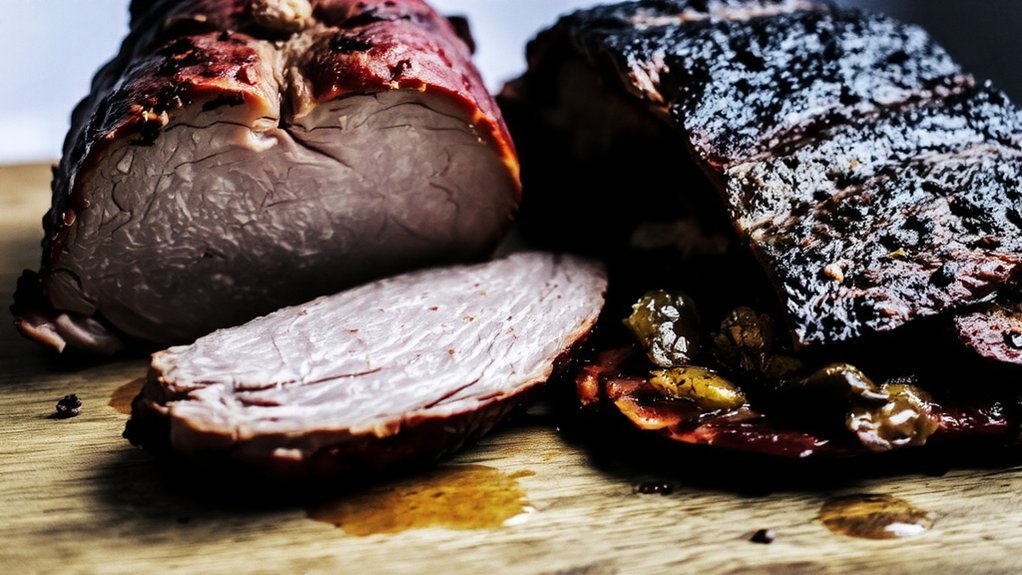
Truth be told, juiciness is where ovens and smokers start throwing elbows. You want slices that glisten, drip a little, and make guests go quiet? Then manage moisture retention like it’s your full‑time job. Ovens win on stability—tight environment, fewer variables, easy to keep brisket bathed in its own steam. Smokers, though, pack flavor while risking dry edges if you don’t respect the juiciness factors: airflow, bark formation, and timing the wrap. I’ll say it plain—control heat, protect surface, don’t rush the rest.
- You crave cheeks-slick, napkin-grabbing bites.
- You serve seconds, and the platter still shines.
- You hear a hush, then grateful laughter.
- You watch juices pool, then vanish, fast.
Keep it gentle, keep it wrapped when needed, and slice only when it’s ready.
Texture and Tenderness Consistency
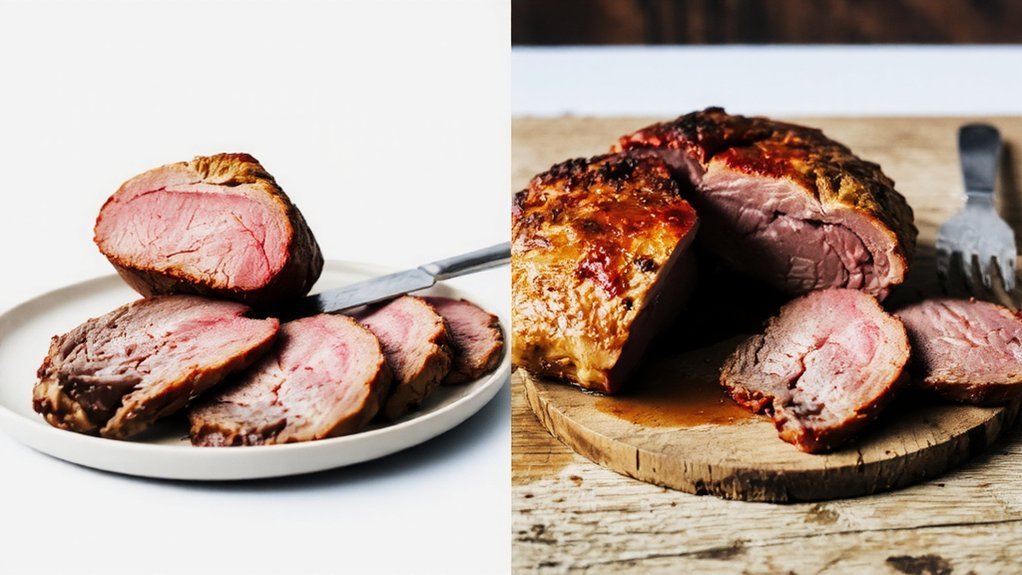
Consistency is the quiet tyrant of brisket, the difference between silky slices and a tug-of-war on a plate. You want guests nodding, not gnawing. So let’s talk texture and tenderness consistency, the heartbeat of your service.
The oven, as a cooking method, gives you steady heat, predictable collagen melt, and uniform tenderness from flat to point. It’s like a friendly metronome—boring, dependable, bless it. The smoker, though, brings charisma and bark, but it can create hot spots, drier edges, and a moody middle if you’re careless. Manage airflow, rotate, and probe often, and it’ll sing.
Either way, meat quality rules. Choose well-marbled brisket, trim smart, salt early. Render fat slow, slice across the grain, and you’ll plate comfort, not calamity.
Time Commitment and Workflow
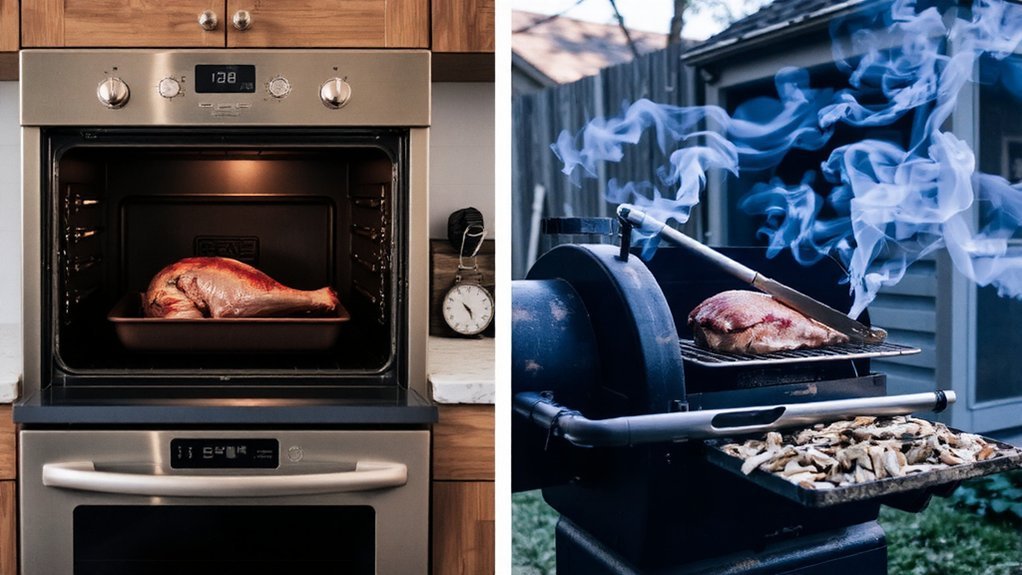
You’re juggling two clocks here: prep and monitoring, plus that tug-of-war between active and idle time. With the smoker, you trim, rub, light the fire, then babysit the bark like a hawk—spritzing, tweaking vents, sniffing smoke, muttering “stay steady, you stubborn beast.” In the oven, you set a steady temp, slide the pan in, and mostly coast—check once, baste if you must, then let heat do the heavy lifting while you reclaim your Saturday.
Prep and Monitoring
Two big clocks run this show: the prep clock and the babysitting clock, and brisket doesn’t care about your weekend plans. You’re trimming fat, mixing rub, and choosing your battlefield: oven or smoker. I’ll say it straight—prep techniques matter. Square edges for even cooking, leave a fat cap for basting, and salt early so the meat drinks it in. Then, monitoring tools earn their keep. Calibrated probe, instant-read backup, and a notebook—yes, the paper kind—so you don’t repeat mistakes I’ve already made for you.
You’ll watch bark darken, hear fat hiss, smell pepper bloom. In the oven, temps stay steady; on a smoker, wind and wood test your patience, and your pride. Either way, you’re cooking for people you love.
- Tender slices, grateful faces
- Warm plates, full hearts
- Wood smoke, quiet joy
- Shared meals, lasting memories
Active Vs Idle Time
While the clock looks brutal, the real question is how much of it you’re actually chained to the cook. If you’re feeding a crowd, that matters. With an oven, your active cooking is front-loaded—preheat, pan, foil, probe—then you glide. Set temp, slide in the brisket, and shift to idle monitoring. You’ll peek at the probe, baste if you’re feeling generous, then get back to prepping sides, setting tables, loving on your people.
A smoker, though, asks for more touch. Fire management, wood additions, vent tweaks—small, steady moves. You’ll smell oak, feel radiant heat, hear that gentle hiss, and yes, you’ll babysit. It’s intimate, and rewarding. Still, block time. Oven equals dependable autopilot. Smoker equals hands-on stewardship. Choose the workflow you can serve well.
Temperature Control and Equipment Ease
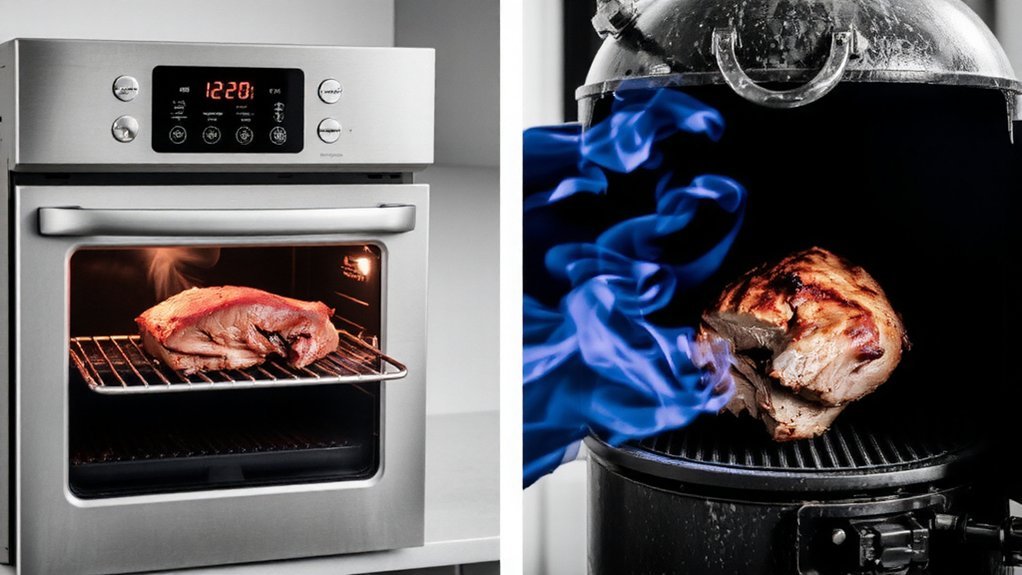
Because brisket is a marathon, not a sprint, temperature control and gear sanity matter more than your rub recipe. In the oven, you set 250, walk away, and enjoy near-perfect temperature stability. It’s calm, like a steady heartbeat. On a smoker, you’re the conductor, nudging vents, watching thin blue smoke, keeping the fire honest. Both can shine, but your equipment setup decides the stress level. I want you free to greet guests, plate sides, serve with heart, not babysit a tantrum.
- The quiet hum of an oven, your secret ally.
- The gentle crackle of a smoker, your campfire choir.
- A steady probe reading, and you breathe again.
- Doors open, plates warm, smiles waiting.
Pick the path that lets you love people while cooking greatness.
Cost, Fuel, and Space Considerations
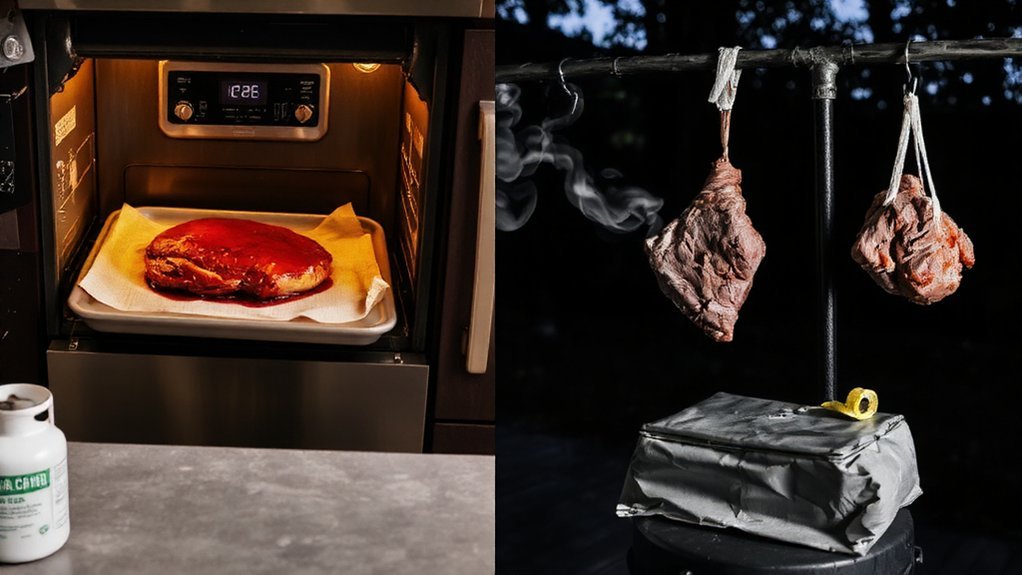
You mastered the heat, now let’s talk what it costs to keep that party humming—money, fuel, and square footage. I’ll shoot you straight: ovens win the cost analysis on day one. You already own one, so equipment costs are basically zero, and fuel efficiency is stellar—electric or gas sips, not gulps. Smokers, though, charm with flavor, while nibbling your wallet. Wood, pellets, or charcoal add recurring bites.
Let’s map space requirements. Ovens hide in plain sight; no extra storage space, no angry neighbors. Smokers need a safe outdoor footprint, airflow, and a dry shed corner. Budget considerations? If you’re feeding a crowd weekly, the smoker earns its keep. If you’re a weekend giver with limited space, the oven stays your frugal, faithful sidekick.
Seasoning, Wrapping, and Resting Strategies
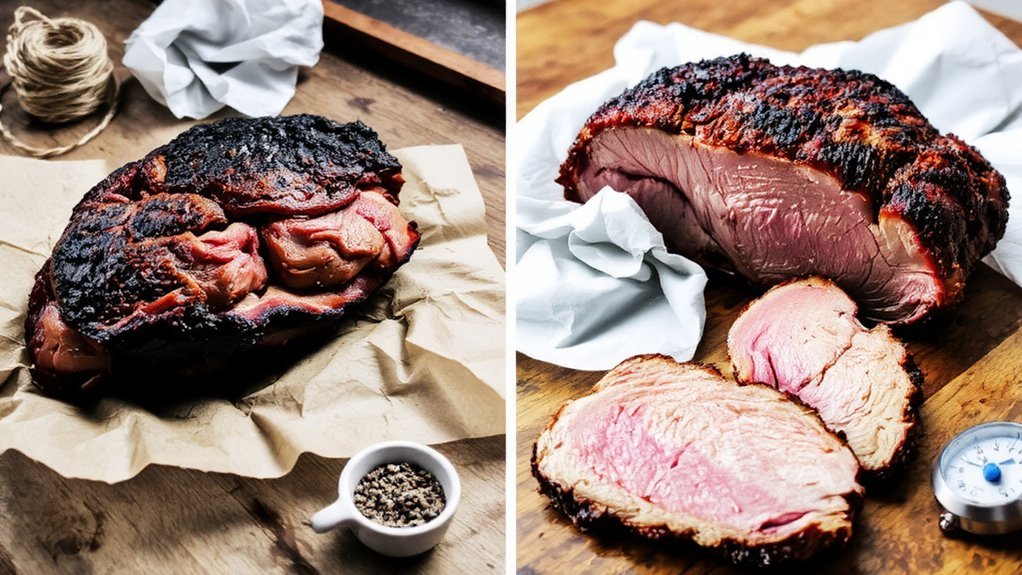
Even if you nailed the heat, brisket only sings when the seasoning, wrapping, and resting hit their marks. Start with dry rubs: coarse salt, pepper, a little garlic, maybe paprika for color. Massage it like you mean it, then let it mingle in the fridge. Want extra juiciness for a big crowd? Try light-handed injection techniques—beef broth, a splash of Worcestershire—small amounts, spaced evenly, no geysers.
Brisket sings when rubs, wraps, and rests align—season boldly, inject lightly, and let time do the magic.
Wrap when the bark’s set and the probe slides in like warm butter. In a smoker, butcher paper protects bark; in an oven, foil locks moisture. Either way, vent briefly, then rest. Hold the brisket, still wrapped, in a cooler or warm oven for an hour or two.
- Feed pride
- Soothe nerves
- Earn hugs
- Spark stories
Best Use Cases: Matching Method to Your Goals
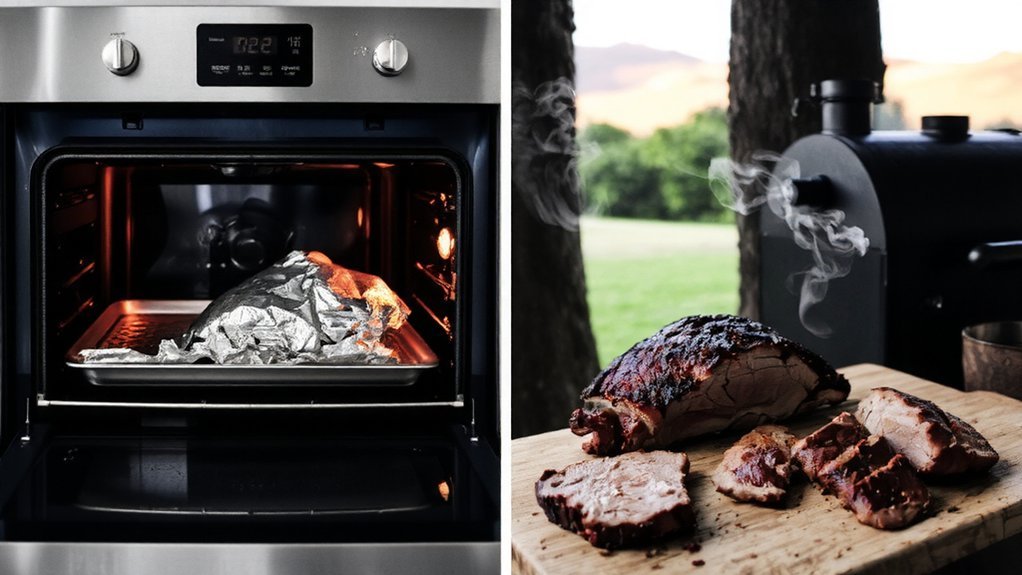
Heat’s sorted, bark’s set, juices are lounging—now pick the tool that matches the mission. Serving a crowd that needs punctual plates? Go oven. It’s steady, predictable, perfect for tight timelines and overnight cooks. You’ll nail tenderness, hold temp without drama, and plate on schedule, like a pro who respects grandma’s casserole clock.
Chasing fireworks—smoke perfume, mahogany bark, campfire applause? Go smoker. Wood kisses, fat crackles, neighbors “just happen” to swing by. It takes attention, but the payoff sings.
Mix brisket techniques to match your guests. Need clean slices for sandwiches, sauces doing the heavy lifting? Oven. Want stand-alone slices that don’t need a speech? Smoker. Hybrid cooking styles work too: smoke to color, oven to finish. Your goal decides the ride, you steer.