
You love brisket, I get it—the smoky crust, the tender pull, the juice that drips like a drumroll. But is it actually good for you, or just delicious trouble? Here’s the twist: brisket packs protein, B12, and iron, yet the cut and trim matter, a lot. Flat vs. point, saturated vs. mono, portion vs. pile—it all changes the story. Grab a fork, we’re about to make your plate smarter, not smaller.
What Is Beef Brisket? Cut Basics and Variations
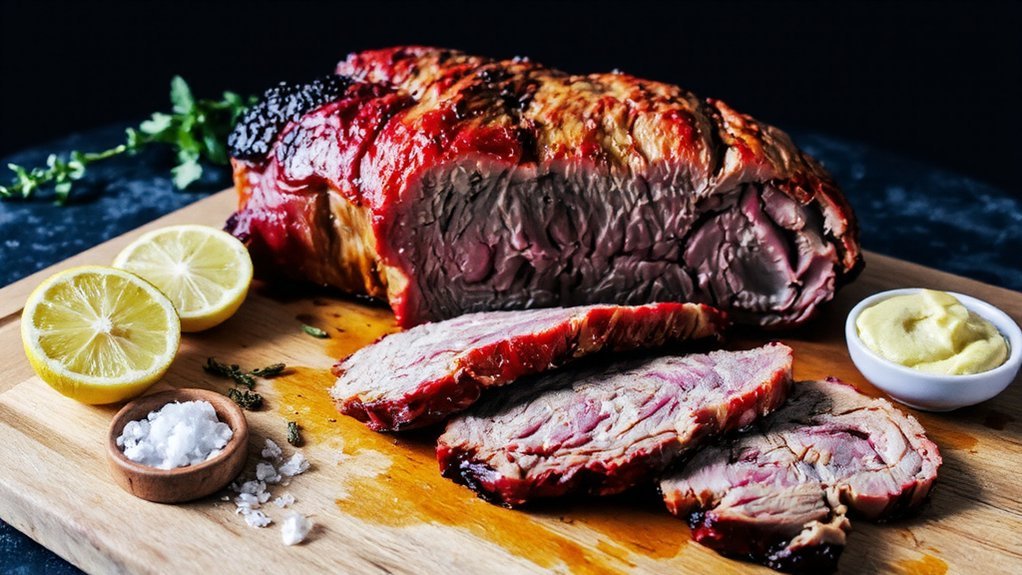
Brisket, the backyard showstopper, comes from the cow’s lower chest—the hard-working pectoral muscles that hold up a lot of weight, which is why it’s tough raw but magic when slow-cooked. You’re working with a primal cut with deep brisket origins, a slab of flavor that rewards patience. I’ll keep it simple: brisket splits into two parts—the leaner flat, tidy slices for neat plates, and the marbled point, juicy shreds for saucy smiles. Together, they’re a packer cut, heavy, glorious, and worth the haul.
You’ll pick your path by crowd and time. Slice the flat for clean sandwiches, or pull the point for generous piles. Then match cooking techniques accordingly—low-and-slow smoking, braising till wobbly, or oven roasting with tight foil, steady heat, and mission-level focus.
Brisket Nutrition at a Glance: Calories, Protein, and Fat
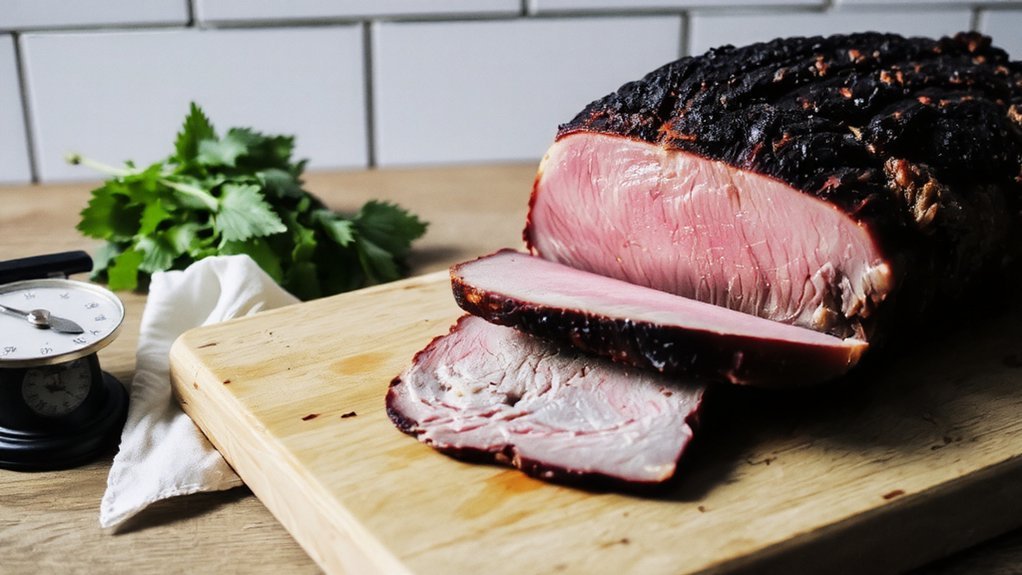
You want the quick stats before the smoke rings and bragging rights, so here’s the cheat sheet: a typical brisket serving lands you a solid hit of calories, plenty of protein for muscle repair, and a noticeable load of fat that brings the flavor. I’ll walk you through what that plate looks like, from the juicy protein punch to the melt-in-your-mouth fats. You’ll know exactly what you’re eating, and why your taste buds cheer while your macros keep score.
Typical Serving Calories
Smoke wisps and a glistening slice on your plate—that’s where the math starts. You’re plating with care, serving your people, and those calories matter. For a typical serving size, think 3 to 4 ounces cooked, about the size of a deck of cards, generous but not reckless. That’ll land roughly 200 to 300 calories, depending on brisket preparation and trim. Fat cap on, saucy glaze, extra bark? You’re nudging the high end. Leaner slices, sauce on the side, tidy trim? You save a tidy chunk.
I’ll level with you—I’ve misjudged bark before. Delicious mistake. So weigh once, then eyeball like a pro. Plan for seconds, balance sides, keep portions friendly. You’re not stingy, you’re intentional. Feed well, track lightly, and let the table stay joyful.
Protein and Fat Profile
While the bark crackles and the juices run, the real story is protein and fat—big flavor, big fuel. You’re serving a crowd, I’m cheering you on, because brisket brings serious muscle food. Lean slices deliver high-quality protein, one of the most satisfying protein sources around, helping repair tissue, steady hunger, and keep folks smiling. Fat? It’s not the villain—it’s the carrier of smoky bliss. Choose wisely, trim smartly, and you’ll balance energy with enjoyment.
| Slice | Protein Bite | Fat Finish |
|---|---|---|
| Lean Flat | Firm chew | Clean, subtle |
| Fat Cap | Velvet-rich | Buttery drip |
| Point | Juicy tug | Deep, bold |
| Burnt Ends | Candy-crisp | Caramel smoke |
I’ll level with you: dietary fats add flavor and staying power. You plate generosity; brisket plates gratitude.
Saturated vs. Monounsaturated Fat in Brisket
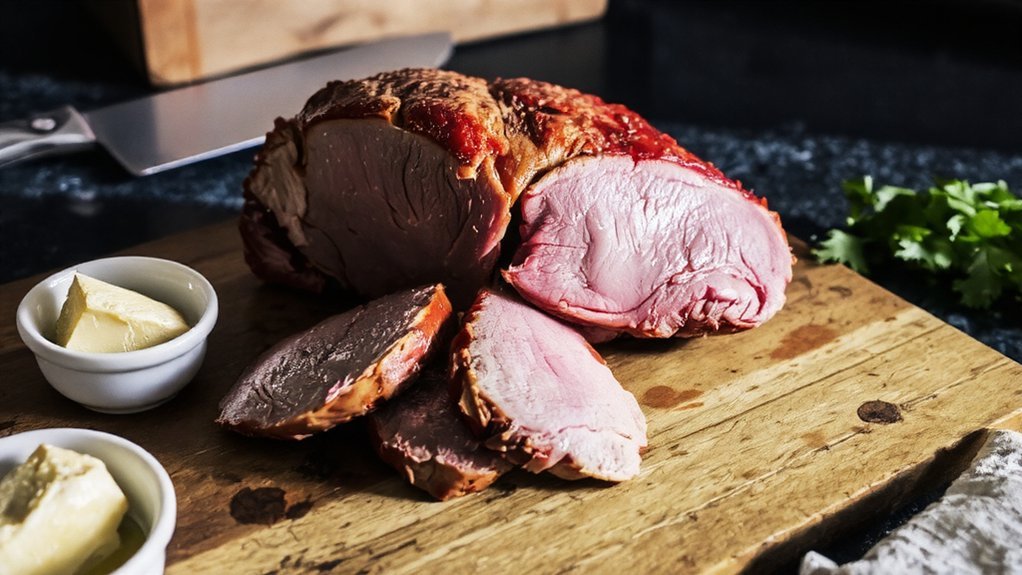
Because brisket wears its fat like a crown, let’s talk about what kind of royalty you’re actually eating: saturated versus monounsaturated. You care for people, so you care what lands on their plates. Here’s the deal. Saturated fat is the firm, waxy stuff that keeps its shape when the meat cools. It boosts flavor, sure, but too much can nudge LDL cholesterol up, and that’s not the legacy you want to serve.
Monounsaturated fat, the smoother, olive-oil cousin, melts gently, bastes the meat, and tends to support heart-healthier numbers. Slice smarter: trim heavy caps, keep a modest layer, and let slow heat render. Choose point for richer bites, flat for leaner platters. Balance the bark, share the tenderness, and serve seconds with confidence.
Vitamins and Minerals Found in Brisket
Fat got its spotlight, sure, but the meat itself brings a loaded toolbox of nutrients you actually want on your plate. When you slice brisket, you’re not just feeding hunger, you’re fueling people. Think brisket vitamins first: B12 for steady energy and nerve health, niacin for metabolism, B6 for mood and focus. You help others show up strong when their plates do, too.
Now the brisket minerals: iron that actually absorbs well, zinc for immune defenses, selenium for antioxidant backup, plus phosphorus to keep bones ready for long days on your feet. You get potassium, too, the quiet fixer for fluid balance and muscle rhythm.
Serve it smart, pair with bright greens and citrus, and you amplify absorption. Boom—nutrient teamwork, deliciously executed.
Point vs. Flat: Leaner and Fattier Options Compared
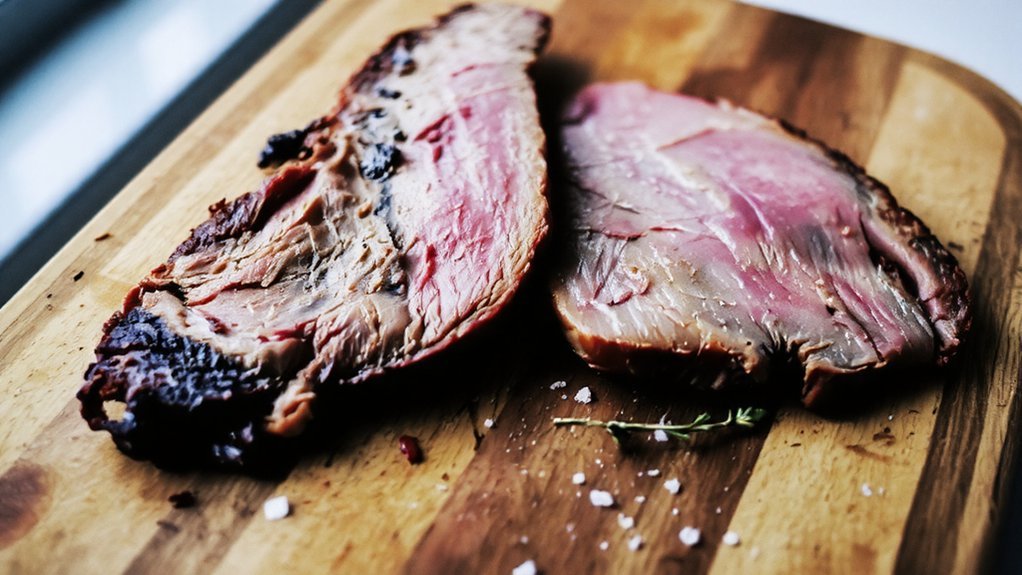
You’re choosing between brisket’s split personality: the point, marbled and juicy, and the flat, leaner and tighter-grained. I’ll be honest, fat content shifts everything—calories, satiety, that glossy drip on your cutting board—so you’ll want to match your goals to the cut. Then pick your heat: low-and-slow smoking melts the point into buttery bliss, while braising or careful slicing keeps the flat tender, clean, and weeknight-friendly.
Fat Content Differences
While the smoke curls and the bark crackles, let’s talk brisket anatomy with zero fluff: the point is the fatty, indulgent side, and the flat is the lean, tidy slice. You’re choosing between marbled richness and streamlined protein, so let’s do a quick fat content comparison. The point carries thick seams and buttery bites, often double the fat of the flat. The flat, trimmed right, gives you cleaner slices, fewer drippings, and steadier numbers for brisket health goals.
Here’s the service-minded move: match portions to needs. Feeding athletes or folks watching lipids? Go flat, thin slices, consistent macros. Serving someone who needs extra calories, flavor, and tenderness? Offer point, smaller portions, big satisfaction. I’ll confess, I love both—charred edges, silky bites, happy plates, grateful guests.
Cooking Methods Impact
Because technique can tilt the scales, how you cook brisket decides whether the point struts or the flat shines. You want juicy slices that serve your guests well, not a grease parade. So, pick cooking techniques that respect the cut. The point’s fattier, rich and luscious; the flat’s leaner, tidy and sliceable. I’ll help you steer both, with flavor enhancement that’s smart, not heavy-handed.
- Smoke low-and-slow: Let fat render gently. The point turns buttery, the flat stays moist. Use clean smoke, steady heat, and rest it long.
- Braise with restraint: Broth, aromatics, tight lid. The point melts; the flat drinks flavor without drowning in fat.
- Roast hot-then-low: Sear for crust, then cruise. Trim excess fat, catch drippings, skim them, and glaze, not soak.
Cooking Methods: Smoking, Braising, and Trimming for Health
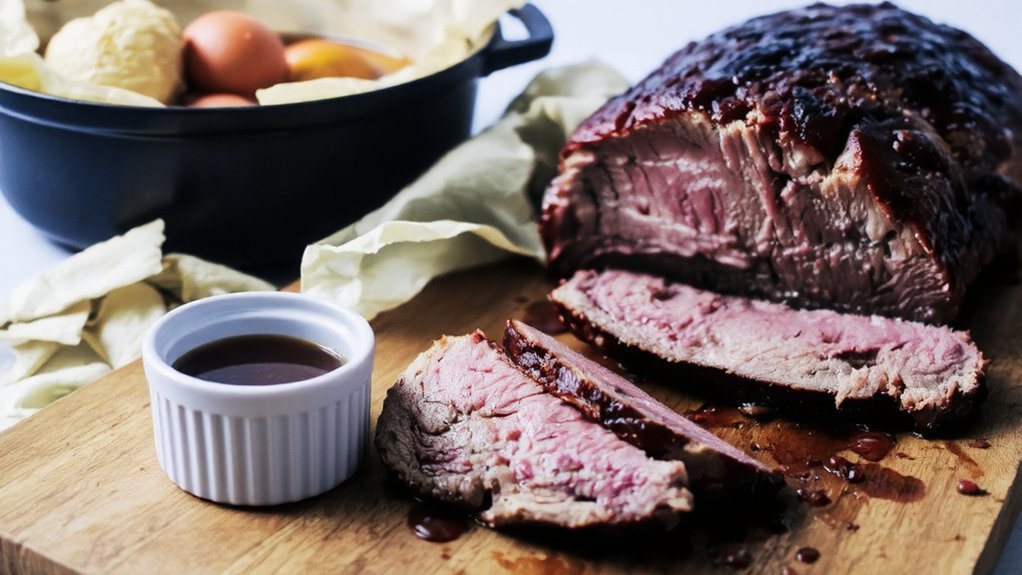
Some days the brisket wants to strut, other days it needs a long hug, and that’s where smoking, braising, and smart trimming come in. You’re cooking to care for people, so let’s make it delicious and kind to their hearts.
First, smoking techniques: hold steady heat, 225–250°F, clean blue smoke, not billowing white. Use oak or hickory for backbone, cherry for a rosy kiss. Keep the fat cap thin, about a quarter inch, so you protect moisture without drowning it. I watch for bark like mahogany leather, then wrap to keep it tender.
Now, braising tips: brown hard for flavor, then simmer low in stock, onions, and garlic. Skim fat as it rises, be patient. Before slicing, trim visible fat. Your guests, and arteries, will applaud.
Portion Sizes and Smart Serving Ideas
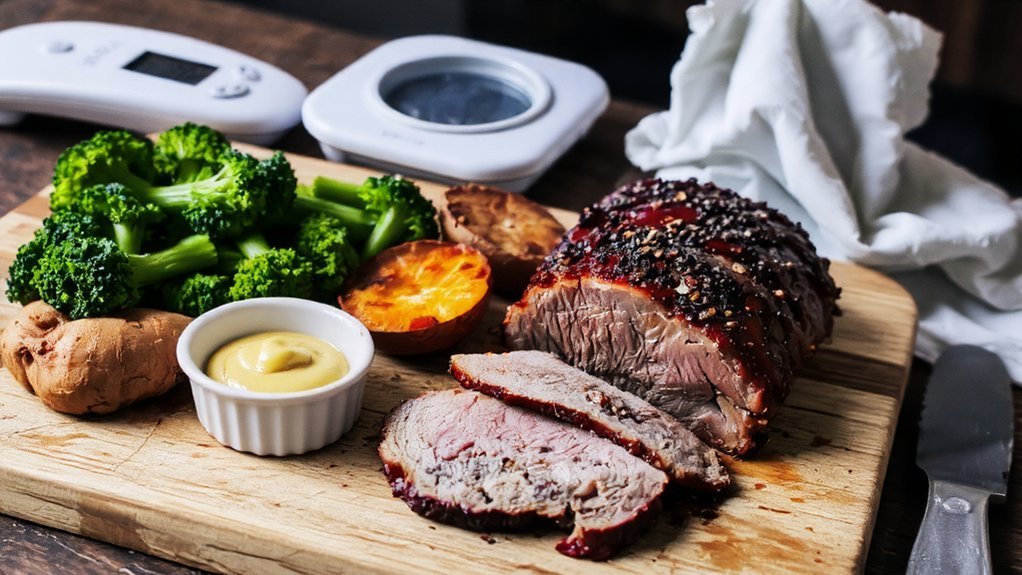
Honestly, how much brisket belongs on a plate? Let’s keep it gracious, not greedy. Aim for 3 to 4 ounces cooked, about a deck of cards, or that small palm you use to pass the mashed potatoes. That’s portion control with heart. You’re feeding people, not starting a nap marathon. Pair that tender slice with bright sides—crunchy slaw, roasted carrots, a lemony salad—so every plate looks generous, not heavy.
Here are smart serving suggestions that make you look like a genius host:
- Build bowls: brisket ribbons, farro, pickled onions, herbs, light drizzle of sauce.
- Open-faced sliders: thin slices, whole-grain toast, mustard, shaved cukes, dill.
- Family platter: pre-sliced brisket, torrent of veggies, vinaigrette, and small tongs—easy to serve, easy to love.
Brisket and Heart Health: What Research Suggests

You’ve got your 3–4 ounce slice nailed, now let’s talk what that bite means for your ticker. Here’s the quick read: brisket isn’t just smoky joy, it can support heart health when you’re smart about the cut, the cook, and the company it keeps.
Research hints at surprising brisket benefits. Compared with some fattier steaks, trimmed brisket can carry more monounsaturated fat, the friendlier fat linked to better cholesterol patterns. Keep visible fat skimmed, choose flat cut over point, and you’re already serving your heart a small kindness.
Go low-sodium on rubs, easy on sugary sauces, and let pepper, garlic, and smoke do the heavy lifting. Pair with fiber-rich sides—think beans, cabbage slaw, charred greens. You’re cooking care, one plate at a time.
Weight Management and Muscle Recovery Considerations
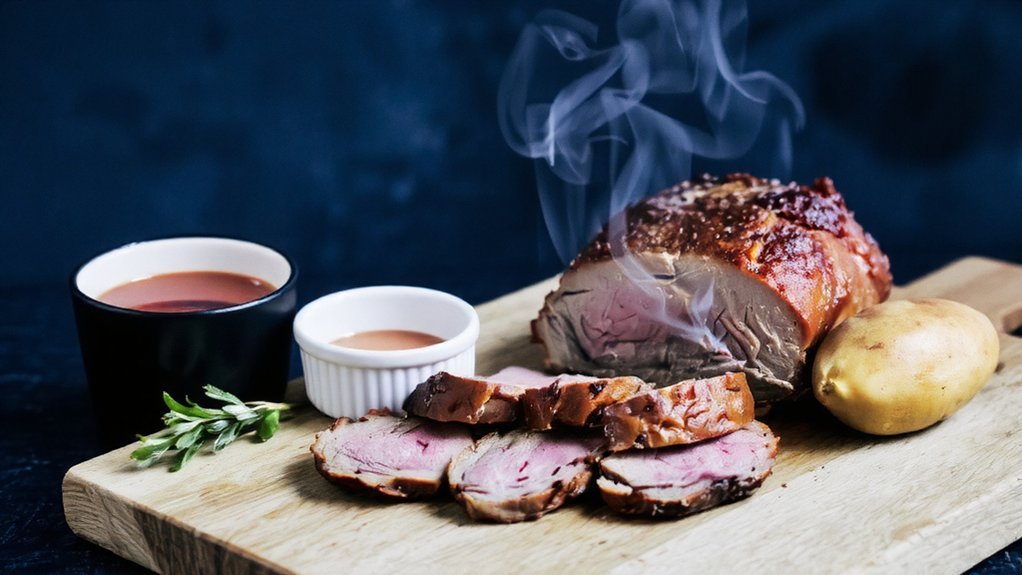
While the smoke still lingers on your fingers, here’s the deal: brisket can absolutely fit into a lean game plan and still pull its weight for muscle repair. You want weight management, I want flavor, and brisket—done right—gives you both. Its complete proteins back muscle recovery after hard work, whether you’re hauling chairs for an event or sprinting between kitchen stations. Trim the excess fat, keep portions sane, and you’ll stay light on your feet, ready to serve others without the mid-shift slump.
Brisket fits a lean plan: trim fat, keep portions tight, recover strong, stay light and energized.
- Prioritize lean slices; deckle off, visible fat trimmed, portions measured like you mean it.
- Time it smart: post-effort meals help muscle recovery, reduce soreness, and keep energy steady.
- Mind the add-ons; sauces and buns sneak in calories, while simple seasonings keep goals on track.
How to Build a Balanced Plate With Brisket
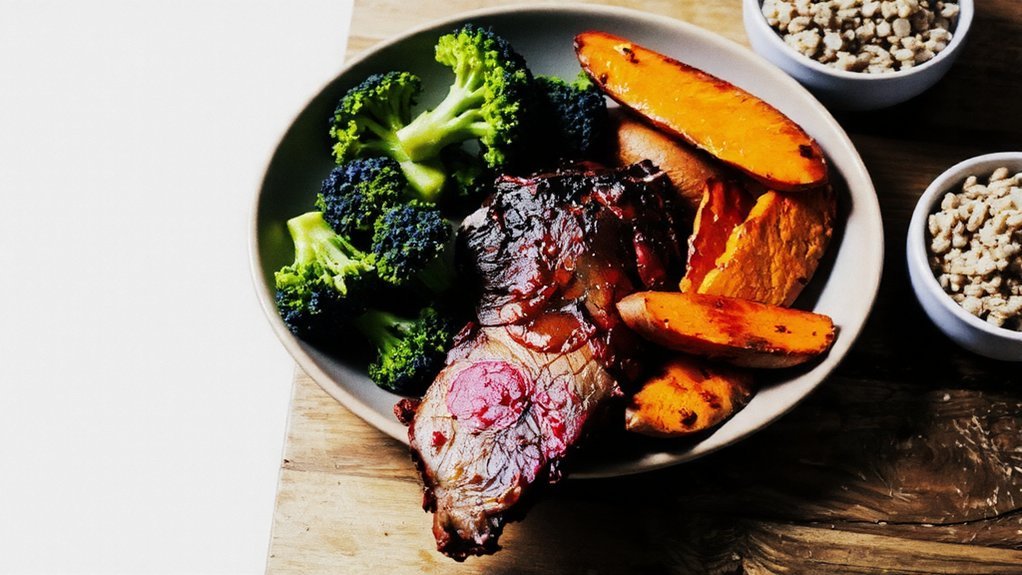
So, where does brisket land on a balanced plate that actually loves you back? Right in the protein seat, generous but not bossy. Think 3–4 ounces, sliced tender, edges a little smoky, juices whispering “you’ve got this.” Now, zoom out. You’re plating for people you care about, so build balanced meals that fuel, not flatten.
Anchor it with fiber-rich side dishes: roasted sweet potatoes, charred Brussels sprouts, or a bright slaw with apple and lime. Add a hearty whole grain—warm quinoa, barley, or a nutty farro salad—so no one needs a nap afterward. Slide in color: tomatoes, pickled onions, herbs, a squeeze of citrus. Keep sauce smart—tangy, not sugary. Water on the table, maybe sparkling. You serve love; the plate should, too.