
You want brisket that melts, not fights back. I’ve got you: watch the temp hit 198–203°F, then trust the feel—your probe should slide in like warm butter, no drama. Look for deep mahogany bark, clear amber juices, and that slow, smug jiggle when you lift it. Miss the signs, and you’ll carve rubber. Nail them, and you’re a hero. Now, here’s how to place the thermometer, tame the stall, and rest it like a pro.
Target Internal Temperatures for Brisket Doneness
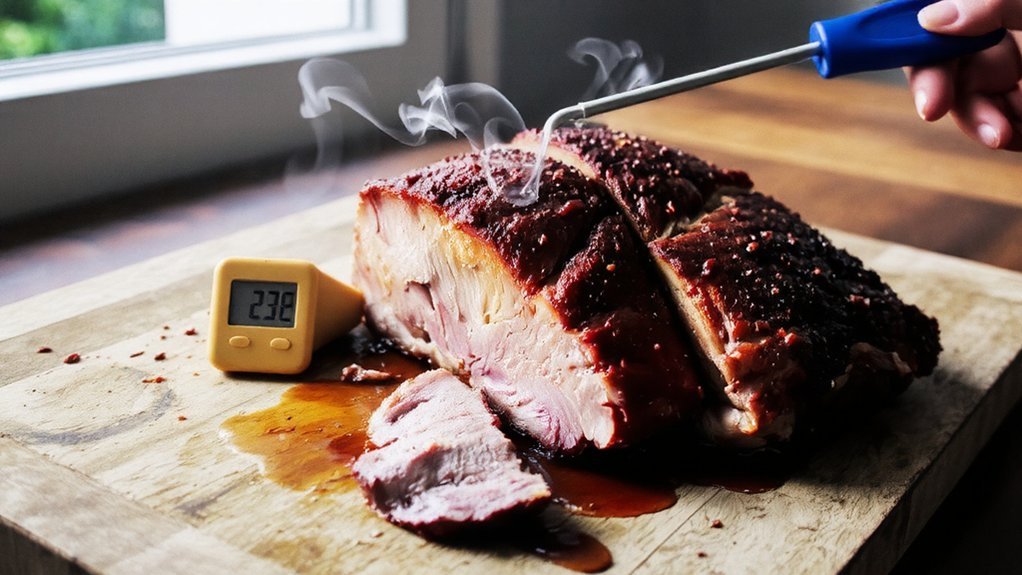
The magic number for brisket isn’t one number, it’s a sweet spot. You’re cooking for people you care about, so aim for kindness on a thermometer. I like target temperatures that guide, not boss. Start cruising at 195°F, then watch your doneness indicators stack up. At 198–203°F, collagen’s melting, juices glisten, bark smells like smoky caramel, and slices hold together but sigh when bent. That’s party time.
Scene change: stall city. Around 150–170°F, the temp lingers, you panic, I nod, wrap or wait. Keep the probe in the thickest flat, avoid seams and fat pockets; accuracy matters when plates depend on you. If you overshoot to 208°F, don’t bail—rest longer. Towel, cooler, one hour minimum. You’ll carve smiles, not just meat.
What “Probe Tender” Feels Like
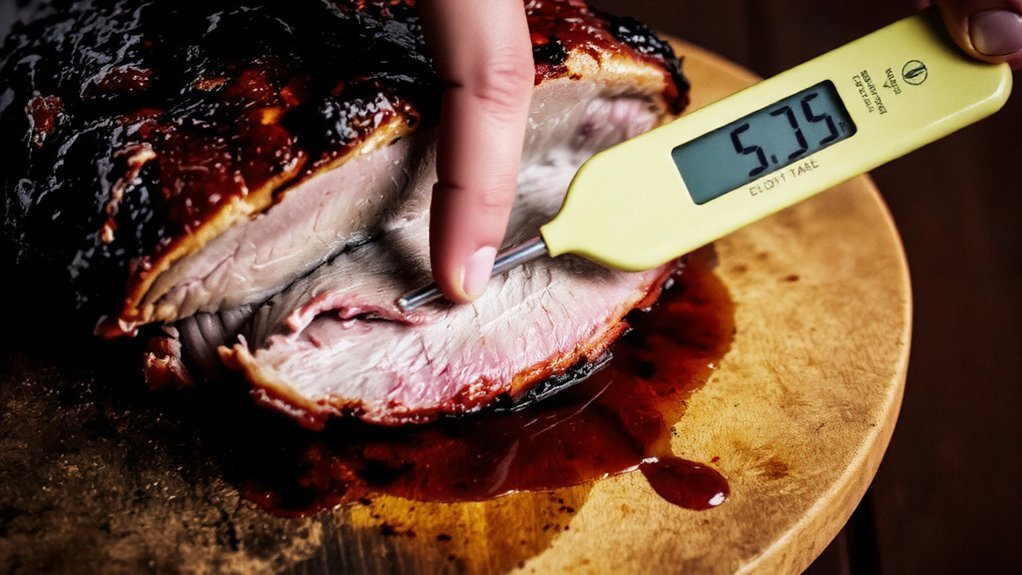
You’re chasing “probe tender,” where the thermometer slides in with butter-like resistance—soft, smooth, almost cheeky. I want you to feel that consistent glide-through in the flat and the point, no gritty tug, no squeaky pause, just a calm, easy push. Then compare multiple spots, top to bottom, edge to center—if it glides everywhere, you’ve nailed it; if one area argues, keep cooking.
Butter-Like Resistance
Against the bark, slide a thin probe or toothpick into the thickest part of the flat, and feel for that whisper-soft glide—like warm butter meeting a hot knife. That’s your cue. You’re chasing a butter like texture with just a hint of tender resistance, the kind that says, “Relax, I’ve got your guests.” If it grabs, even a little, wait. If it skates in, smile, you’re serving joy.
| Cue | What you feel | What to do |
|---|---|---|
| Gentle slide | Butter-soft, minimal tug | Ready to rest |
| Slight snag | Tiny pause, then glide | Give 20–30 more minutes |
| Sticky push | Stops, pushes bark | Keep smoking |
| Gritty bite | Fibers fighting back | Wrap, cook longer |
| Sudden plunge | Mushy, too soft | Pull now, cool fast |
I’ll admit, I miss this feel sometimes. You won’t. You’ve got heart, and a steady hand.
Consistent Glide-Through
Butter met knife back there; now we’re chasing repeatable magic. You want the probe to slide in like it’s greeting an old friend, easy, calm, no drama. That’s “probe tender.” I’m rooting for you, apron hero, because your guests deserve slices that feel like care. Aim for a consistent texture from start to stop, a smooth finish that whispers done, not shouts it. Breathe, steady your hand, and listen to the meat.
- The probe glides in, pauses, then glides out, like warm pudding, no gritty tug, no squeak.
- Your wrist stays neutral, no shove, no fight, just a gentle, confident nudge.
- The exit feels clean, the juice clings, the bark holds, and you smile, because service is about ease, not struggle.
Compare Multiple Spots
While the bark brags on the outside, the truth lives inside, in more than one spot. Grab your probe, and tour the brisket like a friendly inspector. Slide into the flat, then the point, then where they meet. Different brisket cuts cook at different rates, so expect texture variations. You’re chasing “probe tender,” that silky, butter-through-warm-mashed-potatoes glide. No snag, no crunch, just a sigh.
Now move an inch, try again. If one area still grabs the probe like a handshake from your stubborn uncle, keep cooking. Compare three, four spots, tip to middle to thick end. Listen for that whisper-soft entry, feel for zero resistance. When most zones agree, you’re done. Rest it, serve gladly, take the bow. The brisket won’t argue.
Visual Cues: Bark, Juices, and Jiggle
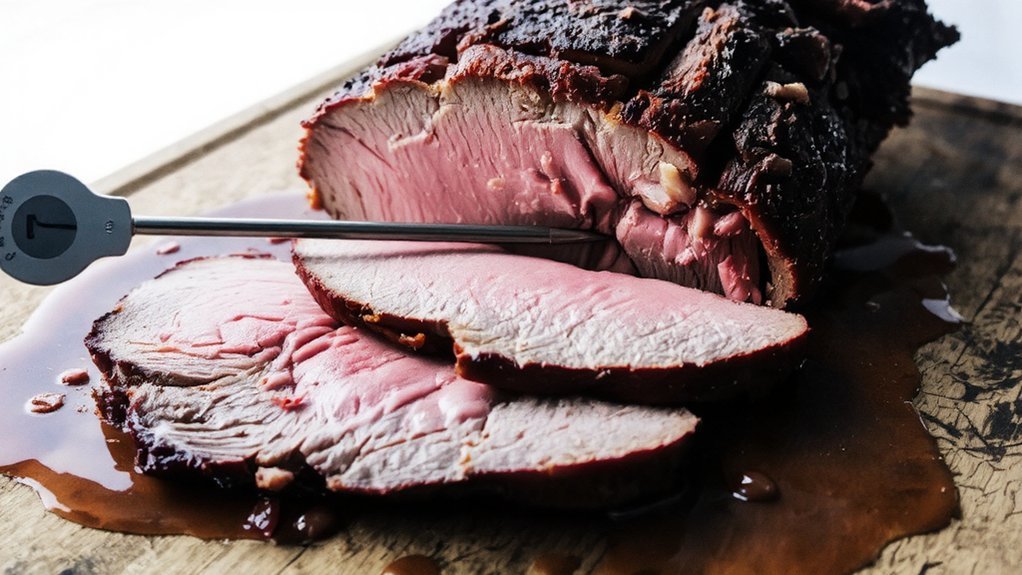
The moment of truth isn’t a number on a thermometer, it’s a show your brisket puts on—bark, juices, and that glorious jiggle. You’re cooking to serve, so let the meat tell you when it’s ready to shine. First, check bark appearance: you want a deep mahogany crust, dry to the touch, not dusty, not sticky, and it shouldn’t scrape off like soot. Then, watch the juice clarity. Pierce the flat with a toothpick, and look for amber, not milky; clean drips mean rendered fat, happy guests.
Let the brisket speak: mahogany bark, clear amber drips, and that confident, custard-like jiggle.
- Bark that cracks slightly when pressed, holds tight, and smells smoky-sweet
- Juices that run clear-amber, with tiny shimmering fat beads, not cloudy
- A gentle, gelatinous jiggle when you lift the slab, like a firm custard, confidence confirmed
Thermometer Placement and Calibration Tips
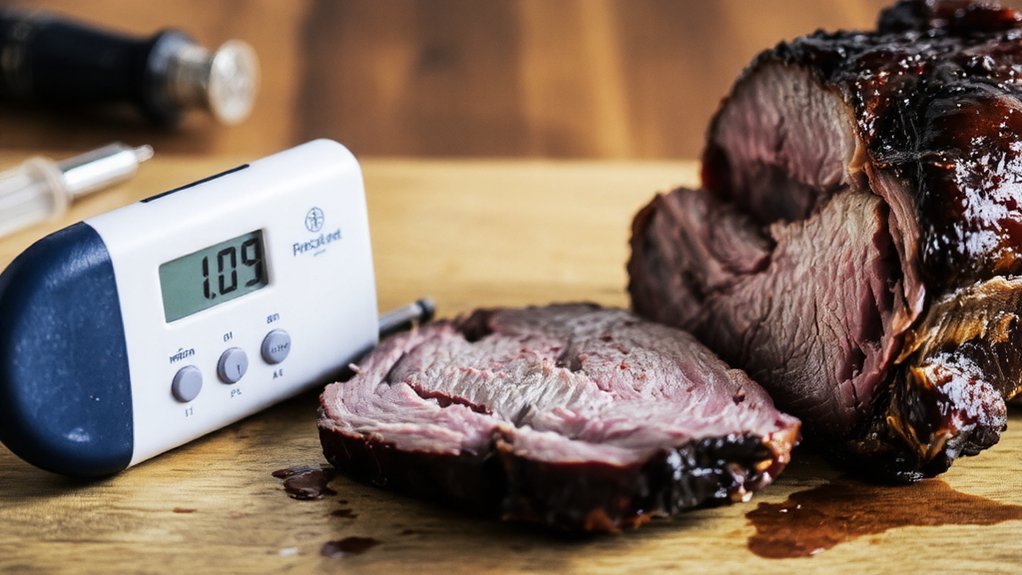
You want the truth from your brisket, so stick the probe in the thickest point of the flat, slide it in sideways toward the center, and dodge any fat seams or bone. Before you trust that number, calibrate your thermometer in ice water—32°F on the nose—or you’re steering by a wobbly compass. I’ve learned the hard way; you don’t want “almost done” brisket, you want buttery, jiggle-like-Jell-O done.
Probe in Thickest Point
One simple rule saves briskets and egos: sink your thermometer into the absolute thickest part of the flat, not the point, and never into a fat seam. You’re aiming for muscle, not marbling. Slide the tip in from the side, mid-slab, steady hands, gentle pressure. I watch the probe depth like a hawk—too shallow reads bark, too deep kisses the grate and lies. Find the thickest area by pressing lightly; it feels dense, cushiony, not wobbly. Wait a few beats while the number settles, then trust the feel, not just the digits.
- Steam rises, pepper pops, you ease the probe in, like testing a cake—clean glide, no snag.
- You shift half an inch, temp jumps, you correct.
- Guests grin; you nod.
Calibrate With Ice Water
Great probe placement means nothing if the thermometer’s lying, so I ice-bath mine before a big cook, like a pregame honesty check. Grab a glass, fill it with crushed ice, then top with cold water. Stir, let it chill for a minute. That’s your zero, pure and simple.
Now, dip the tip, not the stem, into the ice water, no sides, no bottom. Wait till the reading settles. You want 32°F, or 0°C. Off by a degree or two? Note it. Way off? Do a quick temperature calibration if your thermometer allows, or adjust your target temps in your head.
Why bother? Because guests trust you. Brisket sings when your numbers are honest. Calibrate, then cook with purpose, and serve with confidence.
Managing the Stall and Wrapping Options
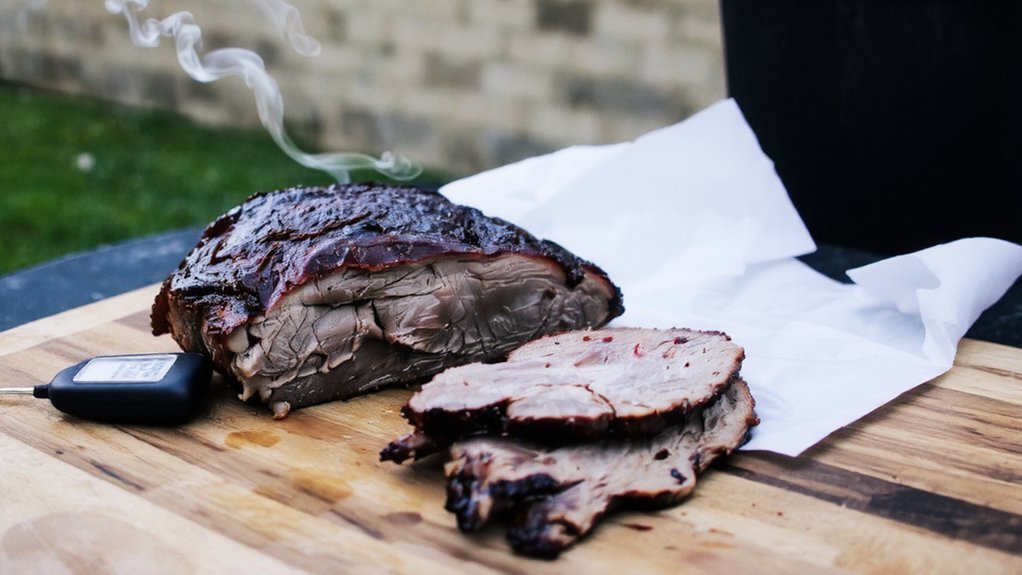
Although it feels like the grill gods hit pause, the stall is just brisket sweating—surface moisture evaporates, cooling the meat, and your thermometer camps out around 150–170°F. Breathe. You’re managing stall, not losing dinner. I watch bark, render, and drippings, then choose my wrapping techniques with purpose. Foil rockets you through fast, locks in juice, softens bark. Butcher paper keeps smoke kissing, preserves texture, rides a steadier climb. No wrap? Pure bark glory, longer ride, more fuel.
- Steam beads under foil, bark goes from crunch to velvet, aromas turn beefy-sweet.
- Paper hugs tight, grease freckles bloom, the bark stays proud.
- Naked brisket crackles, fat blisters, smoke lingers like a hymn.
Bottom line, wrap when color’s mahogany, fat feels supple, and you’re ready to serve well.
Resting and Holding for Juicy Slices
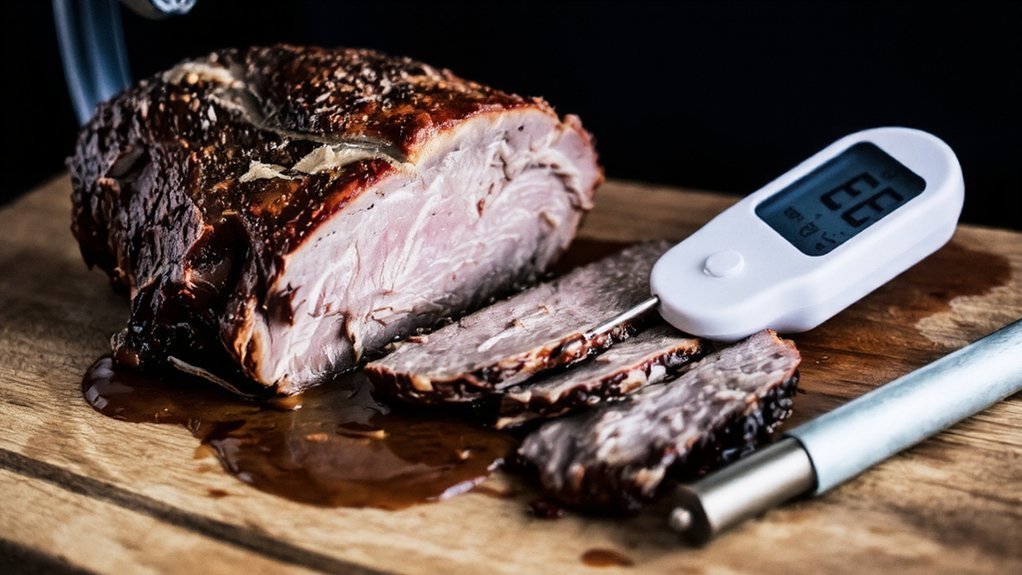
Bark looks right, fat jiggles, you pulled it at probe-tender—now don’t butcher the finish line. Set the brisket on a rack, pan beneath, and let it breathe. Ten minutes, uncovered, stops surface cooking. Then wrap it, butcher paper or foil, towel it, and park it in a dry cooler. That resting period is where juices redistribute, collagen chills out, and your future juicy slices are born.
Keep the hold warm, not hot—150 to 165°F is the sweet zone. I like two to four hours; longer if guests are late, because of course they are. Vent before slicing to release steam, or you’ll wash flavor away. Slice against the grain, pencil-thick, point and flat separated. Serve promptly, smile generously, pretend you weren’t nervous.