
You want a brisket that melts, not sulks, so here’s how we’ll hunt it: start with Prime if you can, eye that even marbling, then pinch the fat cap—it should feel smooth, not waxy. Check for a thick, uniform slab, give it a gentle bend for flexibility, and picture your smoker saying, “Yeah, I’ve got room.” Ask the butcher how long it’s been aged. Hungry for the cut that makes neighbors “just happen” to stop by?
Understanding Brisket Cuts: Packer, Flat, and Point
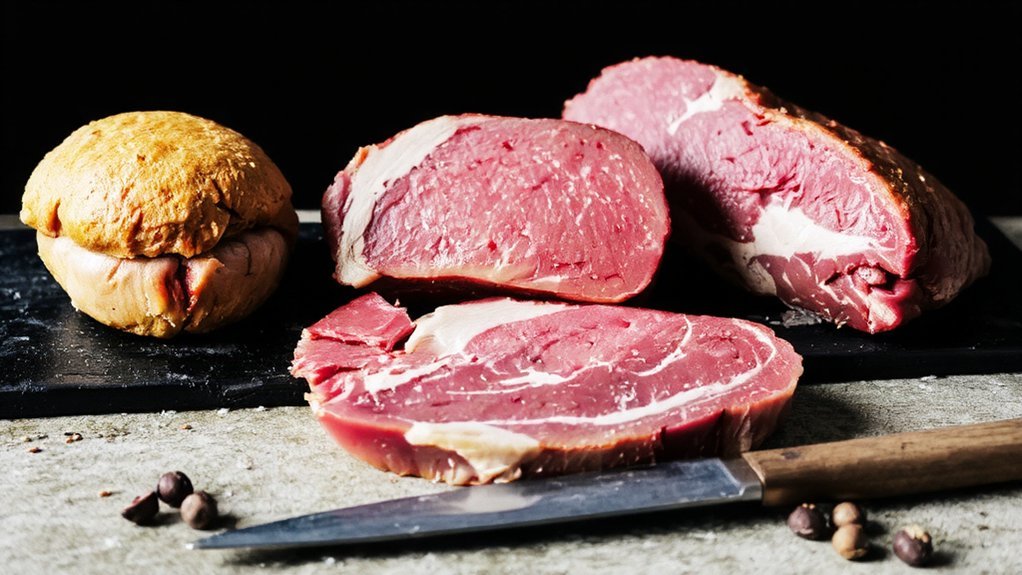
Maps help, but brisket cuts are the real compass. You’ve got three brisket types to steer: packer, flat, and point. The packer is the whole beast—fat cap, wobbly heft, rich with possibilities. It’s the crowd-pleaser when you’re feeding a line of hungry friends. The flat, long and even, slices clean for sandwiches and plated service. The point, knobby and marbled, drips flavor, perfect for burnt ends that make folks close their eyes, then smile.
Here’s how I’d play it. For packers, low-and-slow smoking rules, steady fire, clean blue smoke, patience. For flats, try steady smoking, then a tight wrap, rest warm, slice like silk. For points, cube, sauce lightly, back on heat. Different cooking methods, same mission: serve joy, without apology.
Decoding Beef Grades and What They Mean for Flavor
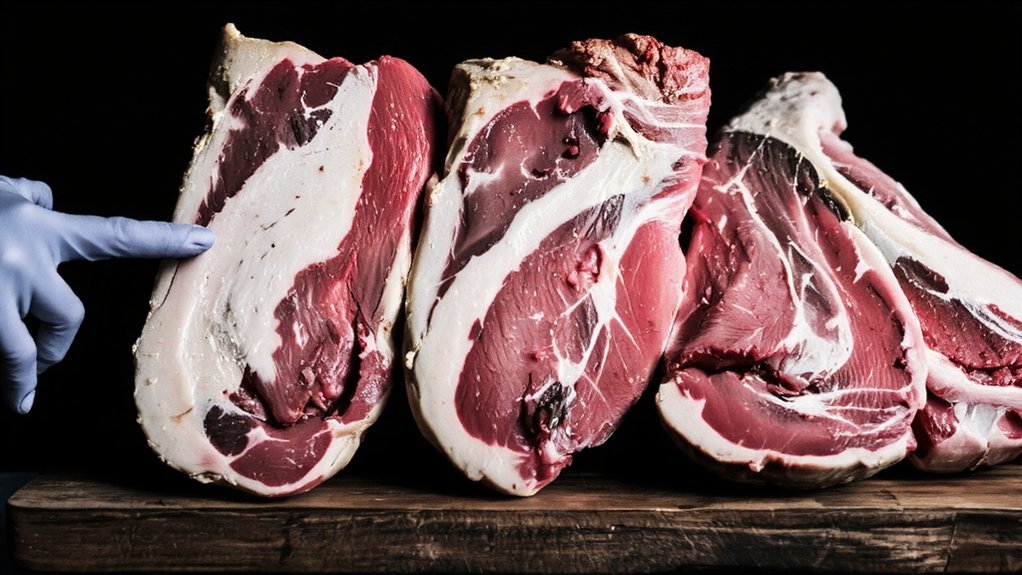
You’re about to meet the alphabet soup of USDA grades—Prime, Choice, Select—and I’ll be your chatty tour guide with sauce on my sleeve. Look for marbling that looks like tiny white lightning bolts, because those fat streaks melt, baste the meat from within, and crank up butter-rich flavor. Oh, and age matters too: younger cattle bring tenderness you can slice with a grin, older ones need patience, low heat, and your best rub.
USDA Grades Explained
Although the labels look official enough to scare a cow, USDA grades are really just a flavor forecast, and I’m here to translate. You’re shopping to serve others well, so let’s keep this simple, kind, and delicious.
Prime sits at the top. It’s younger beef, richly tender, and forgiving, the brisket that lets you smile while the pit hums. Choice follows, dependable and balanced, my weeknight hero. Select trails behind, lean and budget‑friendly, but it demands careful cooking and tight timing. Below that, you’ll see Standard or ungraded—fine for stew, not your showcase brisket.
Here’s the deal, usda grading isn’t a chef’s opinion, it’s quality assurance for texture, juiciness, and overall eating experience. You want consistency when feeding a crowd. Read the shield, trust your eyes, and match the grade to your plan. Big celebration? Prime. Church picnic? Choice. Tight budget, strong technique? Select, with grace and patience.
Marbling’s Flavor Impact
Confetti, but edible—that’s marbling. Those tiny white streaks melt as you cook, basting the brisket from the inside, turning smoke and heat into applause. You’re feeding people you care about, so pick fat that looks like lace, not blobs. I’m talking balanced marbling types: fine, spiderweb strands for elegance; medium flecks for everyday greatness; heavy streaks for a richer, louder bite.
Here’s the flavor math. More intramuscular fat equals deeper flavor profiles—think buttery, beefy, slightly sweet. It carries spice rubs, softens edges, and keeps slices juicy on the tray, not just in your dreams. Run a finger over the flat, feel cool firmness, see clean, creamy lines. If it looks like it’ll baste itself, you just found your crowd-pleaser.
Age and Tenderness
Marbling sets the mood, but age and grade decide the script—who’s tender, who’s chewy, who steals the show. You want brisket that serves your crowd like a pro, so let’s read the cues. Younger cattle, finer grain, softer bite. Older cattle, stronger beefiness, sometimes firmer chew. USDA grades help: Prime brings lush fat and youthful muscle; Choice sits close behind; Select can trend lean, handle with care. I use quick tenderness assessment tricks—press the flat for give, look for tight, even fibers, trust your fingertips.
- Prime or top Choice for effortless slices and happy guests
- Check age factors: younger muscle equals smoother texture
- Press test: gentle bounce beats rigid resistance
- Look for fine, consistent grain across the flat
- Ask your butcher; they know the herd’s story
Marbling and Fat Cap: What to Look For
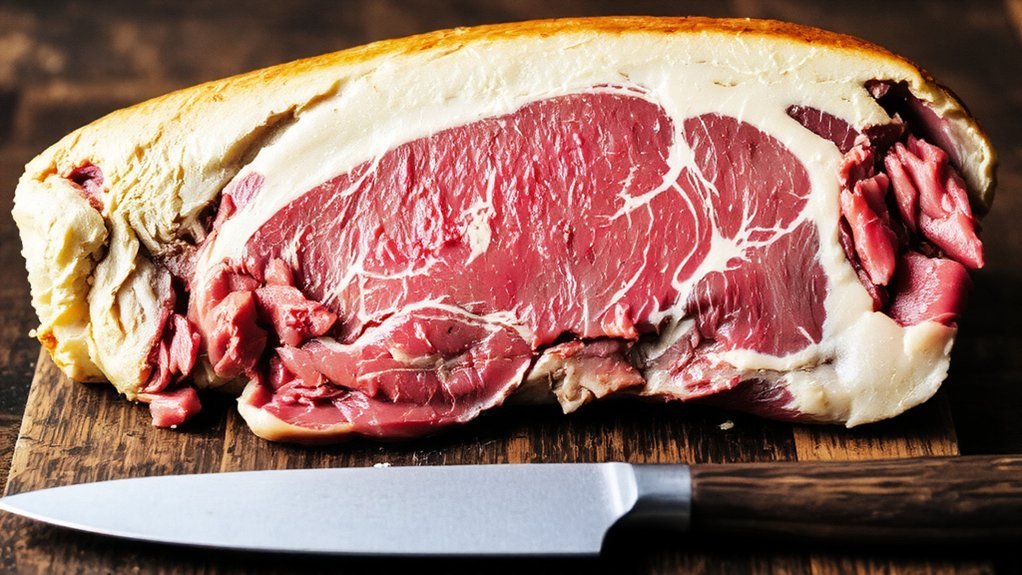
Treasure map time: those creamy white streaks zigzagging through the brisket are marbling, and they’re your GPS to flavor. You’re cooking for people you care about, so chase fine, even fat distribution through the flat and point. That’s marbling importance in action: fat melts, bastes the meat from within, and turns bites into hush‑the-table moments. I look for pearly lines, not chunky clumps, like delicate lightning frozen in beef.
Now, the fat cap. Aim for about a quarter inch, smooth and even. Too thin, and the meat dries; too thick, and you’re paying for wax you’ll trim. Press it—should feel firm, not hard. Trim ragged edges, square it up, but leave a protective layer. When it renders, it perfumes smoke, cushions heat, and delivers generous, silky slices.
Thickness, Shape, and Uniformity for Even Cooking
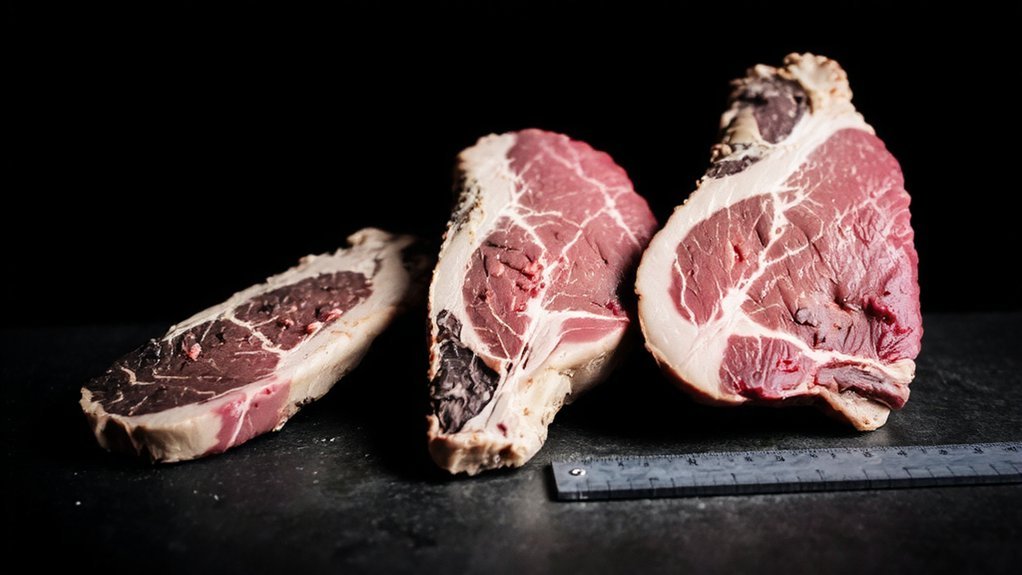
You want the flat to stay the same thickness end to end, so it cooks evenly and doesn’t leave you with one side juicy and the other sulking. Check the point-to-flat ratio, too—balanced heft means fat renders slow and steady, bark builds right, and you don’t babysit hot spots like a nervous parent. And watch those edges; skip briskets that taper to thin flaps, because they crisp up early, dry out fast, and steal your thunder before the stall even starts.
Consistent Flat Thickness
Although it’s tempting to chase the biggest hunk on the rack, a brisket’s flat needs one thing more than bragging rights: consistent thickness from end to end. You’re cooking to serve people well, not just to flex on Instagram, so aim for steady brisket thickness and true flat consistency. Run your hand along the flat; it should feel even, not roller-coastery. If one edge is whisper-thin, that side dries out, while the middle sulks in undercooked purgatory. I want you slicing juicy, uniform slabs, not apologizing at the table.
- Look for a flat that’s 3/4–1 inch thick, edge to edge.
- Avoid abrupt tapers or thin “flags.”
- Check for smooth, even muscle grain.
- Feel for consistent resistance.
- Choose symmetry, serve happiness.
Even Point-to-Flat Ratio
Flat sorted, now let’s talk balance, because the point and flat should feel like partners, not a mismatched blind date. You want an even handshake: a point size that’s generous, but not a meat boulder, and a flat that shows steady, reliable flat consistency. I eyeball the hump—rounded, not lumpy—then press gently. It should feel firm, springy, evenly padded with fat.
Slide your palm from point to flat. No dramatic cliffs, no sudden valleys. You’re chasing a smooth shift so both muscles cook in sync, letting you serve slices that hit plates hot, juicy, and equal. If the point dwarfs the flat, the flat dries out. If the flat dominates, the point under-renders. Balance wins. Your guests taste that harmony, every bite.
Taper-Free Edge Profile
One clean rule saves briskets and friendships: chase edges that don’t taper like a ski slope. You want a slab that stays thick, steady, and calm from corner to corner. Why? Thin edges dry out first, then the middle sulks, and your guests chew politely while plotting an exit. I’ve been there, smiling, apologizing, and hiding the sauce bottle.
You’re serving people, so set them up to win. Feel the rim with your palm, look for an even silhouette, and plan ideal trimming that keeps the profile uniform. That’s where taper free benefits show up—predictable doneness, juicier slices, fewer drama llamas.
- Run your hand, feel steady thickness.
- Sight down the edge, no ski slopes.
- Avoid wispy corners.
- Trim to smooth, gentle lines.
- Prioritize uniform cook, not raw size.
Flexibility and Weight: Signs of Tender Potential
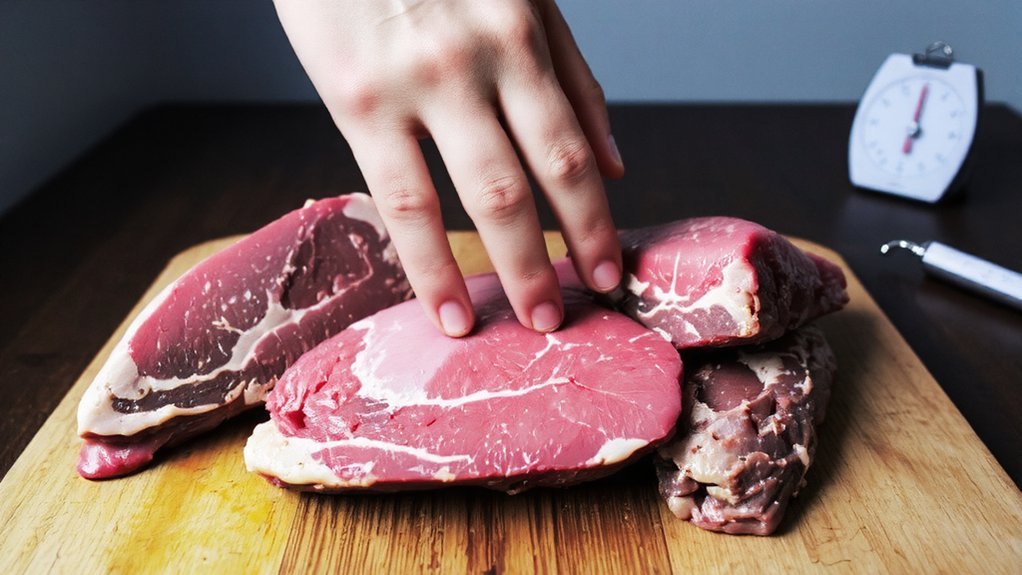
Before you even eyeball the marbling, grab that brisket and give it a gentle bend—does it flop like a lazy hammock, or fight you like a stubborn door? I’m looking for easy sway, a relaxed arc, those flexibility indicators that whisper, “I’ll render beautifully.” If it’s rigid, it’ll likely cook up tough, and nobody’s lining up for shoe leather.
Now, weight considerations. Lift two similar-sized briskets, feel the difference. The heavier one often carries more internal moisture and fat, which means juicier slices for your guests, and fewer disappointed nods. But don’t chase bricks. You want heft with grace, not a bowling ball in a beef suit. Tap the flat, feel the jiggle, listen for that soft thud. When it moves, you’ll know—it’s ready to serve people well.
Sizing Your Brisket for Guests, Smoker, and Cook Time
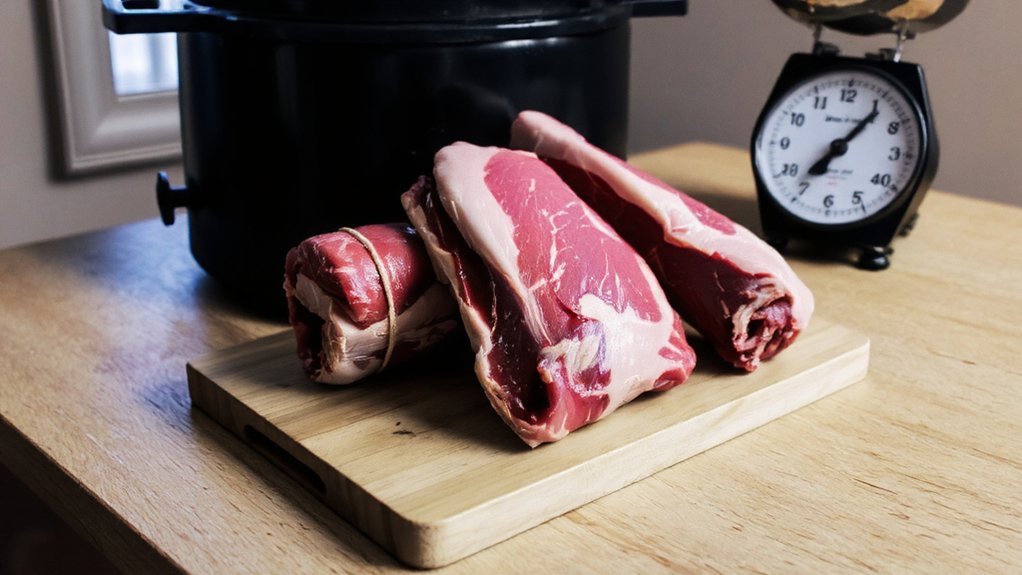
How many mouths are you feeding, and how big is the steel beast you’re cooking on? Let’s size this brisket so every plate sings, and your smoker door actually shuts. Plan 1/2 pound cooked meat per person, 3/4 if your crew eats like linebackers. Raw weight shrinks 35%, so do the math, then add a safety cushion. Check your pit: a full packer stretches 18–22 inches, and it needs airflow, not a claustrophobic nap.
- Gauge guest capacity, then add two portions for late arrivals.
- Match brisket length to grate width, no curling, no corner cramming.
- Choose cooking methods—hot-and-fast trims smaller, low-and-slow welcomes bigger.
- Time it: 1–1.5 hours per pound, plus a long rest.
- Keep a backup roast or sausages, because hospitality wins.
Butcher Tips, Labels, and Smart Buying Strategies

Ever stroll past the meat case and feel like the labels are winking at you? Yeah, me too. Here’s how you win anyway. Start with butcher recommendations—ask what’s fresh, when it landed, and how it was trimmed. Say you’re feeding a crowd, aiming for tender slices, not chewy regrets. Touch the brisket: flexible like a loose wrist, fat creamy-white, not chalky. Sniff for clean, beefy aroma.
Labels matter. USDA Prime means more marbling, Choice is solid for value, grass-fed leans cleaner but cooks faster. Look for “packer cut,” intact point and flat, minimal edge trimming.
Smart buying techniques: shop early before rush hours, compare cryovac dates, watch for manager specials, and buy two—cook one, freeze one. You’ll serve joy, not just meat.