
You’re about to tackle brisket, and I’ll walk you through it so it actually tastes like a triumph, not a science experiment gone rogue. Pick a well-marbled flat or point, trim just enough fat, rub with spice, and choose smoke, oven, or slow-cooker—each sings a different note; you’ll smell caramelized edges and hear a soft sizzle as juices settle. I’ll keep it simple, honest, and useful—now stick around and we’ll get to the good part.
Key Takeaways
- Choose the brisket cut (flat for neat slices, point for richer, fattier bites) and trim excess fat, leaving a thin fat cap.
- Season generously with a balanced rub (kosher salt, black pepper, garlic powder; optional brown sugar and smoked paprika).
- Cook low and slow: smoke at 225–250°F, roast at 300°F, or slow-cook until internal temp reaches 195–205°F for tenderness.
- Rest loosely tented for 30–60 minutes, then slice against the grain with a sharp knife for best texture.
- Reheat gently (250°F oven with broth, steam, or sous-vide) to 140°F, preserving juices and reviving the bark as needed.
Choosing the Right Brisket Cut
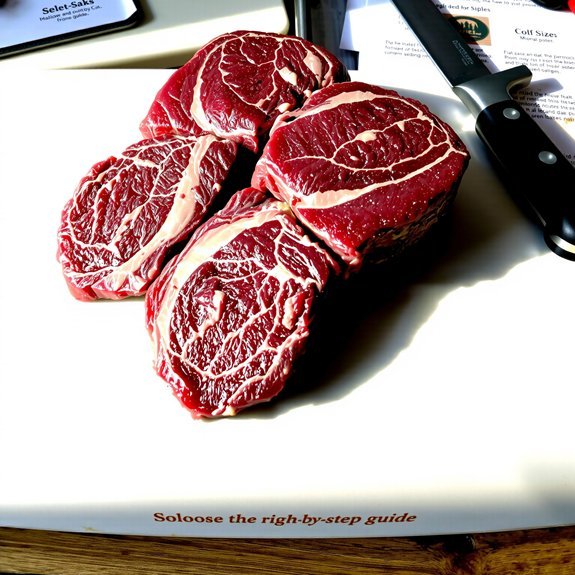
Which cut will make you the neighborhood brisket legend? You pick with curiosity, not blind tradition. I nudge you toward experimenting among brisket types — flat for neat slices, point for buttery pull — and you listen. Feel the fat content under your palm, a firm spring, a promise of juiciness; imagine molten ribbons melting into smoke. I joke that you’ll charm the block with fat-rendered bliss, then get serious: balance fat and flavor, don’t overcommit to one extreme. You visualize the bark, smell of wood and spice, and decide. You’ll choose bravely, knowing texture and taste depend on that choice. Then we move on, confident, ready to turn that raw promise into neighborhood legend.
Trimming and Preparing the Meat
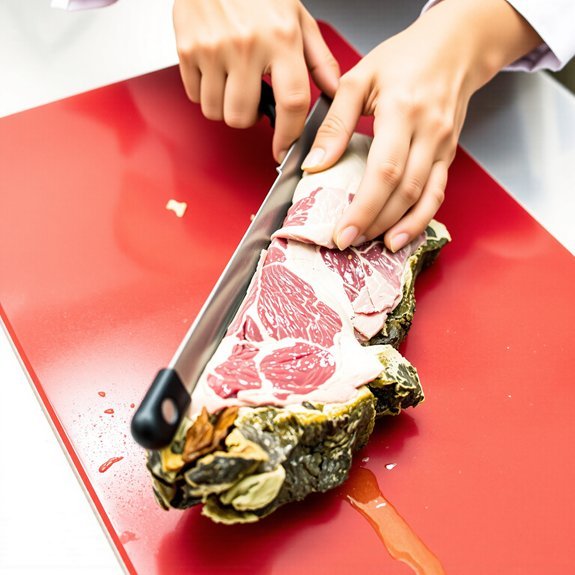
Now we start the real work: trimming and prepping the brisket, where your knife and patience turn promise into dinner. You’ll use smart trimming techniques, indeed, and a few preparing tools, while I nudge you, crack a joke, and try not to cut my fingers. Feel the fat cap, hear the blade whisper, smell raw beef—this is hands-on innovation.
| Calm focus | Sharp blade | Quiet pride |
|---|---|---|
| Tactile feel | Steady cut | Warm smell |
| Patient rhythm | Clean edge | Kitchen grin |
Trim silver skin and excess fat, leave a thin cap for flavor, don’t overdo it. Pat dry, score lightly, set it aside, admire your work, and get ready for the rub chapter.
Selecting Rubs and Marinades
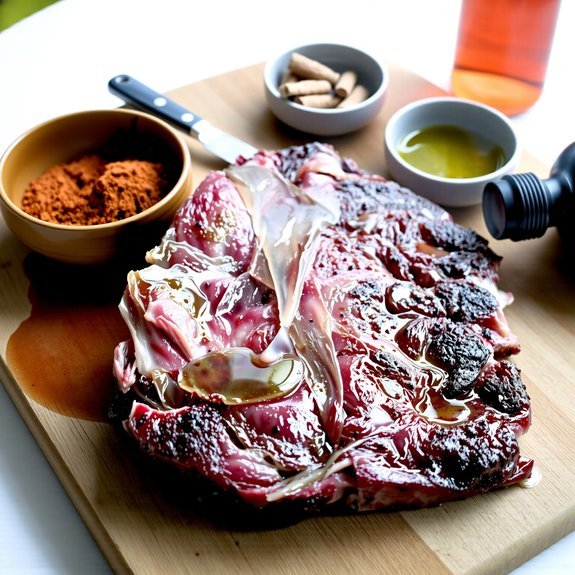
Maybe you’ll grab a jar of something flashy, or you’ll trust a tried-and-true pile of pantry spices — either way, pick a path and commit, because the rub is the brisket’s personality, and you’re the awkward friend introducing it at a party. I want you to experiment, but I’ll keep it practical. Think texture, aroma, and balance: coarse salt, cracked pepper, smoked paprika, brown sugar. Try dry rubs options that contrast sweet and savory, or go bright with citrus zest.
- Classic: kosher salt, black pepper, garlic powder, paprika.
- Sweet-smoky: brown sugar, chipotle, cumin, smoked salt.
- Herb-forward: thyme, rosemary, lemon zest, sea salt.
- Wet: soy, vinegar, oil, garlic — key marinade ingredients.
Smoking, Roasting, or Slow-Cooking Methods
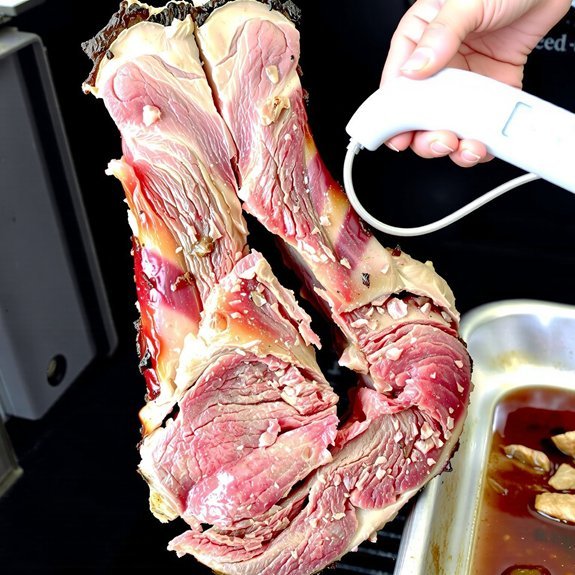
You’ll pick smoking if you want that smoky bark and low, patient heat, roasting for a crisped exterior and reliable oven timing, or slow-cooking when you want fork-tender meat without babysitting. I’ll walk you through how long to run each method and the exact temps that turn brisket from tough to melt-in-your-mouth, with a few “trust me” moments and one tiny confession that I once over-smoked a brisket into jerky. Ready? Set your thermometer, breathe in that wood-and-beef perfume, and let’s get cooking.
Choosing the Right Method
If you’re aiming for that deep mahogany crust and smoke-kissed tug of meat that makes people weep a little, smoking’s your slow dance; if you want a reliably tender cut with less babysitting, roasting or the slow cooker will bail you out, each with its own personality and trade-offs. I walk you through brisket preparation and inventive cooking techniques, so you pick the mood. Want ritual and smoke, expect patience and showmanship. Want roast, expect caramelized edges, oven confidence, and creative glazes. Want slow-cook ease, expect melt-in-your-mouth fall-apart comfort, set-and-forget magic. Here’s a quick checklist to match vibe to method:
- Flavor-first: smoking, bold, complex.
- Precision: roasting, controlled, elegant.
- Convenience: slow-cooker, effortless, forgiving.
- Hybrid: sear then smoke/slow, experimental, clever.
Time and Temperature Tips
When you’re chasing perfect brisket, time and temperature are your co-pilots — crank either one wrong and you’ll get leathery disappointment or a mushy mess, so pay attention like you mean it. I nerd out over temps, and you should too. For smoking, set the pit low and slow, watch cooking times like a hawk, and aim for steady heat around 225–250°F. For roasting, push to 300–325°F for a tighter schedule. Slow-cookers want patience, gentle 8–12 hour love. Always monitor internal temperatures, not clock time: 195–203°F gives tender pull-apart bliss. Probe often, rest long, and wrap when the stall stalls you. You’ll smell smoke, hear sizzle, and grin when that knife slides right through.
Monitoring Temperature and Doneness
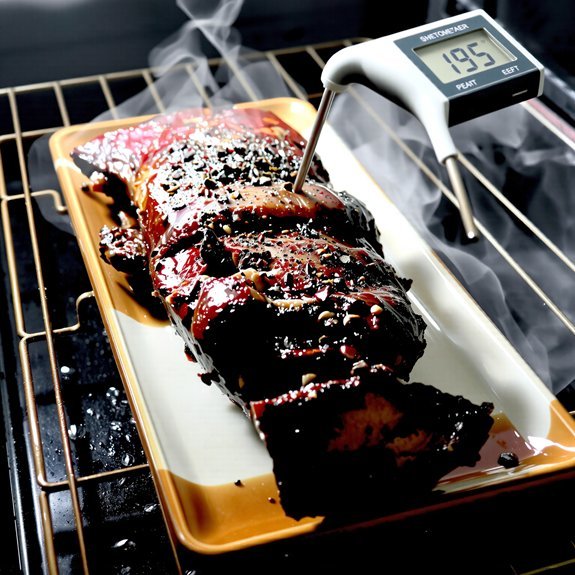
One trusty thermometer is worth a dozen guesswork meals — trust me, I learned that the hard way with a dry brisket and an embarrassed picnic crowd. You’ll embrace temperature monitoring like a new gadget, probe in hand, eyes on the dial, ears for the hiss of the smoker. Doneness testing isn’t mystical, it’s methodical. Pull the probe, feel the give, record the temp. If it’s past 195–205°F, you’re nearing butter territory; below, you’ll need more time.
One trusty thermometer beats guesswork—probe in, eyes on the dial; trust temps and texture for perfect brisket.
- Use a leave-in probe for steady reads, no oven door fuss.
- Verify with a quick instant-read probe for spot checks.
- Note temp trends, not single numbers, to predict finish times.
- Trust texture cues alongside temps, they’ll save you.
Resting and Slicing for Best Texture
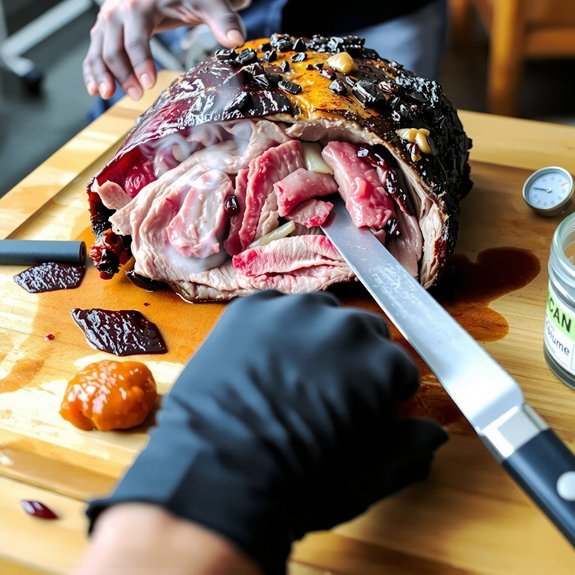
Now comes the magic hour: I make you wait, but only because brisket needs a nap to stop leaking its soul all over the cutting board. You’ll tent it loosely, leave it in a warm spot, and trust me — those resting times aren’t optional; they’re the secret handshake between toughness and silk. While it rests you can breathe in beefy scent, feel the bark firming, imagine the juices redistributing. When you slice, pick a sharp knife, steady the point, and cut against the grain. Use slicing techniques that vary: thin for tender bites, thicker for chew you can savor. I’ll hum a tune, you’ll slice, and together we’ll coax texture out of patience. Simple ritual, big reward.
Serving, Storage, and Reheating Tips
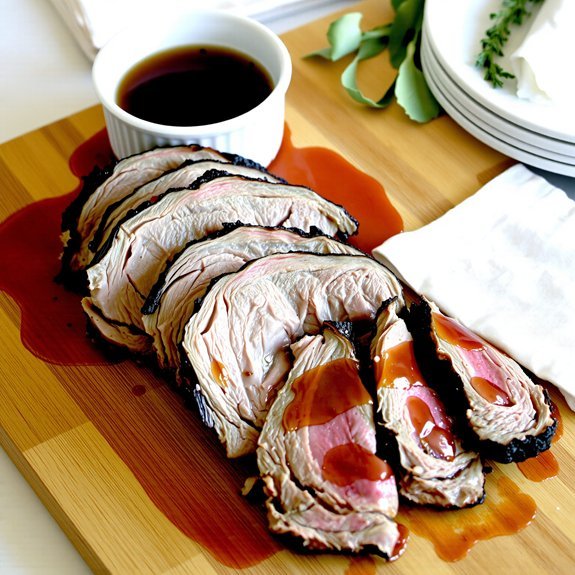
You’re about to plate that glossy, peppery brisket, and I’ll tell you what pairs well — smoky baked beans, crisp slaw, maybe a tangy pickle to cut the richness. When you’re done eating, cool the meat quickly, pat it dry, tuck it into shallow containers, and chill within two hours so it stays juicy and safe. If you want it tasting like it just came off the smoker, reheat gently in foil with a splash of beef broth or steam it slowly, I swear it’ll forgive you.
Serving Suggestions and Sides
Once your brisket’s rested and smelling like a smoky hug, it’s time to dress it up and decide who gets the big piece — you or everyone else. I tell you straight: think bold sauce pairings and reinvented side dishes, not the same tired coleslaw. Slice against the grain, let juices glisten, then play.
- Serve with a tangy vinegar glaze and roasted sweet-potato wedges, contrast and comfort.
- Offer a bright herb salsa verde, charred corn succotash, for freshness and crunch.
- Stack brisket on toasted brioche with pickled red onions, a playful handheld.
- Plate thin slices with smoked‑cheddar grits and green beans, drool-worthy simplicity.
Store and reheat gently, keep flavors alive, don’t overcook — you’ll thank me later.
Proper Cooling and Storage
Because hot brisket keeps cooking after it leaves the smoker, don’t just toss it on the counter and walk away — I’m serious, unless you enjoy mystery bacteria with your barbecue. I let mine rest briefly, then slice or brisket-wrap, using clever cooling techniques: fan the foil, transfer to shallow pans, and keep airflow moving so carryover heat fades fast. I stash portions in tight storage containers, label them, and slide them into the fridge within two hours. For longer life, I vacuum-seal or freeze single-serving slabs, flash-chilling on ice first if I’m feeling dramatic. Smell, texture, and a tidy stack in your fridge tell you you did it right. Trust me, safe brisket keeps flavor honest, and you’ll sleep better.
Best Reheating Methods
How do you resurrect a cold brisket so it tastes like it never left the party? I’ll show you bold reheating techniques that lock in juice, revive bark, and keep flavor preservation top of mind. You’ll hear sizzle, smell smoke, and see steam rise—winning.
- Wrap in foil with beef broth, low oven 250°F, 60–90 minutes, probe to 140°F.
- Steam gently in a skillet with lid, add broth, flip once, finish uncovered for bark.
- Sous-vide at 140°F for an hour, then quick sear for char—precision, like science that hugs.
- Slice cold, reheat slices in a hot pan with butter, spoon juices, finish with a splash of vinegar.
Try, taste, tweak. I promise, revival’s an art you’ll master fast.