
Funny coincidence—you grabbed a brisket the same week I finally nailed the timing, so let’s save you a dry, pricey heartbreak. You’ll choose flat, point, or a whole packer, trim some fat, and pick your weapon: smoker, oven, or slow cooker. Then it’s all about hours per pound, the dreaded stall, and hitting 200–205°F without overshooting. Wrap or don’t? Rest how long? I’ve got the timelines, the wrap rules, and one sneaky trick you’ll want first.
Brisket Basics: Flat vs. Point and Whole Packers
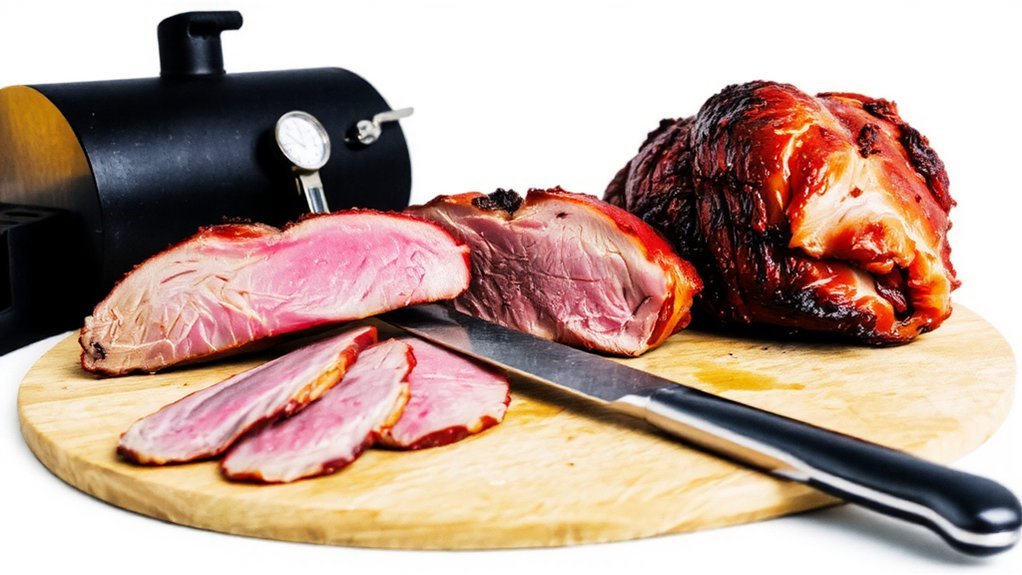
Let’s start with the beast itself: brisket comes in two personalities—the flat and the point—and sometimes they show up together as a whole packer, like an odd couple you somehow root for. You serve people best when you know your brisket cuts. The flat is lean, long, and tidy, slices like a dream, and makes your platter look disciplined. The point is marbled, knobbier, juicier, and throws a flavor party you’ll need napkins for. Together, in a whole packer, they balance each other beautifully.
Now, let’s talk cooking techniques you’ll actually use to love your guests well. Trim wisely, season boldly, sear for a bark that crackles, then go low and steady. Keep the point’s fat working for you, and slice the flat like you mean it.
Key Factors That Influence Cook Time
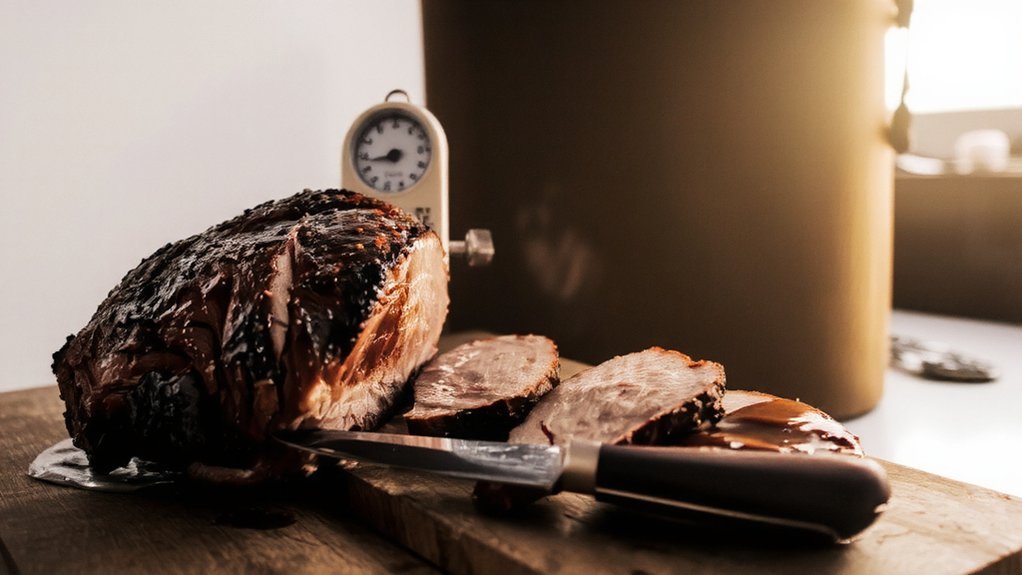
You’re about to juggle two big levers: brisket size and thickness, and the heat you cook it with. A thick, hefty packer soaks up hours like a sponge, while a slimmer flat hits tender sooner, especially if you nudge the temp higher. I’ll say it straight—lower and slower builds that deep bark and buttery bite, higher heat trims time but demands vigilance, a spritz bottle, and nerves of steel.
Brisket Size and Thickness
Size matters, and brisket proves it every time. You’re cooking for others, so let’s set you up to serve slices that sing. Brisket weight and thickness drive time more than any gadget. A 6-pound flat? Quick-ish. A 14-pound packer? Settle in. Thick muscles shield heat, fat melts slowly, and every extra inch adds patience. Different cooking methods tug the clock, too, but size calls the beats.
- Weigh it first: note brisket weight, flat vs. point, and total thickness along the widest section.
- Scan the grain and fat: thicker seams of fat take longer to render, but reward you with silkier bites.
- Trim smart, don’t shave: leave a modest cap for moisture.
- Plan the carve: thinner ends finish sooner—stage slicing so every plate lands hot, juicy, perfect.
Cooking Temperature Range
Though the cut sets the stage, the heat writes the script. You’ve got range to play with, and guests to wow. For classic low-and-slow, hold 225–250°F; collagen melts, bark builds, smiles follow. Need to serve sooner? Nudge to 275°F, maybe 300°F, and watch the clock, not just the meat. I like a steady hum of heat, like a choir, not a soloist.
Different cooking methods tweak flavor profiles and timing. Smokers give deep mahogany bark, ovens deliver even heat, grills bring char-kissed edges. Aim for 195–205°F internal for slicing, 203–210°F if you’re chasing ultra-tender. Stall at 150–170°F? Wrap in butcher paper, keep moisture in, keep service on schedule. Rest it, at least an hour. Juices settle, texture smooths, applause incoming.
Time Per Pound by Cooking Method
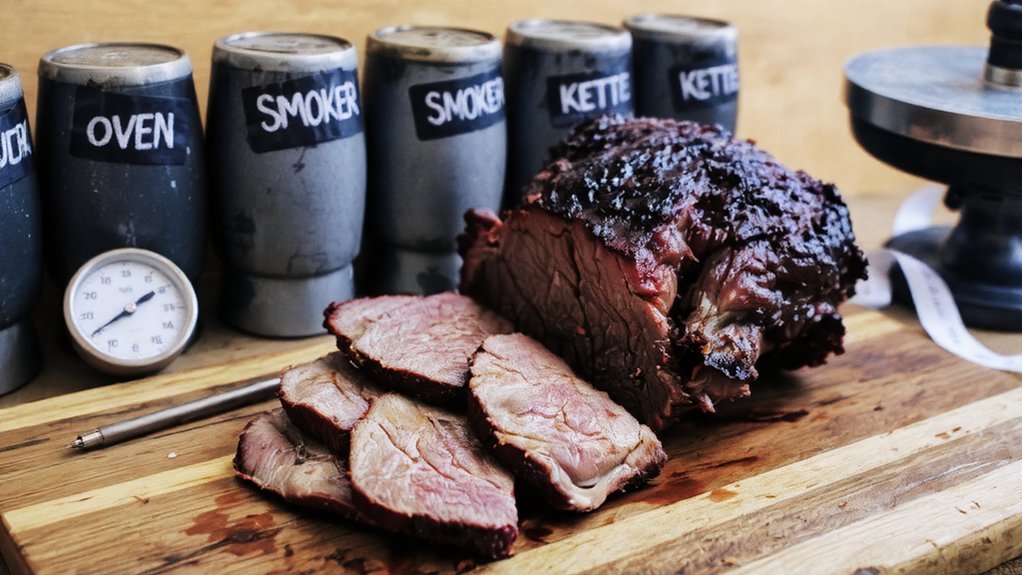
Because brisket’s a diva that softens only on its own timeline, let’s pin down the big question: how many minutes per pound, by method, actually works. You’re cooking to serve joy, not stress, so plan the clock, then let the meat do its slow magic. Grab your brisket seasoning, your favorite cooking accessories, and breathe.
- Smoker, 225°F: 75–90 minutes per pound. Thin blue smoke, steady heat, patient hands, and you’re the hero with napkins.
- Oven braise, 300°F: 45–60 minutes per pound. Covered, cozy, bubbling edges, aromas that make neighbors invent excuses to visit.
- Grill (indirect), 275°F: 60–75 minutes per pound. Shielded from flame, kissed by wood, rotated like a sleepy sunbather.
- Slow cooker, Low: 90–120 minutes per pound. Set it, bless it, walk away, return to fork-soft generosity.
Temperature Targets and Tenderness Cues
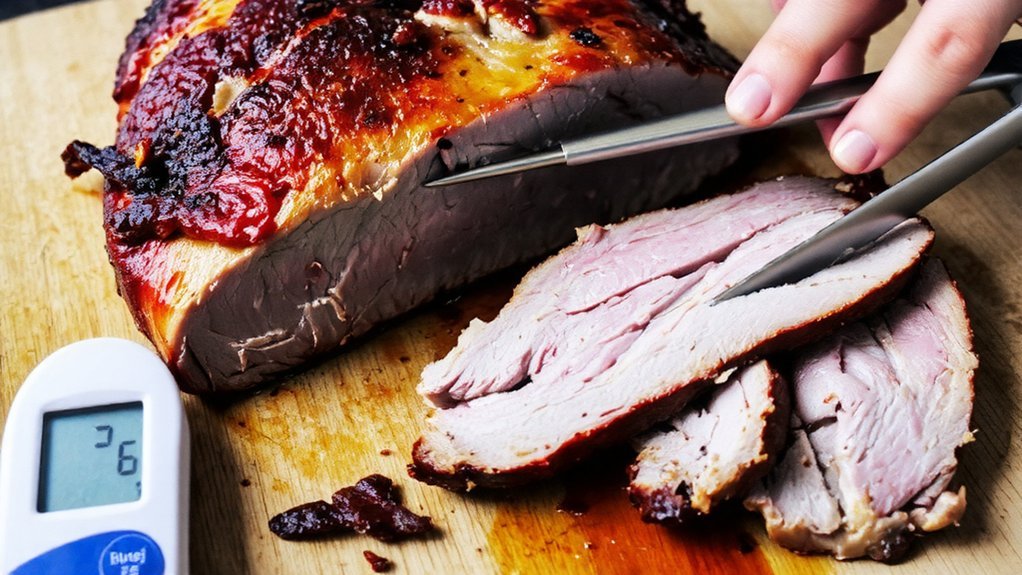
You’ll watch the internal temp climb past the stall and into the sweet zone—think 195–205°F—where fat melts, juices sigh, and the bark smells like smoky caramel. But don’t trust numbers alone, trust the feel: slide a probe into the flat and point, and if it glides like warm butter, you’re golden. If it tugs or squeaks, nope—keep cooking, you’re not at tender-town yet, and yes, I named it that.
Internal Temp Milestones
Two numbers keep your brisket on track: food-safe and melt-in-your-fork. You’re aiming for steady internal temperature checkpoints, not guesswork. I’ll talk you through the cooking milestones so you can serve with confidence, smile big, and slice clean.
- 150–165°F: The bark sets, fat sweats, aromas bloom. Hold steady; you’re building flavor, not racing the clock.
- 165–175°F: The stall shows up, moisture evaporates, temps crawl. Wrap if you’re on a schedule, or ride it out like a patient pit boss.
- 195–203°F: Collagen loosens, slices stay intact, juices glisten. This is your sweet spot for tender, sliceable brisket that plates beautifully.
- 203–208°F: Going softer? Push gently into this range, then rest. Let juices redistribute, board ready, knives sharp, guests waiting.
Probe Tenderness Test
Numbers get you close, but your brisket’s real handshake is how it feels on the probe. Here’s the move: slide a thin thermometer or skewer into the flat and point, with the grain and against it. You’re hunting butter-smooth. If it glides in like warm peanut butter, you’re there. If it snags, smile, then keep cooking.
Let’s talk probe methods. Test multiple spots, avoid fat pockets, and don’t jab the same hole twice, you’ll leak juices like a bad alibi. Pair temp with tenderness indicators: around 200–205°F is common, but feel beats digits. Rest it, wrapped, at least an hour. Then re-probe. Still silky? Carve thin, serve proud. Not yet? Back in the heat. Patience wins, applause follows.
Understanding the Stall and How to Handle It
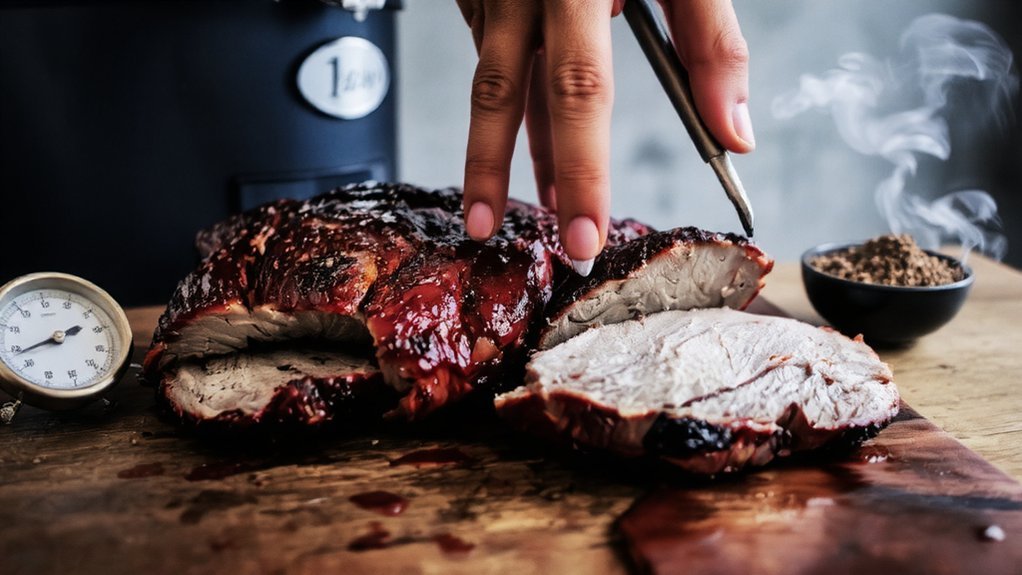
Although the smoker smells like heaven and the bark looks fierce, the brisket suddenly stops climbing in temperature—that’s the stall. Here’s the stall explanation in plain talk: surface moisture evaporates, cooling the meat like sweat, so heat input equals heat lost. Time stretches, guests get hungry, you stare at a thermometer like it owes you rent. Breathe. You’ve got stall strategies that keep service on track and spirits high.
When brisket stalls, breathe. Evaporation cools; patience and steady heat carry you through.
1) Hold steady heat, 250–275°F, clean smoke, thin blue, no drama.
2) Manage moisture: spritz lightly to keep the bark from scorching, but don’t soak it.
3) Stay patient: let collagen melt; tenderness pays off, generosity on a platter.
4) Track internal temp and pace: plan side dishes, brew tea, tell jokes, serve calm.
When and How to Wrap: Foil vs. Butcher Paper
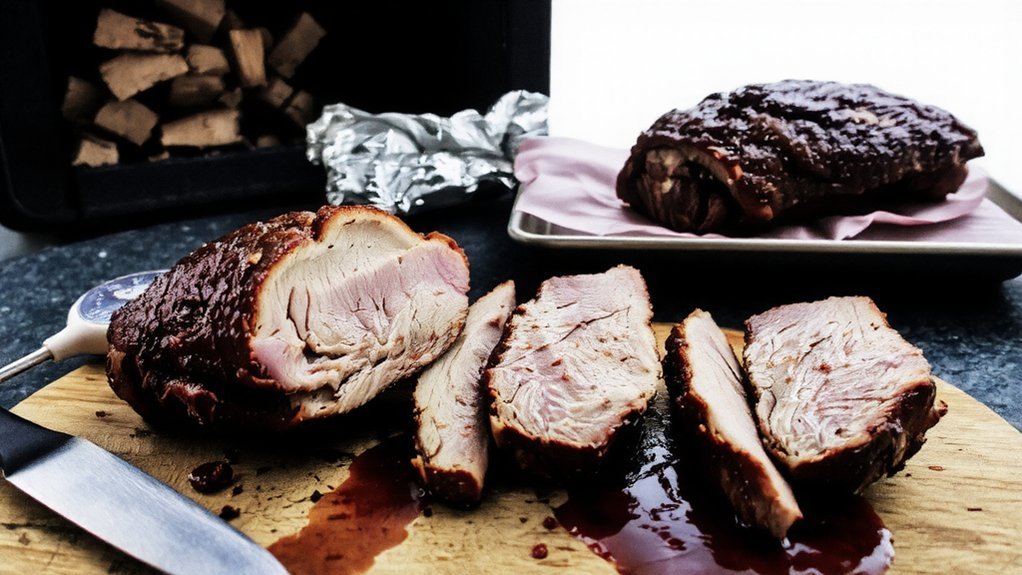
By the time the bark turns mahogany and your probe starts to drag a little, you’re flirting with the wrap. That’s your cue. I tap the thermometer, nod like a diner short-order cook, then choose my wrapping techniques: foil for speed, butcher paper for soul.
Foil locks in heat, boosts moisture retention, and pushes you through the stall fast. The tradeoff, a softer bark. Think pot roast in a tux. If folks are waiting, foil’s your hustle.
Butcher paper breathes. It shields the crust, keeps the smoke-kissed snap, and still guards the juices. Slower, yes, but the bark sings.
How to wrap: pull the brisket, double-layer, tight seams, point toward the fold. Back on the pit, fat cap up. You’re shepherding flavor, not smothering it.
Resting and Holding: Timing for Juicy Slices
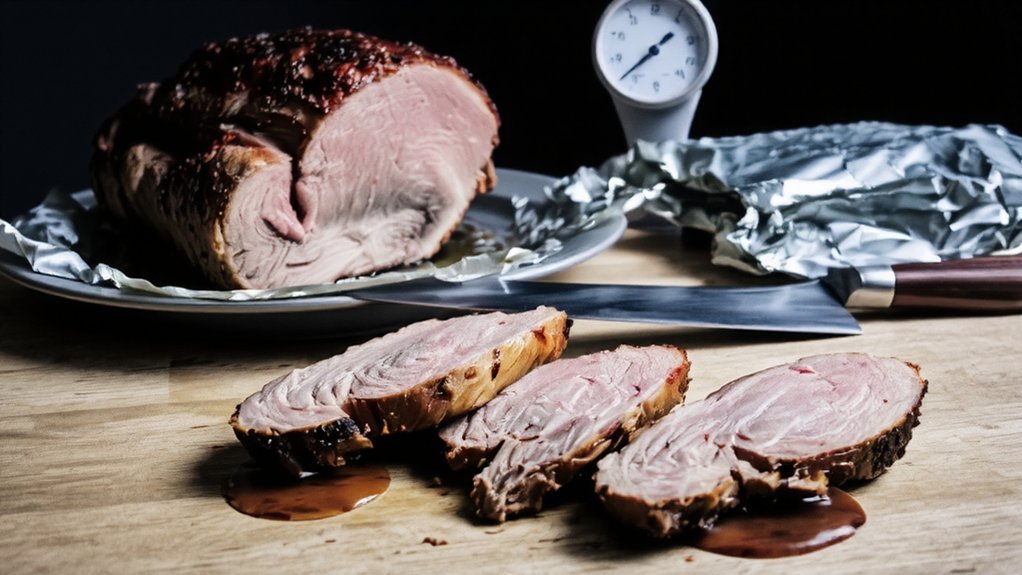
Once the brisket hits probe-tender and you’re grinning like a lottery winner, don’t slice yet—now the magic’s in the rest. Let it sit, wrapped, on the counter until steam calms, juices settle, and the bark sighs instead of crackles. I’m thinking service, not selfies. You’re feeding people you care about, so give that resting period its due, then hold warm, not hot.
- Vent briefly: crack the wrap 5–10 minutes, let excess steam escape, save the bark, save your dignity.
- Hold kindly: rewrap, tuck into a 150–165°F cooler or oven, towels around it, up to several hours.
- Slice technique: separate point and flat, cut across the grain, thin for flat, thicker for point.
- Serve thoughtfully: drip tray, warm knife, warm platter, applause optional.
Sample Timelines: Smoker, Oven, and Slow Cooker
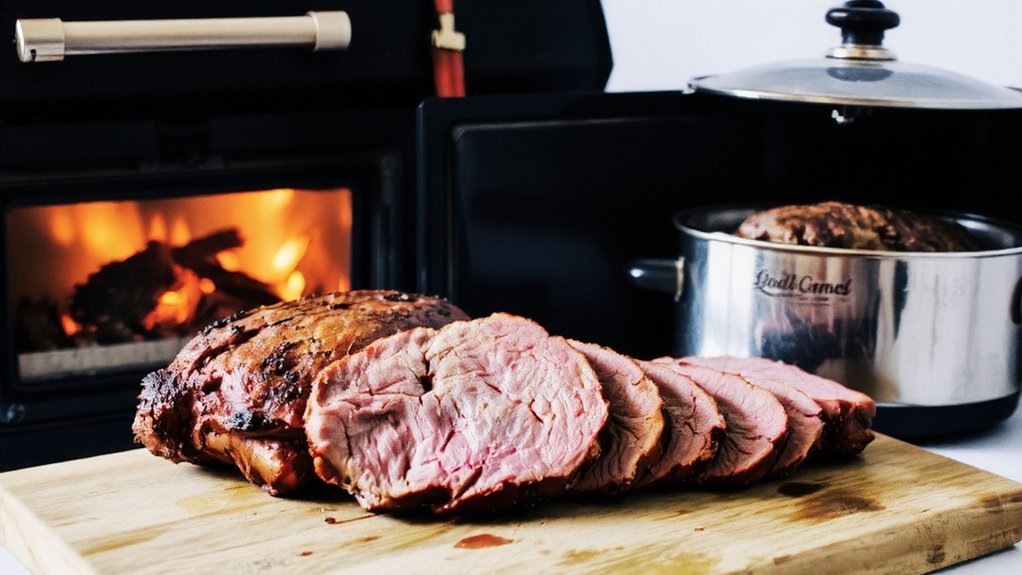
If you like a plan you can tap on the fridge, here’s your brisket clock in three flavors: smoker, oven, and slow cooker. You want timing you can serve with pride, so let’s map it clean. First, quick preparation tips: trim lightly, salt early, and keep a steady temp. I’ll keep the jokes short, the clocks exact.
| Method | Time/Temp | Notes |
|---|---|---|
| Smoker | 1–1.25 hrs/lb at 225–250°F | Smoker advantages: deep bark, perfume-y smoke. |
| Oven | 45–60 min/lb at 300°F | Oven differences: even heat, tidy cleanup. |
| Slow Cooker | 8–10 hrs on Low | Slow cooker benefits: set-and-forget tenderness. |
Here’s the cadence: smoke to 165°F, wrap, ride to 200–205°F. Oven? Same temps, faster climb, less bark. Slow cooker? Braise to probe-tender, then broil for a quick crust. Plate hot, serve happier.
Troubleshooting Overcooked or Undercooked Brisket
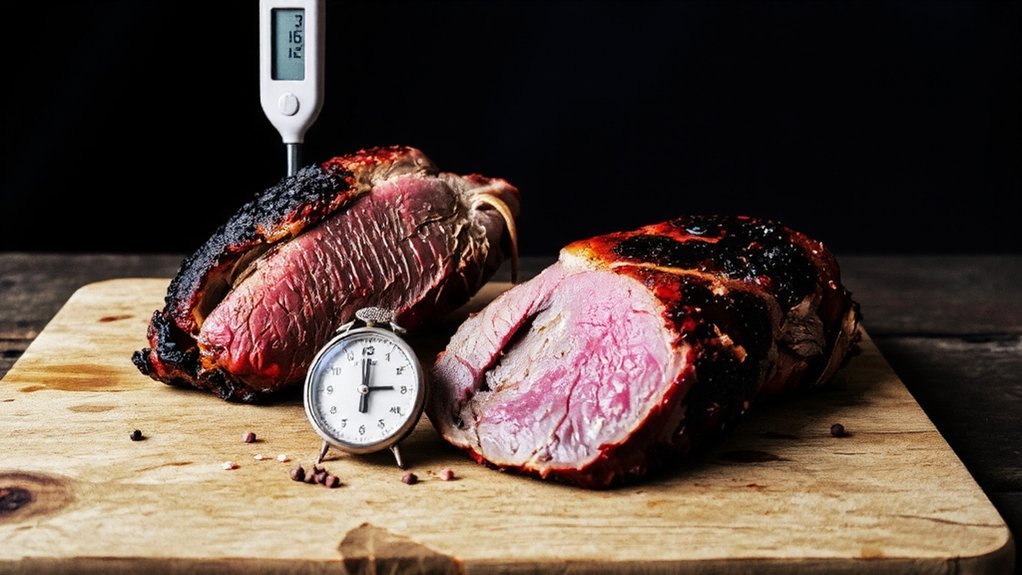
Though brisket can feel like a mood ring with hooves, we can read what it’s telling you and fix it fast. If it’s tough, rubbery, or weeping juices like a teen drama, you’ve got undercooked brisket. If it crumbles, tastes dry, and slices shred on contact, that’s overcooked brisket. Don’t panic. We’ll rescue dinner, and your reputation.
1) For undercooked brisket: wrap tightly in foil with a splash of stock, return to 275°F heat, cook until probe slides in like warm butter, then rest 45 minutes.
2) For overcooked brisket: cube it, warm gently in rich sauce or au jus, serve as sandwiches, tacos, or hash.
3) Slice against the grain, thinner for tough cuts, thicker for dry ones.
4) Always rest, 45–90 minutes, to re-balance juices.