
Two roads diverge in a smoky pit: flat cut or point. You want clean, tidy slices for sandwiches, or juicy, melt-in-your-mouth bites that drip down your wrist. The flat’s lean, neat, and easy to slice; the point’s marbled, rich, and made for burnt ends that vanish fast. I’ll shoot straight, you can’t mess this up—if you know what you’re chasing. So, grab your tongs, lean in, and let’s pick your winner before the fire dies.
Understanding the Brisket: Flat Vs Point
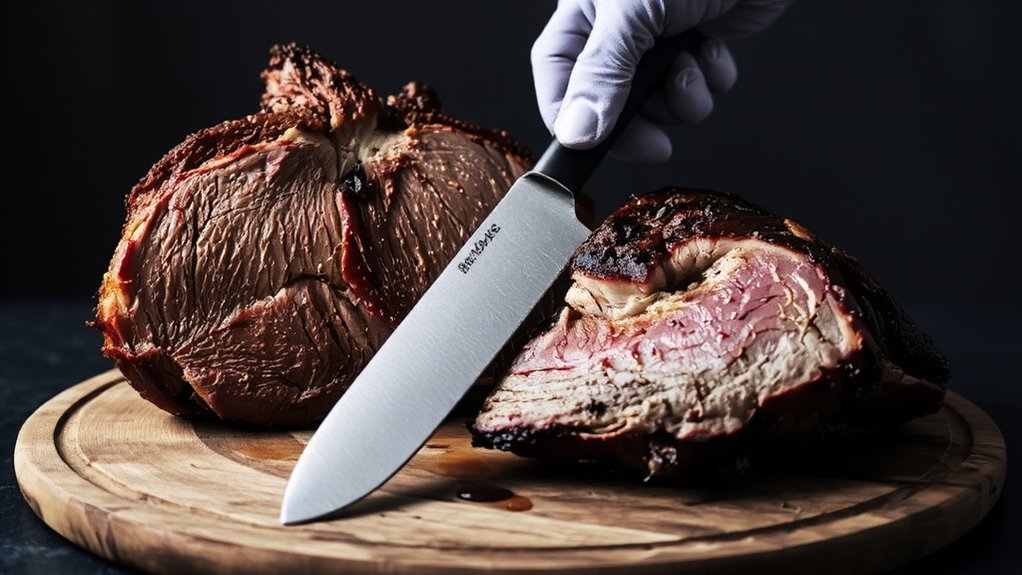
Brisket anatomy, let’s make it painless. You’ve got two main brisket cuts riding shotgun on one chest muscle: the flat and the point. The flat’s long, lean, and even, like a well-behaved sheet of beef. It slices clean, stacks nicely on trays, and makes you look organized when you’re feeding a crowd. The point, chunkier and marbled, feels rugged, a little wild, perfect when you want luscious bites without prim fuss.
Now, cooking styles. If you’re serving guests, you need predictable results. The flat shines with steady heat, tight grain, and tidy slices for sandwiches. The point loves slower smokes, bold rubs, and that shimmering bark everyone fights over. Choose by mission: neat portions, go flat; indulgent cubes, go point. Either way, you’ve got this.
Flavor, Fat, and Texture Differences
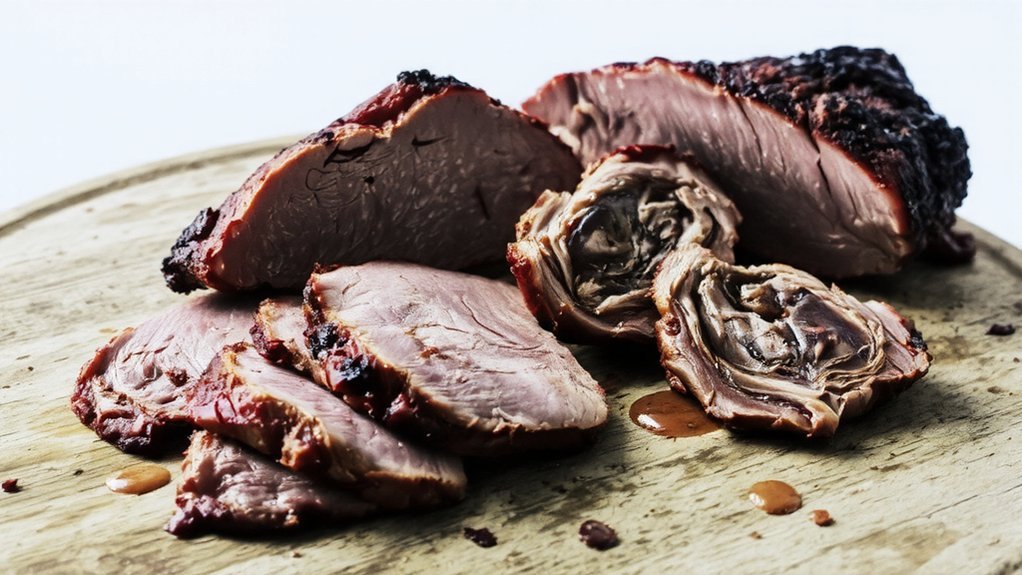
You’re about to taste how fat really flexes: the point’s marbling and thick cap render like buttery rain, while the flat stays lean, tidy, and a bit more disciplined. You’ll catch deeper beefiness and smoke in the point—those juices hold aroma like a sponge—where the flat rides cleaner, brisk, and classic. Bite test time: the point melts and puddles on your tongue, the flat slices neat with a gentle chew, and I’ll happily “test” both until someone hides the knife.
Marbling and Fat Cap
Confession time: I judge brisket by its fat. You should too, because marbling importance isn’t hype—it’s your tenderness insurance. In the flat, the streaks are modest, so you’ll get cleaner slices for platters and sandwiches. In the point, the marbling runs wild, basting every bite, turning cheeks silent at the table. Now, let’s talk fat cap characteristics. Aim for about a quarter inch, even, white, and firm. Trim hard, waxy spots, leave the soft, creamy layer that melts and protects. I’ll square edges, smooth ridges, then pat it dry like it’s headed to church. The flat appreciates restraint; the point forgives, then spoils you. You’re cooking for folks you love, so choose the cut, and the fat, that serves them best.
Beefiness and Smoke Absorption
All that talk about fat wasn’t vanity, it’s flavor economics, and now the bill comes due. You’re chasing bold beefiness and honest smoke, I get it. The flat and point just pay that bill differently. The flat, leaner and wider, welcomes smoke penetration fast, like opening all the windows. The point, richer and thicker, trades patience for payoff, dripping with concentrated savor. You’re serving guests, not flexing, so pick the cut that carries your intentions to the table.
- Flat: higher surface area, quicker smoke penetration, simpler seasoning, clean beefiness levels.
- Point: rendered fat shields early, then amplifies beefiness levels, deeper, darker flavor.
- Flat loves lighter woods, lets pepper sing; point handles heavy smoke like a champ.
- Plan time and airflow; guide the smoke, don’t let it boss you.
Tenderness and Mouthfeel
Even before the bark cracks, tenderness tells you who’s who: the flat slices neat and firm, a clean bite that yields, then stands tall; the point melts like a whispered secret, puddling into rich, buttery bites that coat your tongue and make napkins nervous. You’re plating for guests, so think texture first. The flat behaves, tidy and sliceable, perfect for sandwiches, church suppers, and brisk service. The point? It swoons, drips, and makes eyes roll back. In a mouthfeel comparison, the flat gives gentle chew, a steady rhythm; the point gives lush collapse, a slow waltz.
Here’s the move: carve the flat for clean portions, then chop the point into tender cuts for saucy ends. Balance firm with velvet, give everyone their favorite bite.
Cooking Methods and Time Considerations
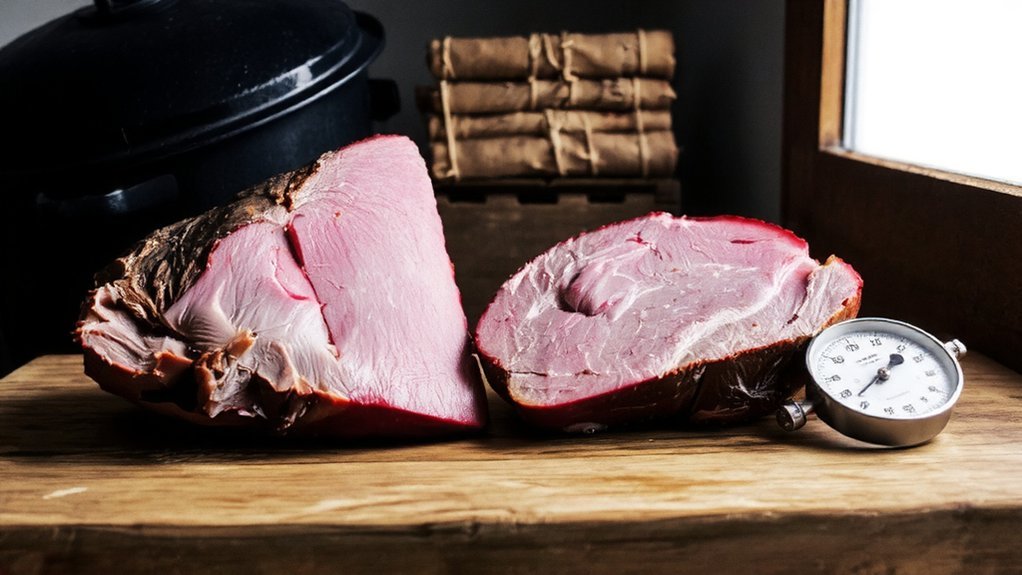
While both cuts end up melt-in-your-mouth tender, they don’t take the same road to get there, and timing is where folks get tripped up. You’re cooking for people you care about, so let’s match cooking methods to each cut, and nail those time considerations without drama. I’ve burned clocks and briskets, so learn from my singed eyebrows.
1) Flat cut: leaner, cooks more evenly. Smoke at 225–250°F, plan 60–75 minutes per pound, wrap when bark sets, rest generously. You’ll carve on schedule, not apologize.
2) Point cut: fattier, richer. Go low and slow, 90–120 minutes per pound. It shrugs off heat swings, but still needs a long rest.
3) Oven braise: tidy, dependable, great for service.
4) Hot-and-fast: handy, but monitor temps, and don’t skip resting.
Slicing, Shredding, and Presentation
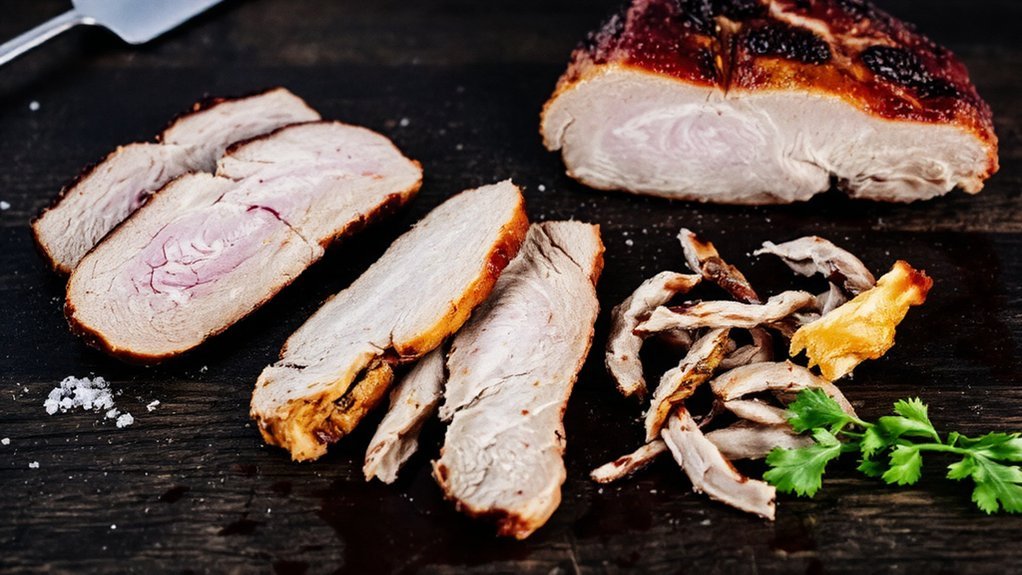
You’re about to make brisket look and taste like a flex, so let’s talk cuts, knives, and showtime. You’ll slice the flat thin across the grain for neat, tender planks, shred the point hot with forks or claws for juicy strands, and yes, I’m already jealous. Plate with contrast—glossy bark up, slices fanned, shredded piles nestled with pickles, onions, and a sauce drizzle that says, “You came to win.”
Ideal Slicing Techniques
Something magical happens the moment a brisket hits the board, and I’m here to make sure your knife turns that magic into applause. You’re carving for guests, not just yourself, so let’s make every slice sing. The flat gives you tidy, lean portions; the point brings rich, marbled bites. With the right slicing techniques and smart knife choice, you’ll serve both like a pro.
- Rest and orient: let it settle, find the grain, then rotate so your slices cut across it.
- Choose the blade: a long slicing knife, 10–12 inches, thin and flexible, honed sharp, no sawing.
- Slice the flat first: 1/4-inch slices, smooth strokes, stack neatly for elegant plating.
- Switch to the point: turn 90 degrees, slightly thicker cuts, showcase bark forward, arrange with contrast.
Best for Shredding
Two bites in, you’ll know the point is king for shredding—those fat veins melt into silky glue, the fibers relax, and the meat pulls apart with a lazy tug that makes your tongs feel like superheroes. When you’re feeding a crowd, that tenderness matters, because generous sandwiches, tacos, and trays move fast. I’m selfish for your guests’ joy, so I’ll say it plain: pick the point.
Use simple shredding techniques: rest the meat, separate big seams of fat, then rake with forks or claw tools, working with the grain until it unravels. Splash in warm drippings, stir, taste, adjust salt. Want crisp edges? Quick skillet kiss, thirty seconds, done.
For brisket recipes that shine, think saucy sliders, smoky chili, or breakfast hash. Serve seconds, smile.
Plating and Presentation
First things first, plate with intent, not panic. You’ve got brisket glory on the board—now make it sing. For flat cuts, slice across the grain, pencil-thick, glossy juices shimmering. For point cuts, shred gently with forks, keep the bark bits front and center. I’m here, cheering you on, napkin in hand, taste buds pacing.
- Slice it: Fan uniform slices like dominoes, overlap slightly, show that smoke ring. Clean edges win hearts.
- Shred it: Pile high, then tuck crisp bark on top for contrast. Drizzle a thin glaze, not a soup.
- Plate smart: Use warm plates, odd numbers, negative space. These plating techniques whisper “intentional.”
- Finish strong: Bright garnishing ideas—pickled onions, scallions, parsley, flaky salt, a lemon kiss—wake everything up.
Best Uses: Sandwiches, Burnt Ends, and Platters
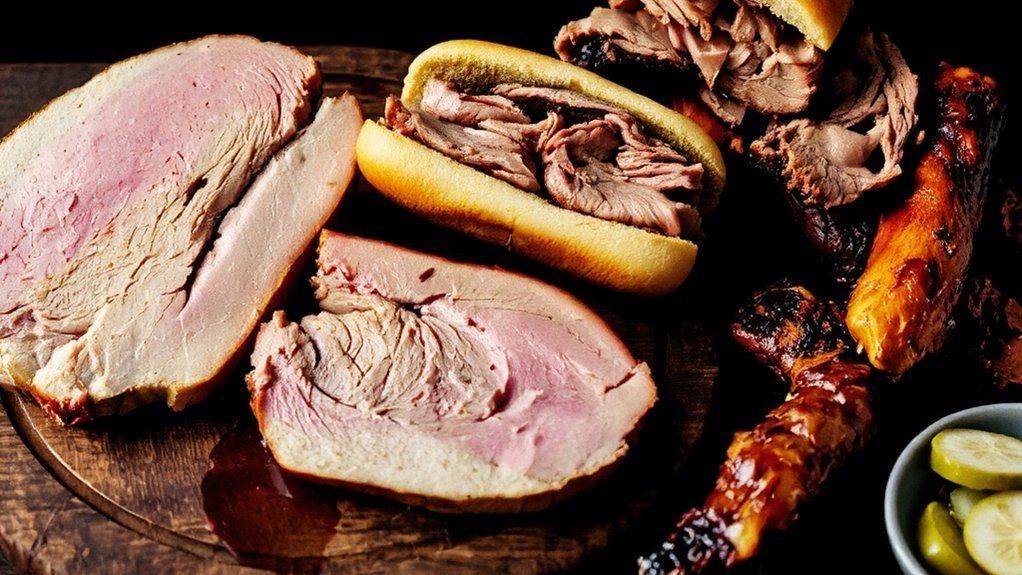
While the smoke’s still hanging in the backyard, let’s talk best uses, because flat and point cuts don’t shine the same way on the plate. If you’re serving a crowd, the flat is your steady hand. It slices clean, stacks neatly, and brings serious sandwich versatility—think tender slabs, tight grain, a swipe of sauce, a crunch of pickles, done. It also anchors platters: uniform slices, glistening edges, easy portions, happy guests.
Now the point, that’s your swagger. Rich, marbled, and begging for burnt ends. Cube it, sauce it, send it back to the heat till the bark crackles and the fat kisses every bite. Those little caramelized nuggets turn into instant smiles, perfect for small plates, shared baskets, or a bold centerpiece alongside simple sides.
Buying Tips and How to Spot Quality
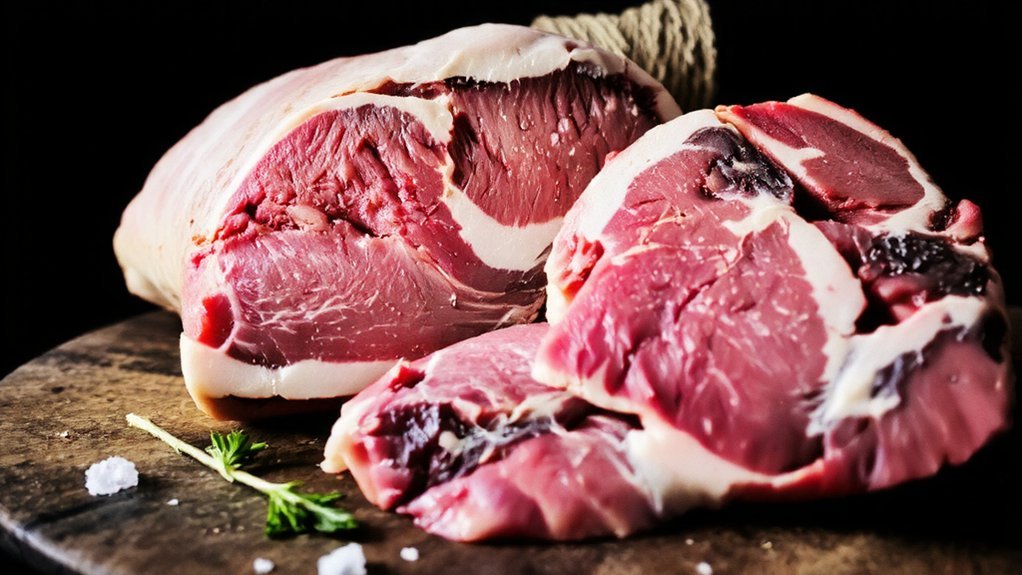
Every great brisket starts at the butcher counter, not the smoker, so let’s shop smart. You’re cooking to serve joy, not just meat, so we’ll chase the right cut with sharp eyes and a little swagger. I’ll nudge, you’ll choose, everyone eats happy.
1) Look for quality indicators: deep red color, creamy white fat, and fine marbling like snowflakes, not streaky lightning. The flat should feel firm; the point, plush.
2) Ask for flexibility. Gently bend the packer; if it arcs easily, connective tissue will render tender. If it’s stiff, smile, and pass.
3) Check the fat cap: about 1/4–1/2 inch, smooth, not waxy. Trim potential matters.
4) Use these purchasing tips: even thickness, clean edges, no off odors, and a tight, cold cryovac.
Cost, Yield, and Serving Size Guidance
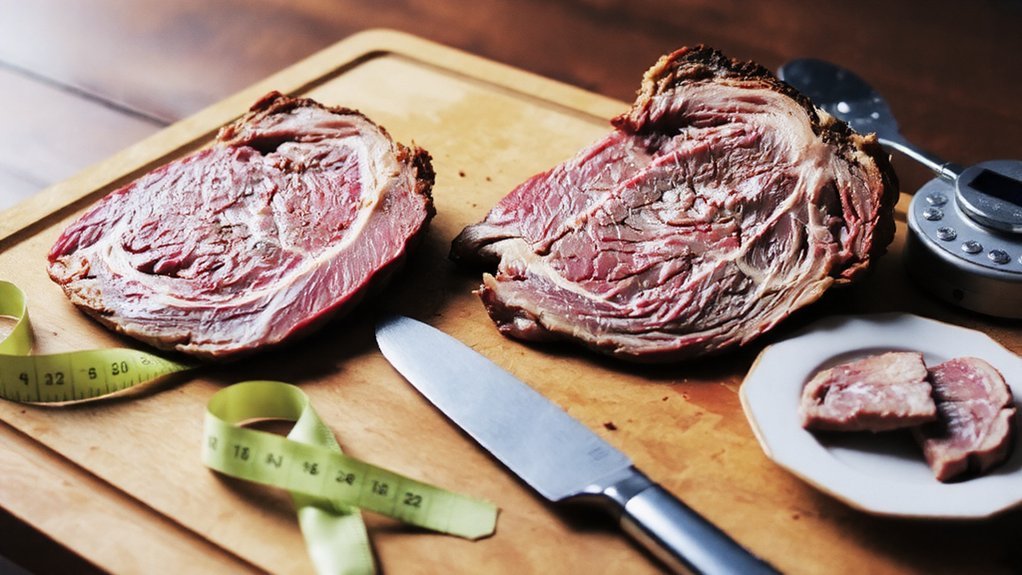
You’ve sized up a beauty at the counter, now let’s talk what it’ll cost you, what you’ll keep, and how many happy mouths you can feed without sweating the math. Here’s the quick cost comparison: flats usually run a bit higher per pound, but they trim lean and slice neat; points are cheaper, fattier, and wildly juicy. For yield estimation, plan 50–60% keep on whole packers, around 65% on flats, 55% on points. I budget half a pound cooked per guest for slices, a touch more for ravenous cousins. Feeding sandwiches or tacos? A third pound works. So, buy 1 to 1.25 pounds raw per person for flats, 1.25 to 1.5 for points. Serve generously, smile big, pretend the calculator was your idea.