
Big flavor, low effort—that’s brisket in the oven. You pick the cut, I’ll show you the move: season boldly, tuck it into a heavy pan, foil it tight, and let slow heat work its magic. The kitchen smells like a steakhouse, the bark turns mahogany, and the fat melts into butter. You’ll slice tender slabs, or shred rich strands, like a pro. But first—flat or point, and how low is low enough?
Choosing the Right Brisket Cut (Flat vs. Point)
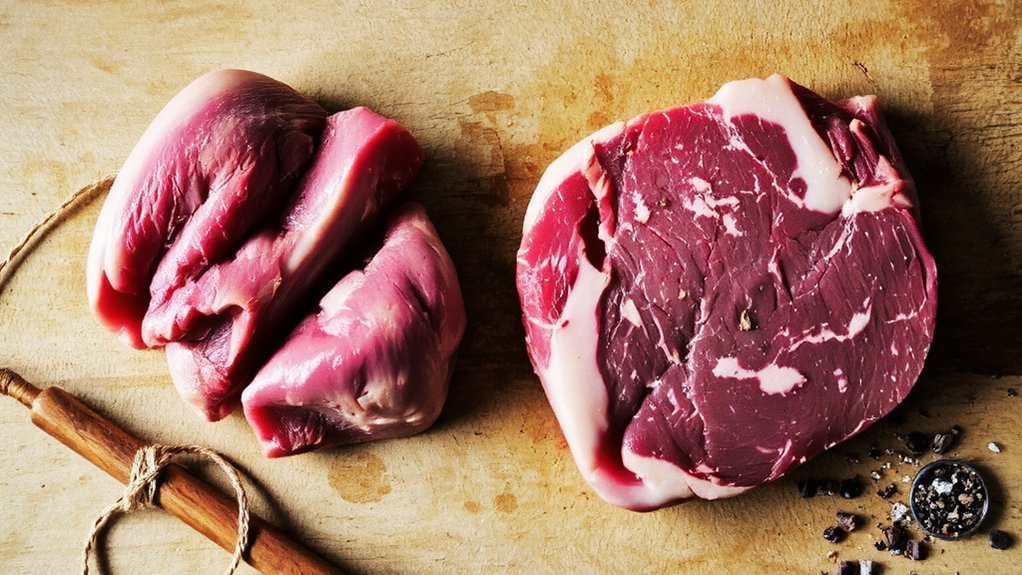
Two brisket personalities walk into your kitchen: the flat and the point. You greet them like honored guests because you’re cooking to bless people, not just fill plates. Let’s size up these brisket types. The flat is lean, uniform, easy to slice into tidy, generous portions. It offers clean beefiness, steady texture, dependable flavor profiles that please a crowd. The point? Rich, marbled, juicier, with buttery pockets that melt, baste, and whisper, “Seconds.” Its flavor hits deeper, like a warm hug with extra gravy.
Ask yourself: Who’s sitting at your table? If you need neat slices for sandwiches or plated service, pick the flat. If your people love luscious, shreddy bites and bold, beefy drama, choose the point. Different guests, different glory.
Essential Equipment and Pan Setup
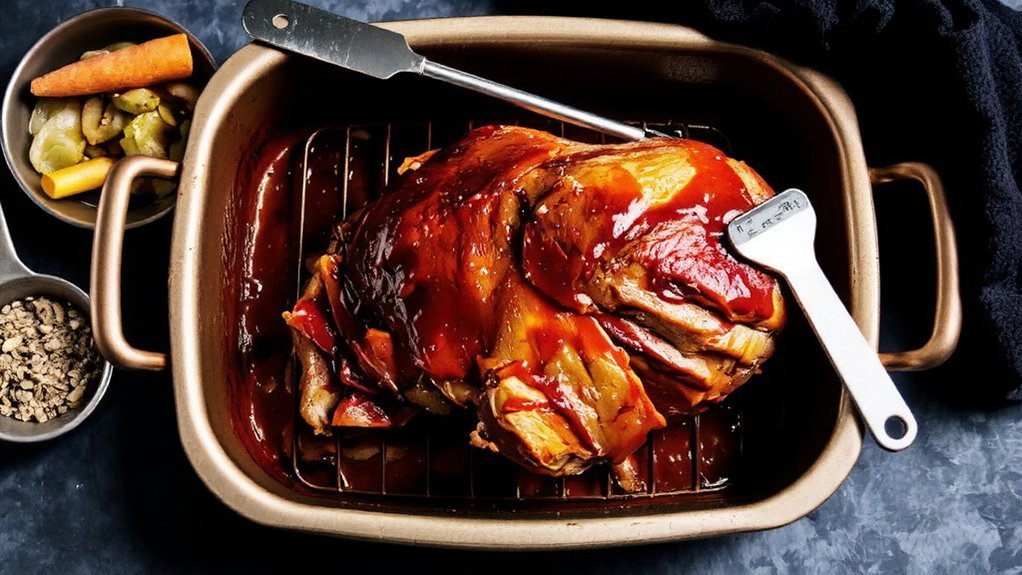
You picked your brisket’s personality; now let’s set the stage so it can perform. Grab your essential tools: a heavy roasting pan, a sturdy rack, foil that could moonlight as armor, and an instant‑read thermometer. I like a Dutch oven for small flats, but for a big crowd-pleaser, go wide and deep.
Pan selection matters. Choose a pan with high sides to catch drippings, and room for airflow. Set the rack inside so heat can circulate, and fat can render like slow jazz. Pour in a cup of stock or water for gentle humidity, nothing splashy.
Tent with tight foil, edges crimped, like wrapping a present for your favorite aunt. Slide it onto the middle rack. Thermometer parked nearby. You’re hosting a slow miracle.
Simple Seasoning Options: From Salt-and-Pepper to Bold Rubs
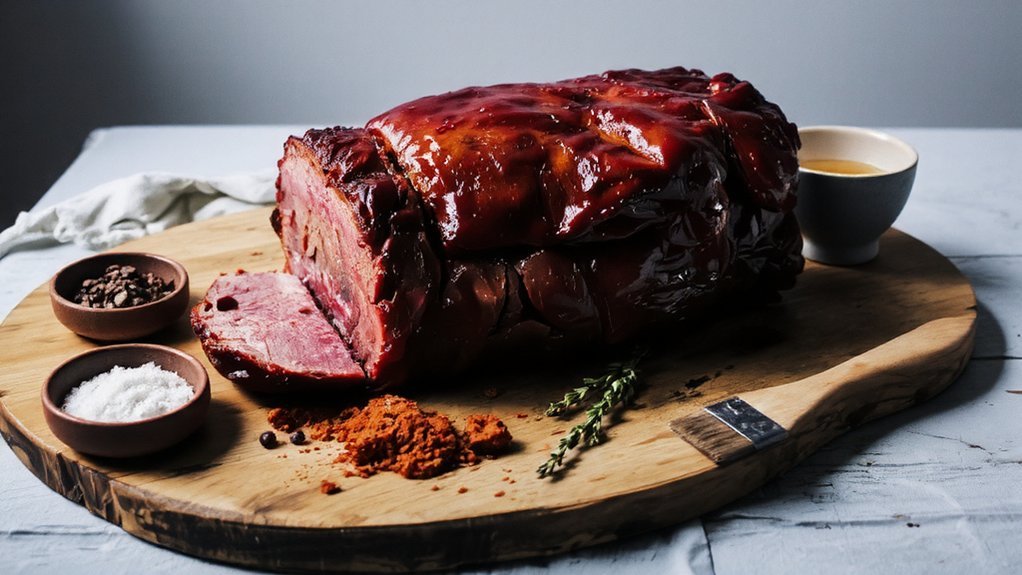
Salt is your steering wheel here, pepper the gas pedal. Start simple: kosher salt, cracked black pepper, maybe a whisper of garlic powder. You’re guiding flavor so guests feel cared for, not ambushed. I rub it in like sunscreen—edges, creases, every nook—then let it breathe while you tidy the kitchen and practice your victory speech.
| Approach | Flavor Snapshot |
|---|---|
| Salt-and-pepper | Pure beef, clean bark, honest bite |
| Simple spice blends | Paprika glow, garlic hum, gentle warmth |
| Herbed marinades | Rosemary-lemon lift, thyme whisper, silky finish |
Ready to play bolder? Mix brown sugar, smoked paprika, cumin, and chili, then smile like you meant mischief. For herbed marinades, whisk olive oil, lemon zest, crushed garlic, rosemary, and thyme. You’re building kindness, one fragrant layer at a time.
Oven Temperature and Time: The Low-and-Slow Method
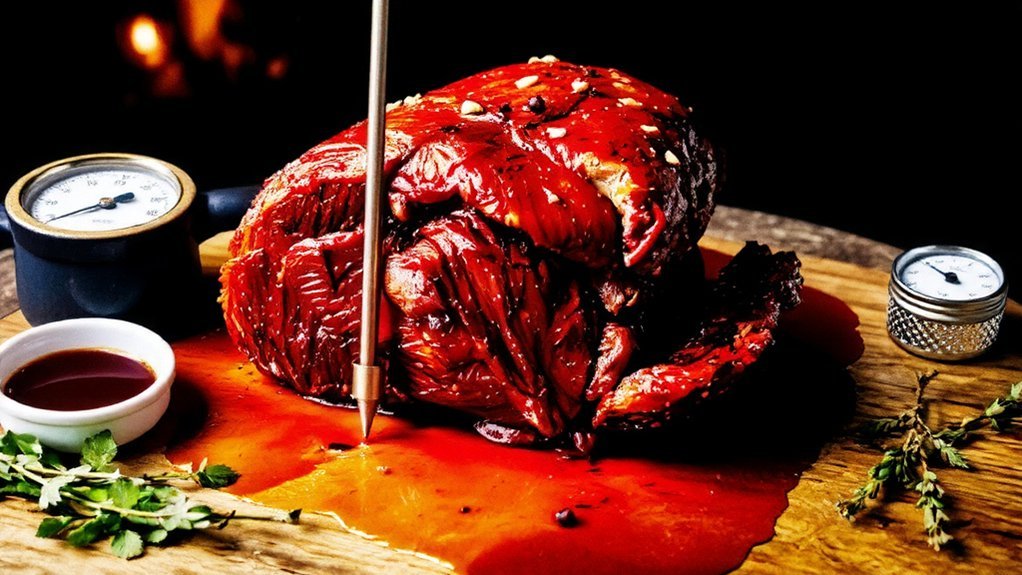
You’ll park that brisket in a cozy 250–275°F oven, low heat that melts collagen slowly while the kitchen smells like a smoky hug. For timing, plan roughly 60–75 minutes per pound until the thickest spot hits 195–203°F, then rest it, because patience tastes like butter. I’ll keep you honest with a timer, you keep me honest with a thermometer—deal?
Ideal Low-Temp Range
Two numbers matter most for low-and-slow brisket: 225–250°F and plenty of hours. That range is your ideal temperature for low cooking, the sweet spot where fat melts, collagen relaxes, and tough turns tender. Set the oven to 235°F if you like splitting the difference; I do, mostly because I’m indecisive and proud. You’ll hear gentle sizzles, smell peppery smoke vibes, and watch the surface darken into bark, not burn.
Keep the pan snug with foil, add a splash of broth or water, and park the brisket on a rack so the heat hugs it evenly. Don’t peek much. Every door open drops heat, steals moisture, and tests your patience. Be steady, be kind, and let slow heat do the serving for you.
Calculating Cook Duration
One simple rule keeps your timeline sane: plan about 1 to 1.5 hours per pound at 225–250°F, then add a cushion, because brisket runs on its own moody clock. You’re serving people, not the oven, so let’s nail cook time calculations with grace and a backup plan. Start with brisket weight, do the math, then build in 60–90 minutes for rest and wiggle room. I watch bark color, probe tenderness, and the vibe in the kitchen—smells deepen, juices glisten, patience pays.
| Brisket Weight | Estimated Cook Time |
|---|---|
| 3 lb | 3–4.5 hours |
| 5 lb | 5–7.5 hours |
| 8 lb | 8–12 hours |
| 10 lb | 10–15 hours |
| Rest | 60–90 minutes |
When a probe slides in like warm butter, you’re done. Serve proudly.
How to Tell When Brisket Is Done
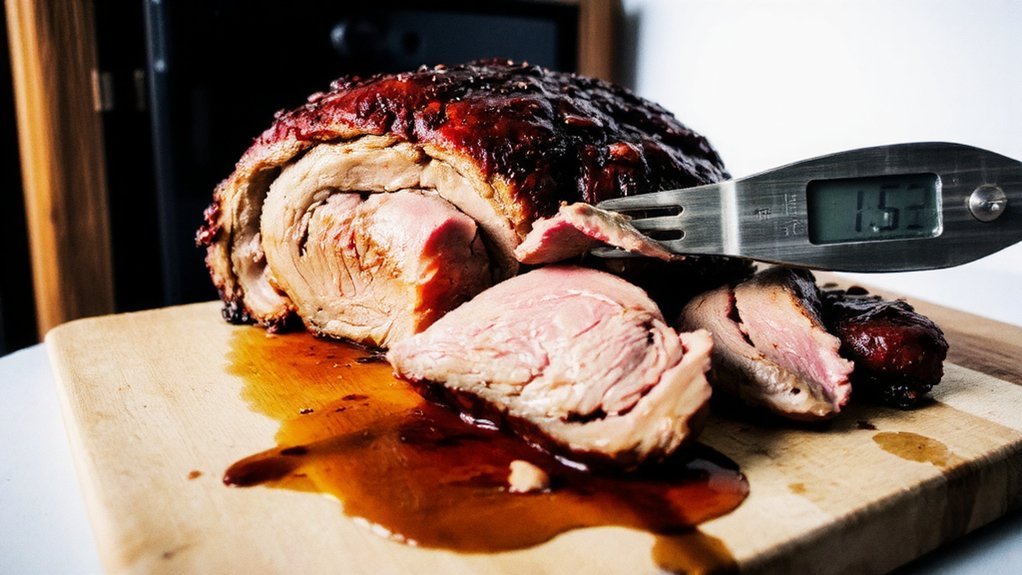
You’ll know brisket’s ready when your thermometer sings in the 195–205°F range, that sweet spot where fat melts and fibers loosen like a sigh. Then do the probe test: slide a skewer or thermometer tip into the flat and point, it should glide in like warm butter with almost no pushback. If it still grabs or squeaks, smile, shut the oven, and give it more time—I won’t tell.
Internal Temperature Targets
Forget guessing by vibe—brisket tells the truth with a thermometer. You’re cooking for people you care about, so let’s give them the good stuff, not a mystery roast. Here are the internal temperature guidelines I trust. Aim for 150–160°F during the stall, stay patient, keep the oven steady. Push through to 195°F, fat rendering, juices shimmering. For most ovens, the ideal doneness levels land between 200 and 205°F; collagen melts, slices hold, sandwiches sing. Cooking for shredding? Take it to 205–210°F, then rest like you mean it.
Here’s the move: insert a reliable probe in the thickest flat, avoid fat pockets and bone. Track temps, note plateaus, resist hero moves. When the numbers line up, pull it, wrap it, let it sigh.
Probe Tenderness Check
How do you know it’s done-done, not just hot and hopeful? You use probe techniques, gently, like you’re checking a sleeping baby’s blanket. Slide a thin skewer or thermometer into the flat and point. You’re hunting tenderness indicators, not numbers. If it glides in with zero pushback, like warm butter, you’re golden. If it catches, keep cooking, keep caring.
| What you feel | What it means |
|---|---|
| Crunchy road | Not ready, fibers still tight |
| Soft potholes | Close, give it time |
| Butter-slick | Done, slice dreams await |
| Jiggle city | Collagen melted, serve proud |
Probe in several spots, especially the thick end. Rest it, tented, 30–60 minutes. Then slice against the grain. You’ll feed folks smiles, not excuses.
Resting, Slicing, and Shredding Techniques
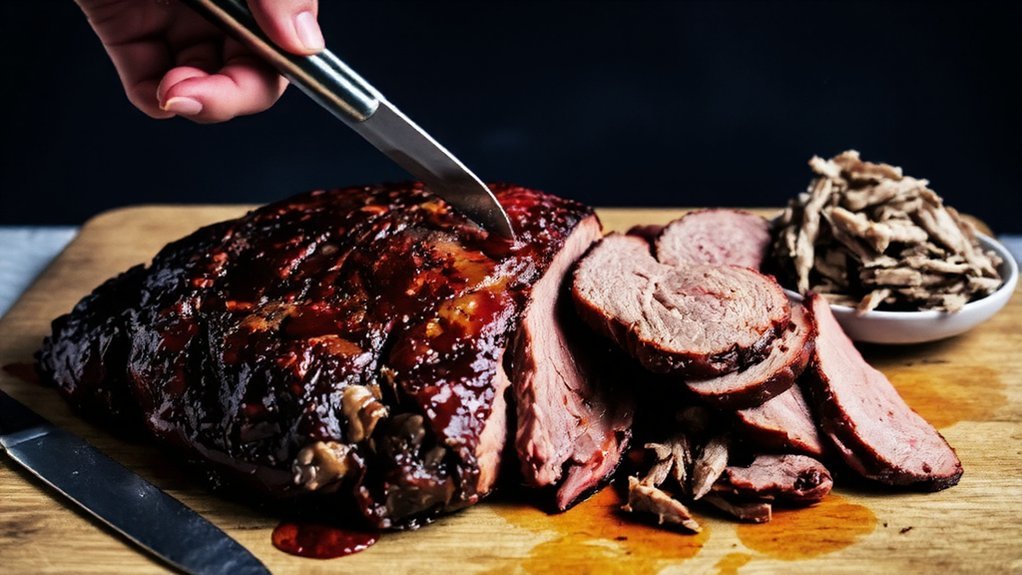
While the oven cools and the brisket sighs on the counter, we shift from cooking to discipline. Give it a generous resting time, 30 minutes minimum, tented loosely with foil. Don’t rush it—the juices redistribute, the bark softens slightly, the aroma turns from loud to velvet.
Now, knife up. For a clean slicing technique, find the grain on the flat, rotate the slab if needed, and carve 1/4-inch slices across the grain. Wipe the blade often, keep strokes long and confident. When you reach the point, switch gears. For a tender shredding method, separate the point, pull with gloved hands or forks, and mix the barky bits through. Toss in a spoon of juices for flavor infusion. Serve with pride, humility, and extra napkins.
Make-Ahead, Reheating, and Serving Tips
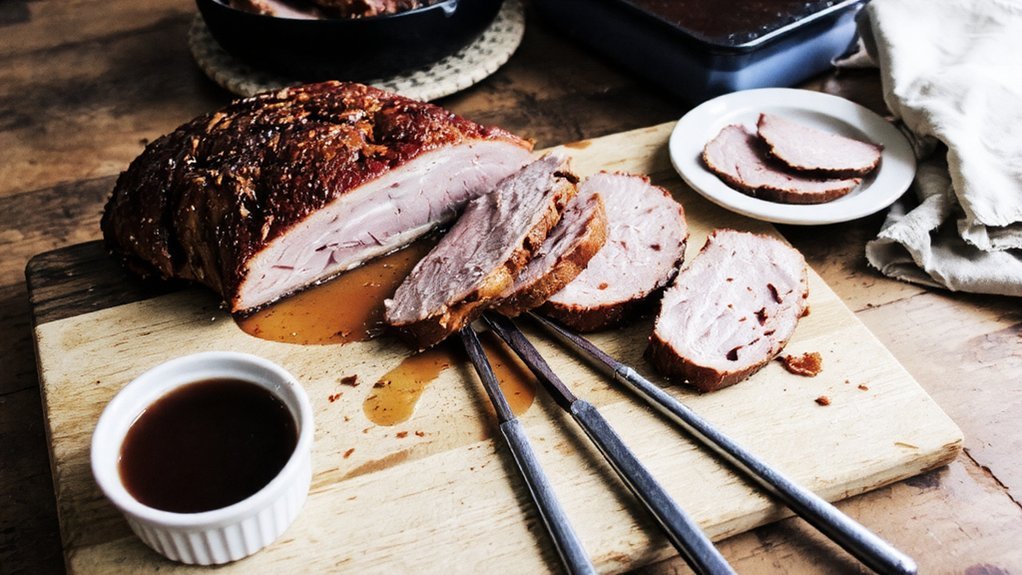
Because brisket is the ultimate time-bender, let’s play the long game and make it ahead, no stress, no panic plating. After roasting, chill it whole in its juices, uncovered until steam’s gone, then covered overnight. Fat firms, flavors marry, and tomorrow-you looks brilliant. For make ahead preparation, slice cold across the grain, lay slices in a shallow pan, spoon juices over, cover tight.
Reheat low and slow: 300°F oven, 25–35 minutes, until steamy and tender. Or warm sealed portions in a gentle simmering water bath, no drying, no drama. Keep a ladle of hot jus nearby, finish with a gloss.
- Warm plates, warmer hearts, pass napkins like confetti.
- Serving suggestions: pillowy rolls, tangy slaw, sharp pickles.
- Garnish with fresh parsley, a squeeze of lemon, instant lift.