
A neighbor once said brisket is like choosing a road trip: scenic, speedy, or hands-free Uber. You’ve got three lanes—smoker for big bark and backyard swagger, oven for steady heat and zero drama, slow cooker for set-it-and-forget-it tenderness that hugs your fork. I’ll walk you through cuts, timing, and the gear you actually own, no cowboy hat required. Pick your lane, I’ll bring the map—and the one trick pitmasters whisper when the coals run cold.
Brisket Basics: Cut, Grades, and Trimming
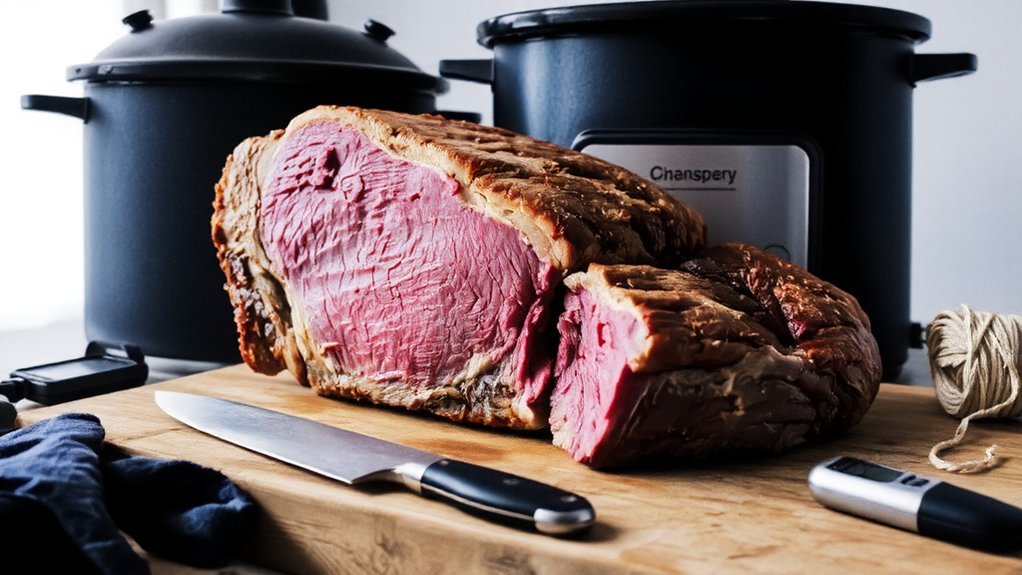
Before we chase smoke rings and bragging rights, let’s meet the brisket. You’re serving comfort, not ego, so start with the right brisket cuts. The whole packer has two muscles: the fatty point, rich and wobbly, and the leaner flat, tidy and slicer-friendly. I’d pick a packer for gatherings, then portion as needed. Check quality grades: Prime brings generous marbling and forgiveness, Choice works well with careful trimming, Select demands patience and extra moisture.
Now, trimming. Lay it cold, fat side up. Glide your knife, not hack it. Leave about a quarter inch of fat cap for protection, remove hard surface fat that won’t render, square the thin edges so they don’t dry out. Smooth, even, respectful—because your guests deserve your best.
Smoker Method: Bark, Smoke Ring, and Time
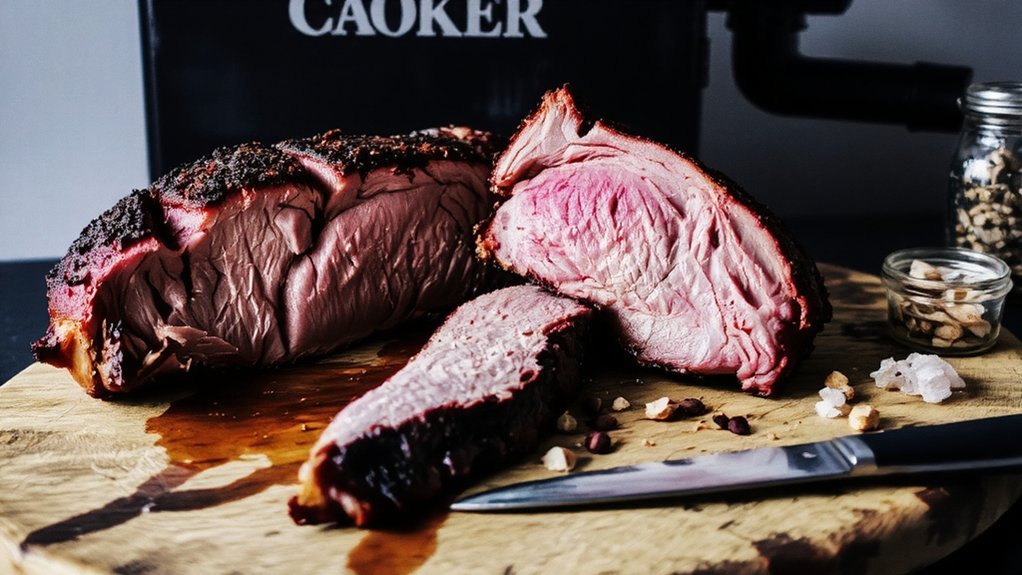
Two truths run your smoker: heat is the engine, time is the ticket. You’re here to serve joy, so chase bark formation like it’s your love language. Run 225–250°F, clean blue smoke, thin as a whisper. I spritz every hour after the rub sets, letting smoke infusion kiss the fat, not drown it. When the stall hits, be patient, wrap in butcher paper once bark is firm, then ride to 203°F, probe-tender.
Here’s your quick guide, tight and tidy:
| Target | Action |
|---|---|
| 225–250°F | Hold steady airflow |
| Thin blue smoke | Clean burn, sweet aroma |
| 4–6 hours | Build bark before wrapping |
| 160–170°F | Wrap when bark won’t smear |
| 203°F, probe like butter | Rest 1 hour, slice against grain |
Serve proud, slice juicy, watch smiles.
Oven Method: Consistency, Crust, and Control
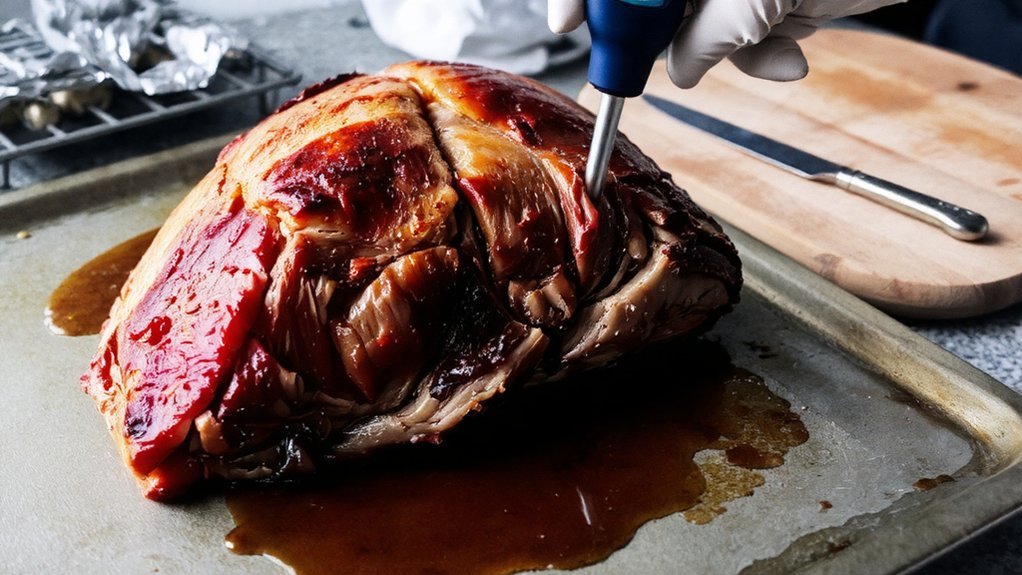
Smoke kissed your brisket dreams, sure, but the oven is your quiet assassin—steady heat, zero guesswork, and no raccoon judging your fire at 3 a.m. You want consistency? Set the oven temperature, honor the cooking time, and serve slices that make people feel seen. I’m talking seasoned fat cap up, a tight foil wrap, then patience.
Start hot, 300°F for an hour to jumpstart the crust. Drop to 250°F, ride it slow till 195–203°F internal, juices humming. Don’t rush; the stall is real, but you’re calmer than a choir director.
When it probes like warm butter, rest it, still wrapped, 45 minutes. Unwrap. Broil 2–4 minutes for a proud, blistered bark. Slice against the grain, point and flat separated, and plate with purpose.
Slow Cooker Method: Set-It-and-Forget-It Tenderness
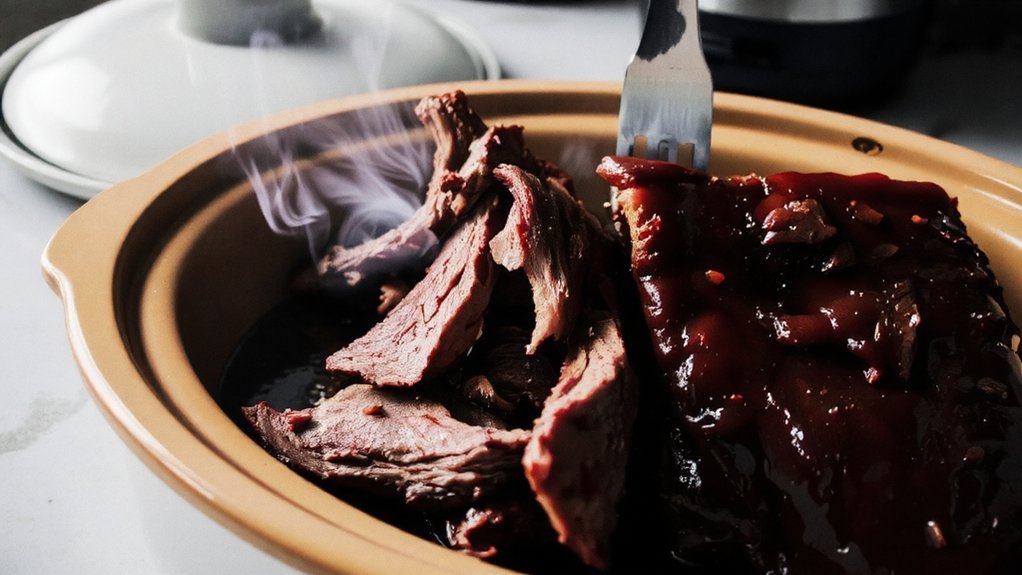
Even if you’ve got the patience of a gnat, the slow cooker turns brisket into velvet without you babysitting a flame or a thermometer. You season boldly, sear if you want swagger, then nestle the meat in onions, garlic, and broth. Lid on, low heat, long nap. That’s the slow cooker benefits playbook—steady moisture, forgiving timing, melt-in-mouth slices that plate beautifully for guests.
Here’s why your people will feel seen and fed:
Here’s why your people will feel seen and fed: gentle heat, hands-free hours, consistent crowd-pleasing comfort.
1) Gentle heat coaxes collagen into buttery tenderness, no drama.
2) Hands-free hours free you to set tables, call Grandma, breathe.
3) Consistent results mean second helpings, not second guesses.
Lean into recipe variations: smoky chipotle with orange, classic thyme and bay, or soy-ginger with star anise. Serve proudly, carve warm, accept applause.
Side-by-Side Comparison: Flavor, Texture, Effort, and Cost
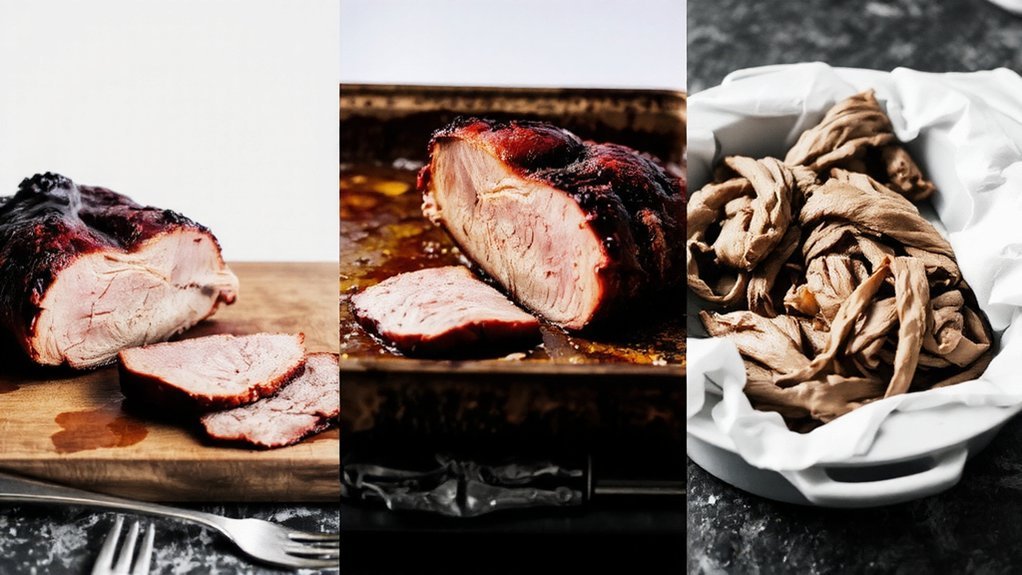
While the smoke clears and the timers stop beeping, let’s line these brisket methods up like contenders and call what we taste. You want flavor profiles that make guests lean in. The smoker benefits are bold: bark crackles, fat renders, and that mahogany ring whispers, “Seconds?” Texture’s tug-and-chew, juicy, elegant. Effort’s higher, fuel and patience required, but the applause is real.
Oven brisket? Reliable, roomy, straightforward. Yet oven drawbacks show up: milder crust, less depth, higher energy costs if you babysit temps. Still good, just not smoky-grand.
Slow cooker advantages shine for service: hands-off ease, forgiving heat, budget-friendly. Meat turns spoon-tender, brothy, cozy. The trade-off, of course, is bark—nearly none. So, you finish under the broiler, smile, and plate with pride.
How to Choose: Equipment, Schedule, and Crowd Size

Decision time, brisket boss: let’s match your gear, your clock, and your guest list like puzzle pieces that actually click. Start with equipment selection: oven for steady heat and easy cleanup, smoker for deep bark and bragging rights, slow cooker for set‑and‑forget tenderness. Now, schedule planning—be honest. If you’ve got a Saturday to babysit temps, smoke it. Busy weekday? Slow cooker wins. Hosting tonight? Oven’s your reliable friend.
Crowd considerations matter. Count plates, then match cooking capacity. Big crew needs a full packer, maybe two; smaller crowd, a trimmed flat works. I’ll shoot you straight—don’t promise seconds you can’t deliver.
1) Picture their faces when the lid lifts—goosebumps.
2) Hear the hush, then the happy sighs.
3) Serve generously, rest proudly.