
You want brisket that melts like butter and snaps with peppery bark? Perfect. Grab a well-marbled packer, trim it neat, then hit it with a bold rub—heavy on salt and cracked black pepper, a kiss of paprika. Set your smoker steady at 235°F, clean smoke only, and don’t panic at the stall—we’ll wrap smart. Rest it till the jiggle’s real, slice pencil-thick, serve with pickles. Sounds simple, right? Here’s where it gets spicy.
Choosing the Right Brisket Cut and Grade
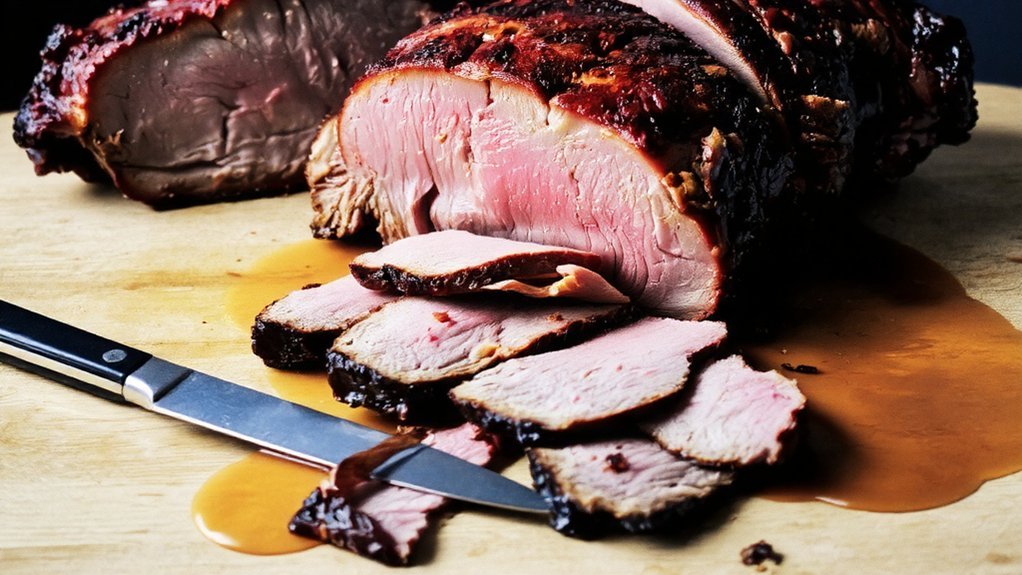
Before we even fire up the smoker, let’s pick the right brisket, because the cut you choose decides your destiny. You’re cooking to bless people, so start strong. Look for a whole packer, point and flat attached, supple in the hand, not stiff. Check fat content like a jeweler studies diamonds. You want creamy white marbling through the flat, a quarter-inch fat cap, trimmed but protective.
Now brisket grading, it matters. Prime brings generous marbling, melts into buttery bites. Choice, a solid, budget-friendly hero, still tender if you baby it. Select, I’ll be honest, needs extra care, or it sulks.
Grab a brisket with even thickness, rounded corners, no ragged edges. Bend it—does it flop? Good sign. Imagine the slices, juicy, glistening, your guests grinning.
Essential Tools, Fuel, and Wood Selection
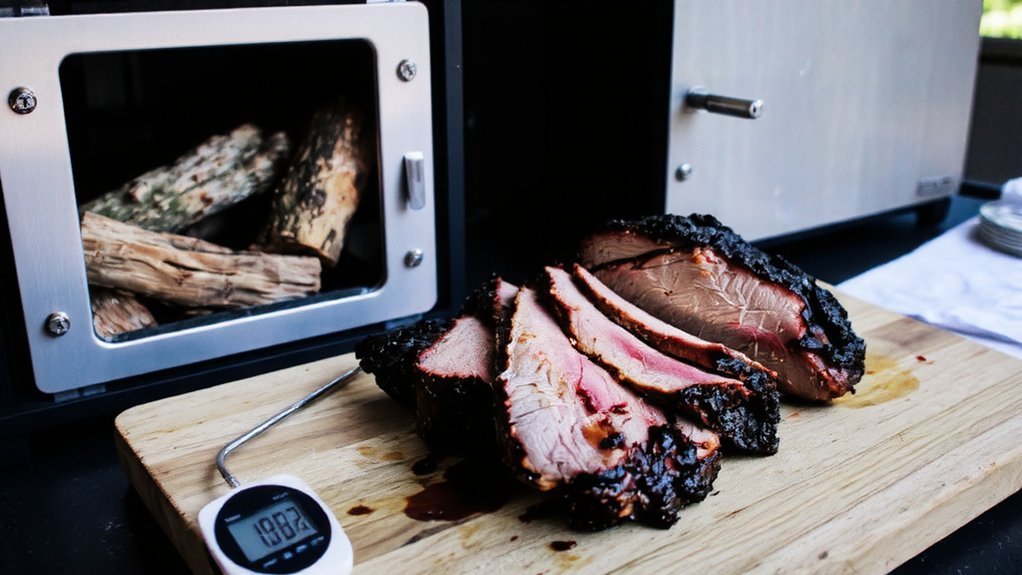
You’ll need a few MVPs on deck—reliable smoker, instant-read thermometer, sturdy tongs, a water pan that actually holds water, and a spritz bottle that doesn’t wimp out. Next, pick your heat: charcoal brings classic smoke and bark, pellets give push-button ease and steady temps—I won’t judge, I’ve burned both. For wood, reach for post oak or oak as your backbone, add hickory for muscle, or toss in apple/cherry for a sweet, rosy kiss.
Must-Have Smoking Tools
Three things turn brisket smoke from guesswork into gospel: the right tools, the right fuel, and wood that smells like heaven and burns like it means it. You’re cooking for people you care about, so let’s gear up. I start with a reliable smoker thermometer—dual-probe, accurate, not drama-prone. One probe rides the grate, one burrows into the flat. Next, a sturdy chimney starter, because lighter fluid tastes like regret. Long tongs and heatproof gloves keep you nimble, safe, and generous with help. A sharp slicing knife, long and flexible, honors every juicy slice. Water pan? Yes—steady temps, softer bark, richer flavor infusion. For clean fires and smart smoking techniques, keep a digital timer, airflow damper tool, and a tidy ash rake.
Charcoal vs. Pellets
Gear in hand, let’s talk firepower, because brisket worships heat with personality. You’ve got two paths: charcoal or pellets. I’ve danced with both, burned my eyebrows, fed plenty of happy crowds.
Charcoal benefits? Control and soul. You manage airflow, build a glowing bed, feel the pit breathe. It sears hotter, holds bark beautifully, and rewards attention. You’ll tinker vents, stir coals, and smell that deep, old-school smoke as neighbors drift over, plates in hand.
Pellet convenience? Set it, check temps, serve on time. A hopper hums, a controller babysits, and you focus on sides, sauce, and smiling guests. It’s steady, predictable, clean. No ash storms, no guessing games, just consistent heat and happy schedules.
Pick the tool that fits your service style, then cook like you mean it.
Best Wood Choices
A brisket sings when the wood’s right, so let’s stock the pit with flavor, not drama. You’re feeding people you love, so pick wood that treats them kindly. Start with post oak, clean and steady; it’s classic Texas, pure beef booster. Add hickory for bolder wood flavor, but go easy—too much turns preachy. Cherry brings a rosy bark and gentle sweetness; guests notice, plates empty. Apple’s mellow, perfect for brunch crowds and picky cousins. Mesquite? Use sparingly, like hot sauce—great kick, quick regret.
Now, smoking techniques. Burn seasoned chunks or splits, not sappy logs. Aim for thin blue smoke, not white clouds of sadness. Mix woods in layers, adjust as bark darkens, and keep airflow honest. Serve slices, accept applause, pretend you’re humble.
Trimming and Prep for Optimal Bark
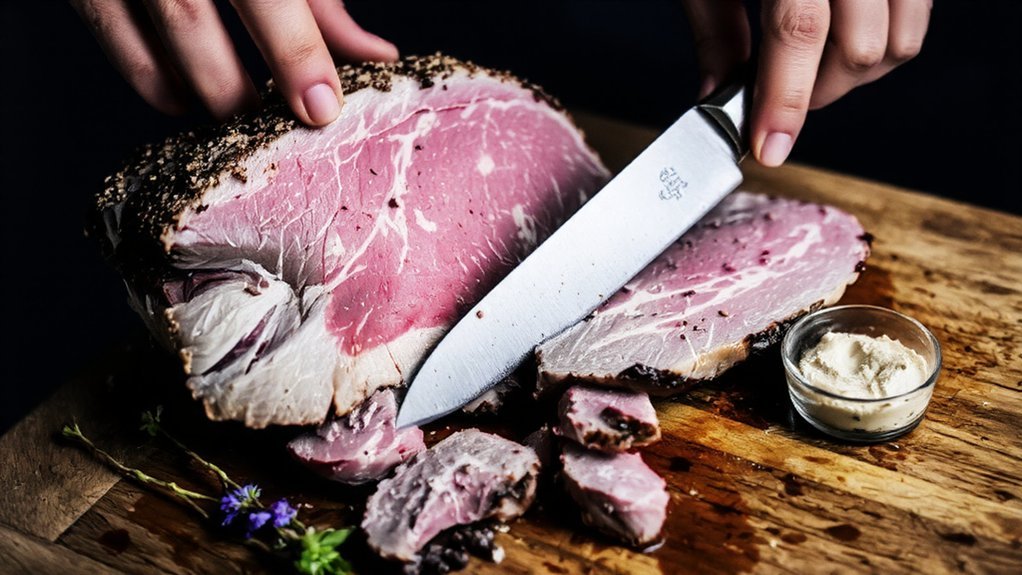
Before the smoke ever kisses that brisket, the magic starts with a sharp knife and a little tough love. Flip the slab, trim the fat cap to a steady quarter inch, smooth and even, so heat hugs it kindly. Shave off silver skin and wispy edges; they burn ugly, not heroic. Square the corners for uniform cooking, then pat it dry till it squeaks. You’re building bark texture now, not later. Light oil, gentle binder, then a confident dusting of bark seasoning basics—keep it simple, purposeful, servant-hearted.
| Step | Action | Why it Matters |
|---|---|---|
| 1 | Trim fat cap to 1/4″ | Even rendering, better bark |
| 2 | Remove silver skin | Clean bite, no curl |
| 3 | Square edges | Consistent cook |
| 4 | Pat dry | Crust formation |
| 5 | Light oil | Adhesion, color |
The Perfect Dry Rub: Ratios and Variations
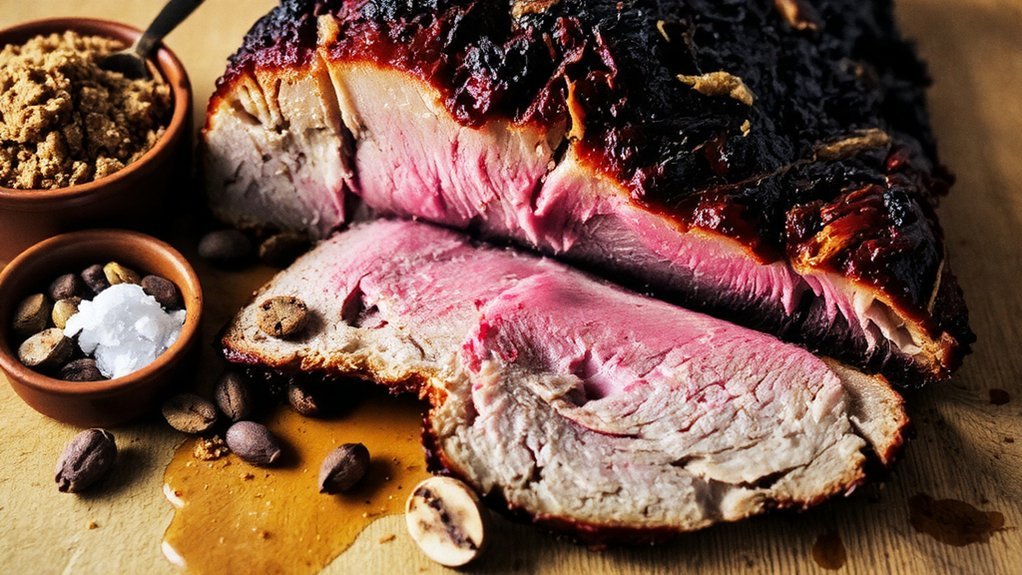
You’re about to balance sweet and savory like a pitmaster on a tightrope—start with a 1:1 salt-to-sugar ratio, then nudge it sweeter for heavier smoke or saltier for a crisper bark. Next, set your heat level: black pepper for a steady thrum, cayenne for a quick jab, chipotle for smoky warmth—taste it dry on your fingertip, feel the tingle, adjust. I’ll cheer while you tweak, because nothing beats that first whiff of peppery-sweet rub hitting warm beef, and yes, I’m already pretending it was my idea.
Salt-To-Sugar Balance
Goldilocks math, but for meat: the sweet-salty balance in your brisket rub makes or breaks the bark. You’re cooking to bless people, so let’s nail this. I start with a 2:1 ratio, salt to sugar, then tweak by taste. Different salt types matter—kosher grips well, sea salt brings minerals, flaky melts slower. Taste a pinch. It should sparkle, not sting.
Sugar adds caramel notes and bronzed crust. White sugar is clean, brown adds molasses charm. Watching carbs or smoke temps? Try sugar alternatives: coconut sugar, maple sugar, or a whisper of honey powder. Keep it dry, keep it even. Rub, rest, then press your palm across the surface—grains should cling like confetti. If it screams sweet, add salt. If it bites, bump sugar. Perfect.
Spice Heat Levels
Salt and sweet are in harmony, so now we light the fuse. You’re guiding guests, not daring them, so choose heat that flatters, not bullies. I start with black pepper’s steady thump, then layer paprika for color and smoke, cayenne for a clean kick, and chipotle for a warm, husky glow. That’s your ladder.
Do quick heat tolerance testing: pinch of rub on the tongue, sip of water, quick breath. Count to five. Too tame? Add cayenne by quarter-teaspoons. Too fierce? Fold in more paprika and brown sugar. Keep notes on spice flavor profiles—bright cayenne, fruity ancho, earthy cumin, citrusy coriander—so you steer with purpose.
Final check: rub a fingertip on sliced fat, taste, smile. If it sings, they’ll cheer.
Smoking Timeline: Temps, Stalls, and Wrapping
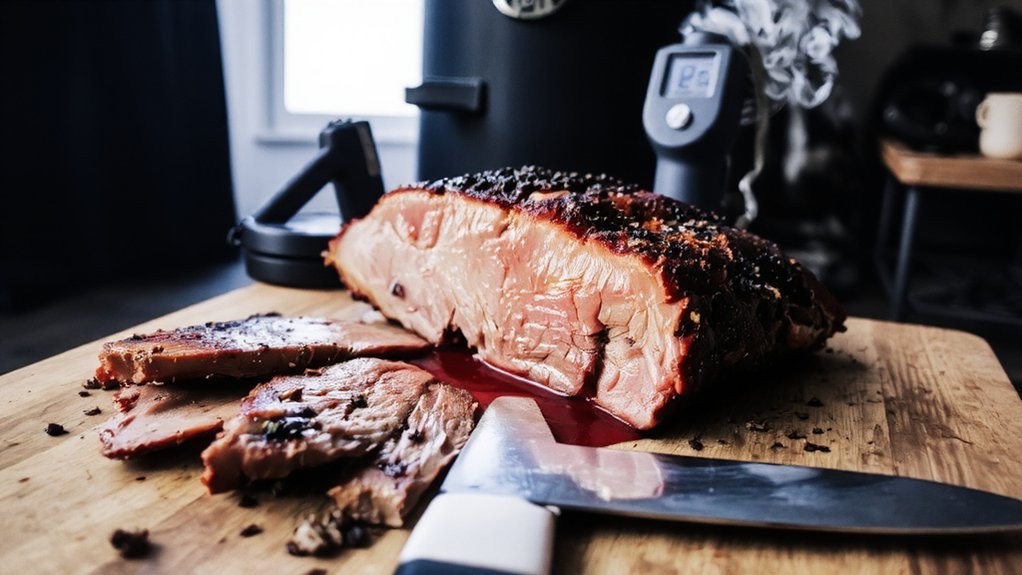
While the smoke rolls and the neighbors pretend they’re not jealous, here’s the play-by-play you actually need: brisket loves a slow climb, not a sprint. Aim for 225–250°F, steady and kind. Expect temperature fluctuations; they’re normal, like toddlers and Wi‑Fi. Your smoking duration? Plan 1 to 1.5 hours per pound, but cook by feel, not the clock.
At 150–170°F internal, the stall hits. Moisture evaporates, cooling the meat, and you’ll think time stopped. Breathe. Hold course, or wrap. I like butcher paper for a drier bark, foil for speed. Spritz before wrapping, snug but not suffocating. Back on the pit, same pit temp, probe tenderness as you near finish. When the probe slides in like warm butter, you nailed it. Neighbors suddenly appear. Weird.
Resting, Slicing, and Serving Like a Pro
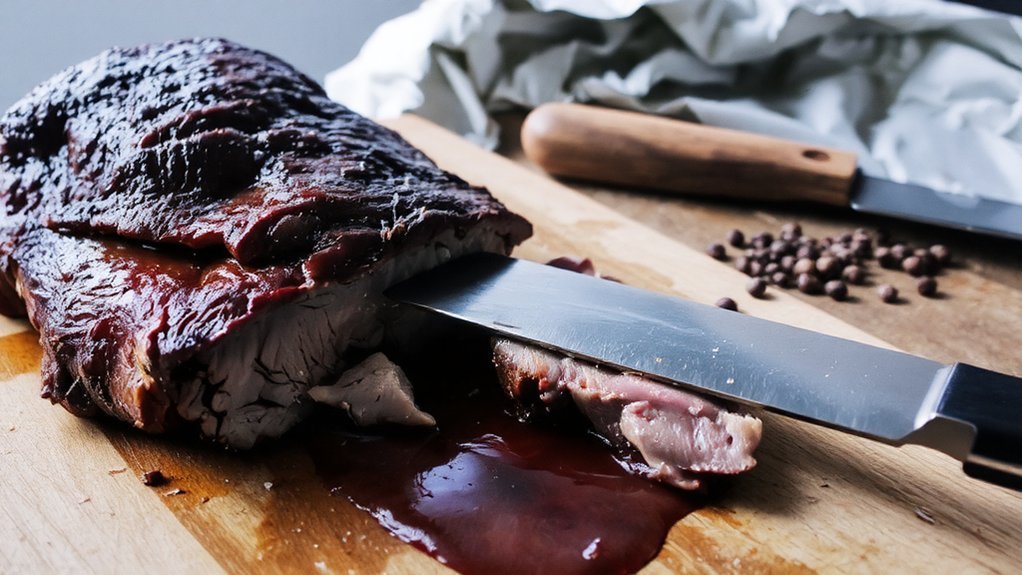
Brisket’s humming at temp, the probe slid in like butter, so don’t wreck the ending by rushing the curtain call. Park it in a dry cooler, wrapped in paper and towels, 1–3 hours. That’s one of the best resting techniques for juicy slices and grateful guests. When you’re ready, separate point from flat, find the grain, and switch angles at the seam. Sharp slicing methods matter, like, heroically.
Park it in a dry cooler, wrapped tight, then slice smart—switch angles, save juices, bask in glory.
- Hold the knife level, make 1/4-inch slices on the flat, thicker on the point.
- Save juices, drizzle over slices, then whisper, “You’re welcome.”
- Warm plates, serve fast, keep smiles longer.
For serving suggestions, pair with tangy pickles, soft rolls, and bright slaw. Presentation tips? Fan the slices, shine with jus, sprinkle chopped parsley, then step back.
Troubleshooting Common Brisket Pitfalls
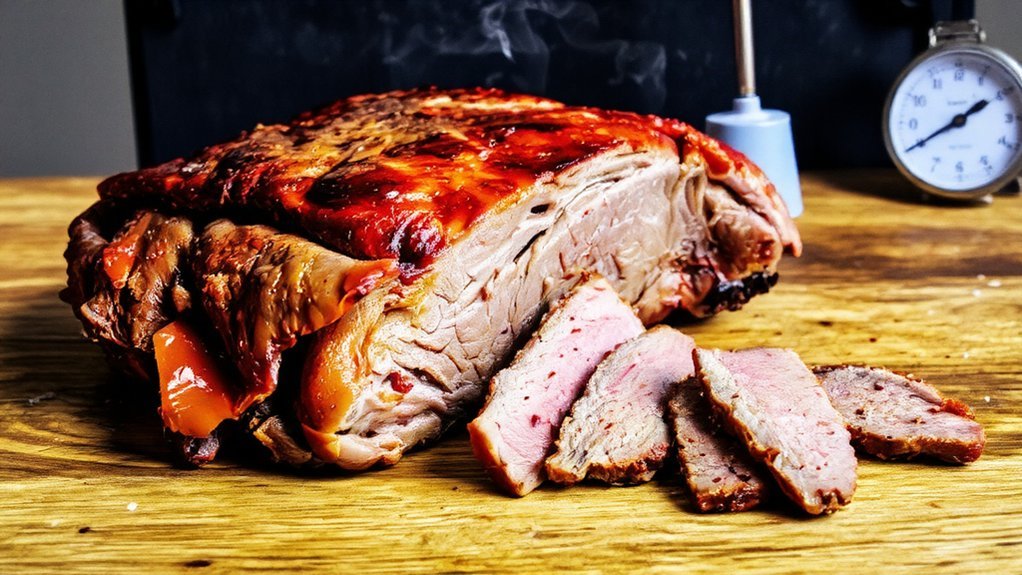
Even with your smoker purring and your confidence high, brisket can still throw curveballs—dry edges, rubbery bark, weepy slices, or that dreaded pot-roast texture. I’ve been there, apron stained, pride dented. Here’s how you serve joy, not excuses. Watch brisket texture first: probe like warm butter, not mashed potatoes. If you hit doneness issues, extend the cook, lower heat, rest longer. Dry edges? Trim less, spritz more, wrap earlier. Rubbery bark? Unwrap to finish, let it set. Pale smoke rings? Clean fire, cold meat, thin blue smoke.
| Problem | Cause | Quick Fix |
|---|---|---|
| Dry edges | Too much trim, heat spikes | Spritz, wrap sooner |
| Tight slices | Under-rendered | Cook longer, rest |
| Mushy feel | Overcooked | Shorten hold |
| Bitter bark | Dirty smoke | Vent, clean fire |
| Weak smoke rings | Hot start | Start meat colder |