
You’ve seen Aaron Franklin flick a knife under a fat cap like it’s a magic trick—spoiler, it’s the blade doing half the work. You need a narrow, semi-flexible 6–8 inch cutter with a pointed tip and gentle belly, something that slides, not hacks, through cold fat. High-carbon stainless, comfy handle, no wrist drama. I’ve tried the good, the bad, and the bendy. Want zero waste and silky slices? Let’s separate heroes from drawer clutter.
What to Look for in a Brisket Trimming Knife
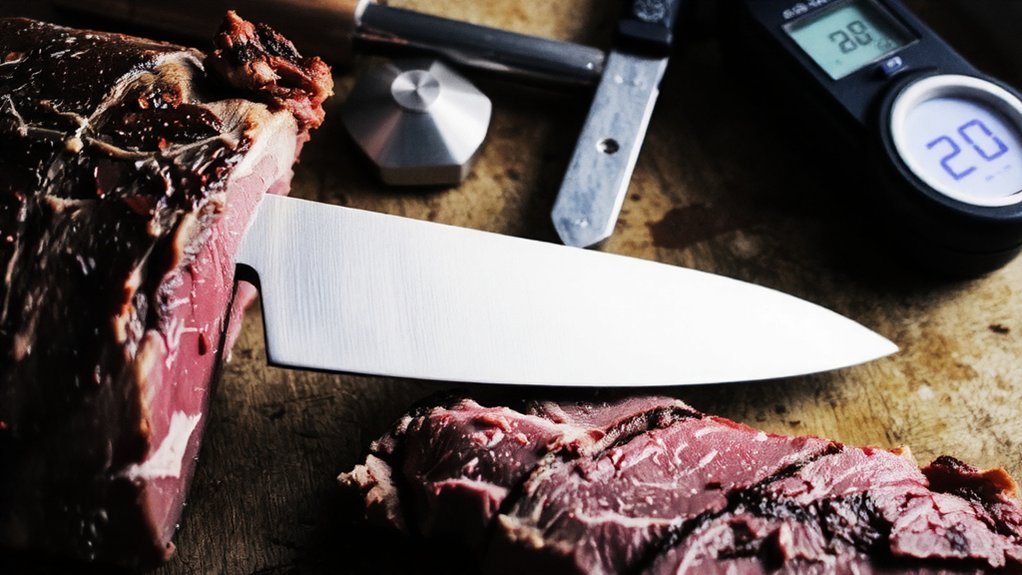
Ever wonder why some knives glide through brisket fat like a hot skate on ice while others chew and stall? You want a blade that hugs curves, not fights them. Look for a narrow, slightly flexible edge, 6–8 inches, with a pointed tip for detail work. A thin grind slices silver skin clean; a gentle belly helps you skim fat without gouging meat. Grip matters, so pick a handle with traction when slick, not pretty-but-slippery. Balance should feel neutral, nimble, like it reads your mind.
Now, trimming techniques meet knife maintenance. Keep a keen edge—hone lightly before each session, sharpen when it grips instead of glides. Choose stainless for easy cleanup, or high-carbon if you’ll oil it. Your brisket—and guests—will notice.
Boning vs. Fillet vs. Trimming Knives: Key Differences

You’re about to meet three blades with distinct personalities, so let’s talk blade shape and flex—stiff boning knives punch through silver skin, fillet knives bend and glide like ballerinas, and trimming knives split the difference for clean, confident sweeps. Edge geometry matters too: tighter bevels slice whisper-thin fat like satin, broader edges muscle through gristle without whining. And the handle, your anchor—seek grip, balance, and control, so your wrist stays steady, your cuts stay tidy, and your brisket looks like you meant it.
Blade Shape and Flex
While the brisket rests on your board like a sleepy bulldog, the real game begins with blade shape and flex—because boning, fillet, and trimming knives aren’t interchangeable twins, they’re cousins with attitude. You’re serving people you care about, so pick the right cousin. Boning knives, with modest blade curvature and a semi-stiff spine, slip along cartilage, pop seams, and steer around knobs without drama. Fillet knives bend more, hugging contours; they glide under silver skin, but can wobble in dense fat. Trimming knives split the difference: a gentle curve, controlled flex, and a point that finds pockets of hard fat.
Here’s the cutting technique: anchor your wrist, use short strokes, let flex do the hugging, not the detour. Feel the tug? Adjust pressure, keep contact, stay kind, stay tidy.
Edge Geometry Differences
Because steel meets meat at the edge, geometry decides everything: how clean your slices look, how much effort you spend, and whether the brisket forgives you. So let’s talk edge geometry and blade angles, the quiet heroes behind those silky slices you serve with pride. Boning knives run steeper, around 18–22 degrees, sturdy for cartilage and silver skin. Fillet knives go slimmer, 12–16 degrees, gliding like a skater under fat caps. Trimming knives split the lane, 14–18 degrees, crisp on bark, gentle on meat. You’ll feel the difference—less drag, fewer tears, more applause.
| Knife Type | Edge Geometry / Blade Angles |
|---|---|
| Boning | Steeper, 18–22° |
| Fillet | Slim, 12–16° |
| Trimming | Mid-slim, 14–18° |
| Purpose | Power vs. glide balance |
| Result | Clean, fast, forgiving cuts |
Handle and Control
Some knives feel like a handshake, others like a wrestling match. When you’re trimming brisket for guests, you need calm control, not chaos. Boning knives give you tight turns around fat seams, the narrow handle guiding your wrist like a paintbrush. Fillet knives flex, great for long, smooth glides, but they can wobble if blade balance is off. Trimming knives split the difference—enough stiffness for push cuts, enough finesse for detail work.
I want you to feel the knife settle in, grip comfort dialed in, no hotspots. Textured scales help when things get slick, and a modest finger guard keeps confidence high. Choke up on the spine, test the tip, then let the handle do its quiet magic. You’ll carve cleaner, faster, kinder.
Blade Steel and Edge Retention That Stand Up to Fat
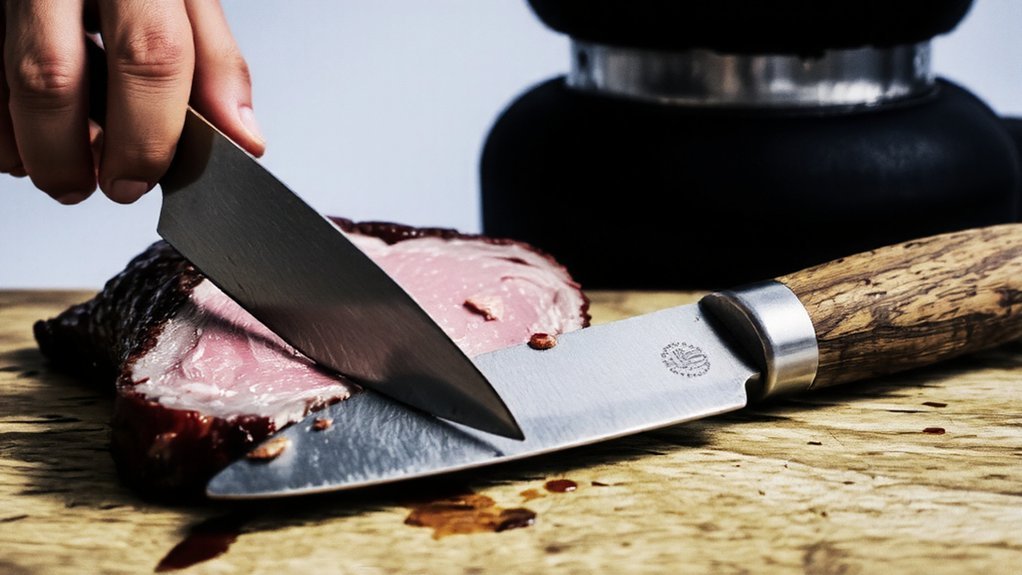
Even after you’ve wrestled a brisket onto the board, the real fight is with fat, and that’s where blade steel and edge retention earn their paycheck. You need steel that shrugs off gristle, slides through tallow, and keeps its bite. I’m talking real blade durability, not weekend-warrior shine. High-carbon stainless balances hardness and stain resistance, so you’re not babying the knife while guests wait hungry.
- Hardness matters: a 58–61 HRC edge holds up during long trims, without chipping on cartilage.
- Fine carbides, tighter grain: cleaner slices, less drag, fewer resharpens between flats and points.
- Polished, thin edge: glides through cold fat, then warm fat, like it’s paid to.
- Smart cutting techniques: short, confident strokes, wipe often, keep friction low, serve faster.
Curved vs. Straight Blades for Precision Control
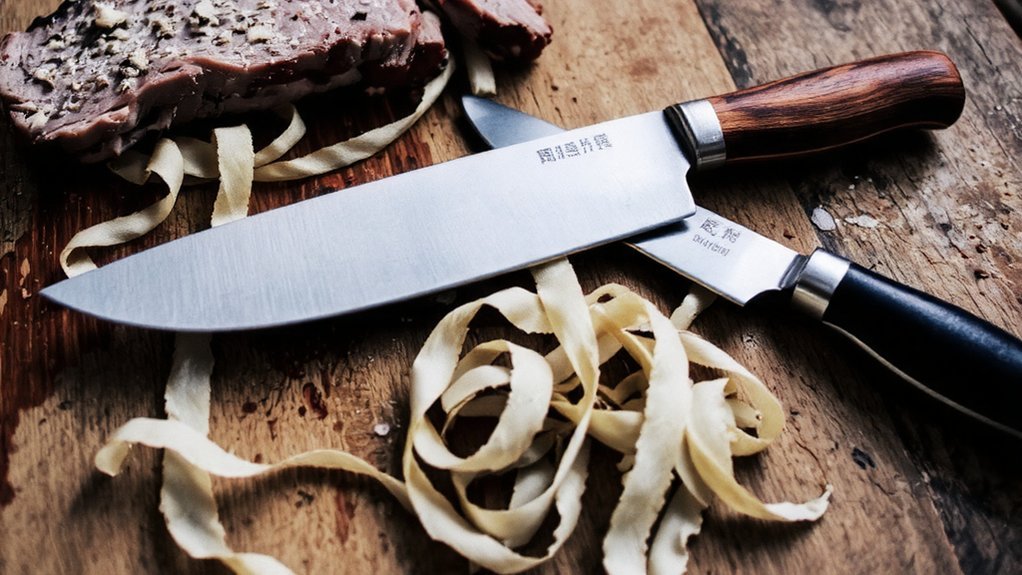
You’ve got two blade shapes on the cutting board, and your hand knows the truth before your brain does—ergonomics and grip either lock in or they don’t. A curved blade rolls under the fat cap like a kayak in smooth water, letting you scoop and sweep, while a straight edge tracks clean lines, keeps you honest, and makes neat, confident passes. When you need tip control precision—sneaking under silver skin, tracing tight seams—I’m betting you want that point steady, your wrist relaxed, and your cuts crisp enough to make the dog sit up straighter.
Ergonomics and Grip
Grip is the quiet hero when you’re trimming brisket, and the blade’s shape decides how that hero behaves. You want control that feels natural, steady, and generous, because you’re cooking for others, not wrestling steel. I look for handle materials that sit calm in the palm—rubberized composites, dense wood, grippy polymers. Then I test grip textures, wet or greasy, because brisket isn’t polite. Curved blades invite your wrist to roll; straight blades keep your line honest. Either way, the handle must stay anchored, no drama, just service.
- Lock your wrist, guide with fingers, let the knife glide.
- Choose a balance point near your pinch, not your ego.
- Keep knuckles clear; save the heroics for plating.
- If it slips once, it’s fired.
Fat Cap Maneuvering
Control starts in your hand, but the fat cap decides if you actually mean it. When you’re serving others, you want clean bites, not greasy regrets, so pick your blade like you pick your guests—on purpose.
Go curved when the fat ripples and domes. That belly rides contours, skims with shallow arcs, and lets you feather off waxy layers without gouging meat. You’ll feel the glide, then a soft give, like peeling paint in smooth ribbons. Straight blades shine on flats and long runs—think ruler-straight lanes for steady, even passes.
Use smart fat cap techniques: anchor the brisket, pull the skin taut, slice away from your fingers. Build trimming strategies: mark a quarter-inch target, work in sections, wipe often, reset your angle, stay calm, keep it generous, not sloppy.
Tip Control Precision
A sharp tip is your paintbrush, and brisket is a finicky canvas that moves when you blink. You’re here to serve, not shred, so let’s talk tip control. Curved blades roll through silver skin, riding contours like a canoe in calm water. Straight blades track true, laser-line cuts when you need absolute blade control. I switch between both, no shame, because precision trimming is a team sport.
- Curved tip: glide along fat seams, peel, lift, whisper-thin slices.
- Straight tip: point-and-place, exact pokes, tight turns near bark.
- Choke up on the handle, pinch the spine, steady wrist, small strokes.
- Let the tip lead, not your ego; pause, reset, breathe.
When guests smile, you’ll forget the scraps. That’s the win.
Flexibility: When a Flexible Edge Beats a Stiff One
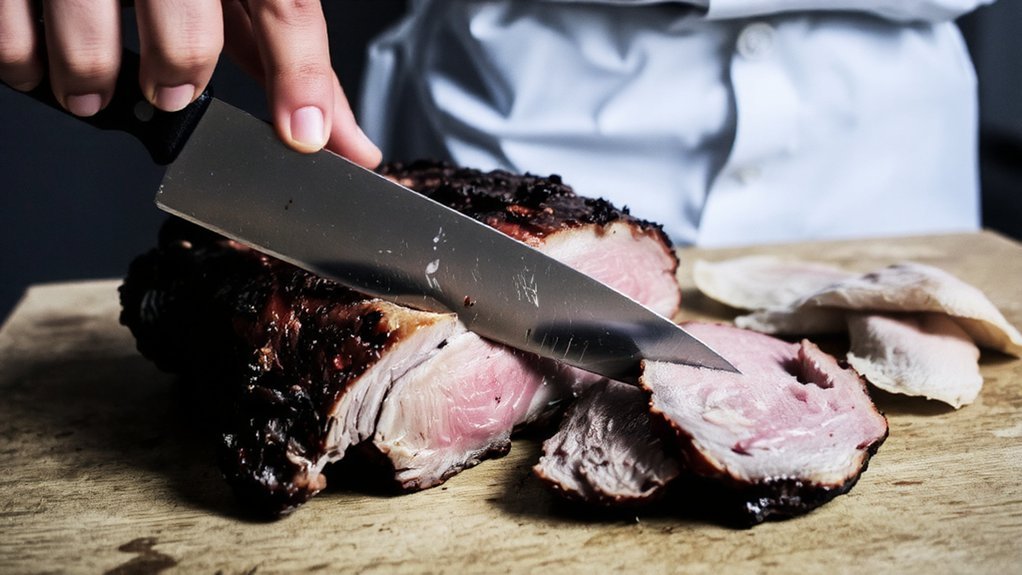
Because brisket isn’t a neat little rectangle, a flexible blade earns its keep where a stiff one stumbles. You’re tracing fat seams, riding silver skin, dodging pockets of soft, jiggly goodness. A bendy edge hugs curves, skims just under the fat cap, and leaves meat intact. That’s the flexibility benefits sweet spot—clean trims, fewer oops moments, happier guests.
I like to slide in, feel the blade bow, then pop out with a ribbon of fat curling like orange peel. You get edge versatility, too—tip for tight corners, mid-blade for long sweeps, heel for firm nudges. Hear that whispery slice? That’s control. Less sawing, more gliding. You move faster, waste less, serve more. And yes, your brisket looks photo-ready, without the panic sweat.
Handle Ergonomics and Grip for Long Prep Sessions
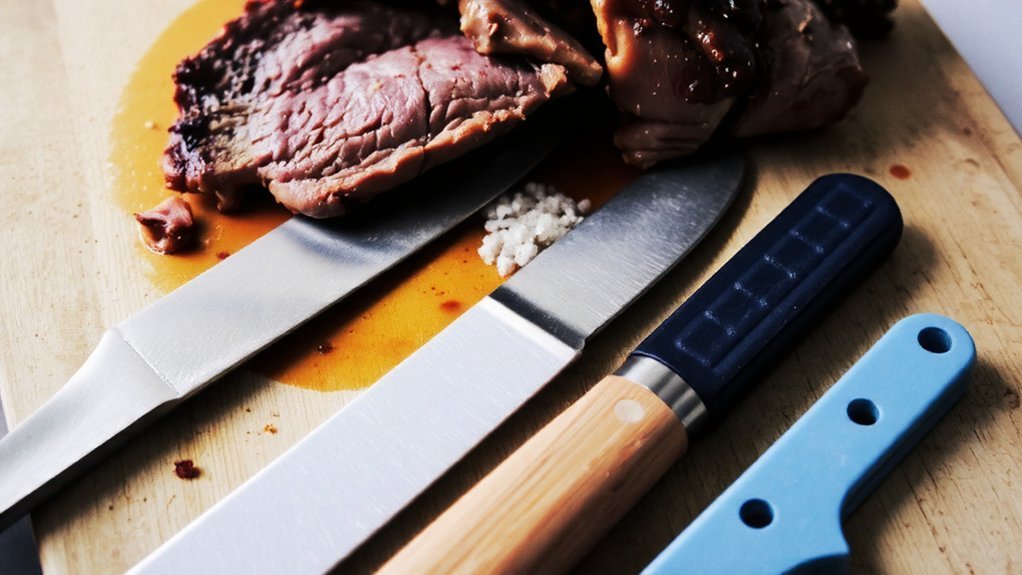
If your hand cramps halfway through trimming, the knife didn’t just fail—you did, by picking a handle that hates you. You’re serving guests, not your carpal tunnel, so chase comfort first. I look for a palm-filling shape, a gentle swell at the butt, and a secure pinch near the bolster. The right handle materials and grip textures keep your fingers anchored when fat gets slick, and they quiet those micro-shakes that turn neat lines into jagged snowbanks.
- Choose contours that match your palm, not your ego; bigger isn’t always better.
- Prioritize tacky grip textures that stay confident when wet, greasy, or both.
- Balance matters; a neutral see-saw saves stamina over long shifts.
- Test hot spots; any rub today becomes a blister by brisket number three.
Maintenance: Sharpening, Honing, and Care Tips
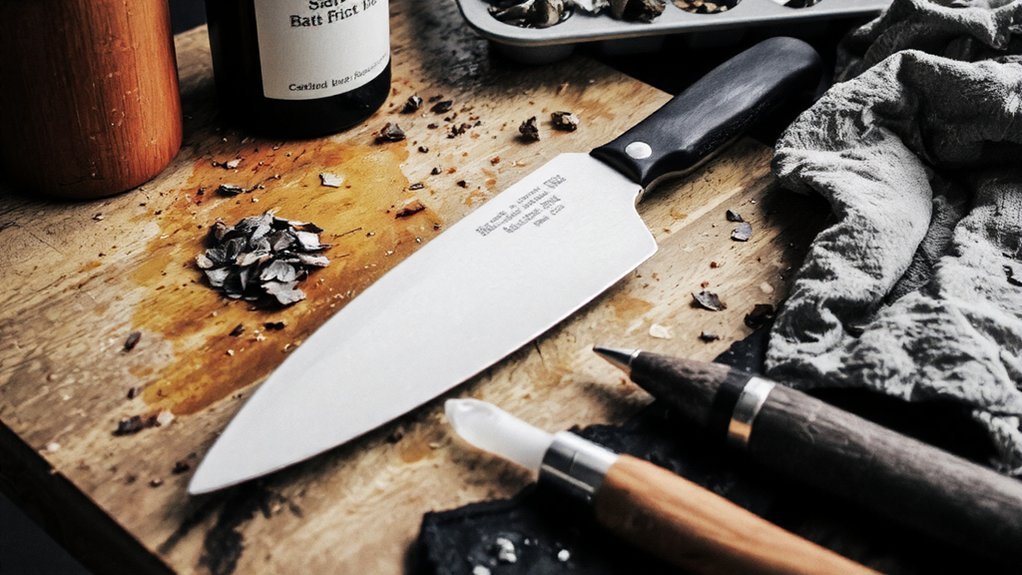
Steel stays honest when you do, so let’s talk upkeep before that brisket turns into a ragged crime scene. You want clean slices that serve well, not shredded edges and wounded pride. Start with honing, little and often. Ten gentle passes per side on a ceramic rod keeps the edge aligned, whisper-light pressure, tip to heel.
When it dulls, pull out real sharpening techniques: whetstone, 1000/3000 grit, steady 15–20° angle, smooth strokes, then strop on leather for that quiet, sticky grab. Rinse, dry, admire.
Now the boring heroics: proper knife care. Hand-wash, hot water, mild soap, no soaking, no dishwasher—ever. Dry immediately, then sheath or magnetic rack. A light food-safe oil keeps carbon steel from pouting. Respect the edge, protect your service.
Top Picks: Best Knives for Trimming Brisket
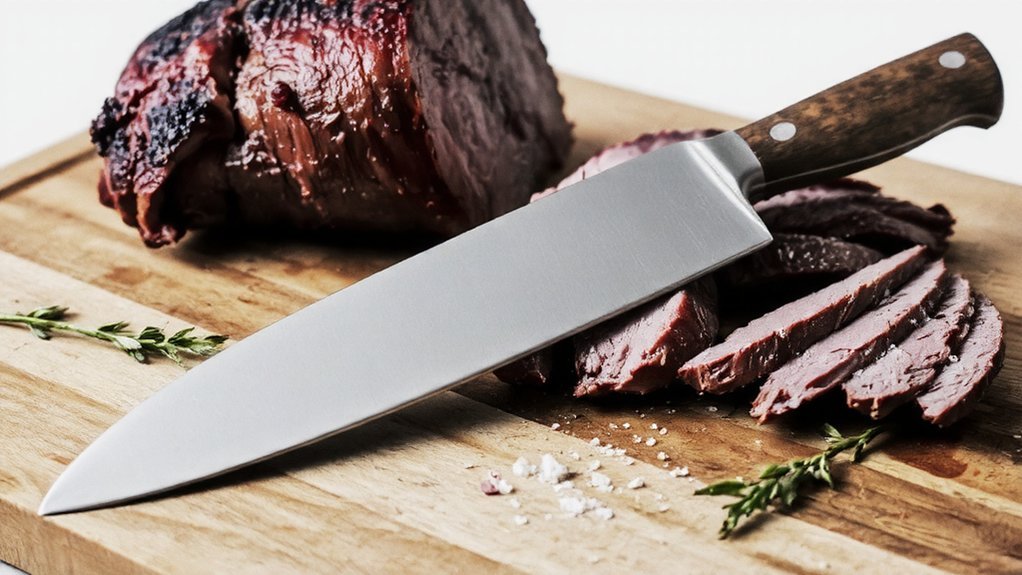
Edges are tuned and gleaming, so let’s put the right blade in your hand before the brisket hits the board. You’re here to feed people well, so I’ll steer you fast. For top knife brands, look for narrow, semi-flex boning knives with grippy handles and tough steel. You want glide through silver skin, not wrestling.
- Choose a 6–8 inch semi-flex boner; it tracks tight curves, spares meat, boosts trimming techniques.
- Favor a shallow belly and pointed tip; you’ll sneak under seams, then peel fat like ribbon.
- Seek textured, heat-safe handles; wet hands happen, guests still arrive on time.
- Pick stainless that holds a keen edge; less sharpening, more service.
Grab it, test balance, make a few air-cuts, then meet that brisket with purpose.
Budget, Mid-Range, and Pro Options Compared
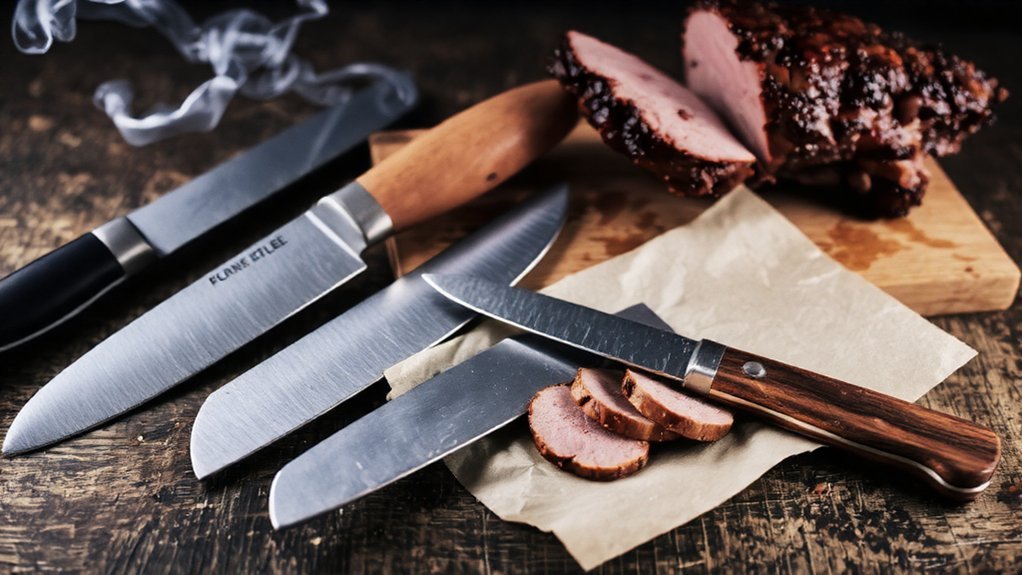
Before you throw cash at shiny steel, let’s map the lanes: budget, mid-range, and pro. If you’re cooking for a crowd, you need a tool that keeps pace, not drama. Budget friendly options give you flexible blades, decent edge life, and easy maintenance. You’ll trim fat cleanly, no tears, no guilt. Step up to mid-range, and you get better steel, tighter grinds, and grippy handles that stay steady when brisket gets slick. You’ll move faster, cleaner, kinder.
Now the pro tier, the land of premium craftsmanship. Think laser-thin bevels, wicked edge retention, balance that feels telepathic. You’ll glide under silver skin, whisper through fat caps, and finish with cuts that plate beautifully. Serve with confidence, smile big, and let the knife vanish in your hand.