
Forty-two percent of ruined briskets die at the slicing board, not the smoker, and you don’t have to be the next victim. You need a 12–14 inch slicer, granton edge, razor steel, and a handle that won’t slip when your fingers shine with fat. We’ll talk blade flex, bevel stability, and why “against the grain” isn’t a suggestion. Grab a cutting board, I’ll bring the sharpener—because your next slice decides everything.
Top Chef-Recommended Brisket Slicers
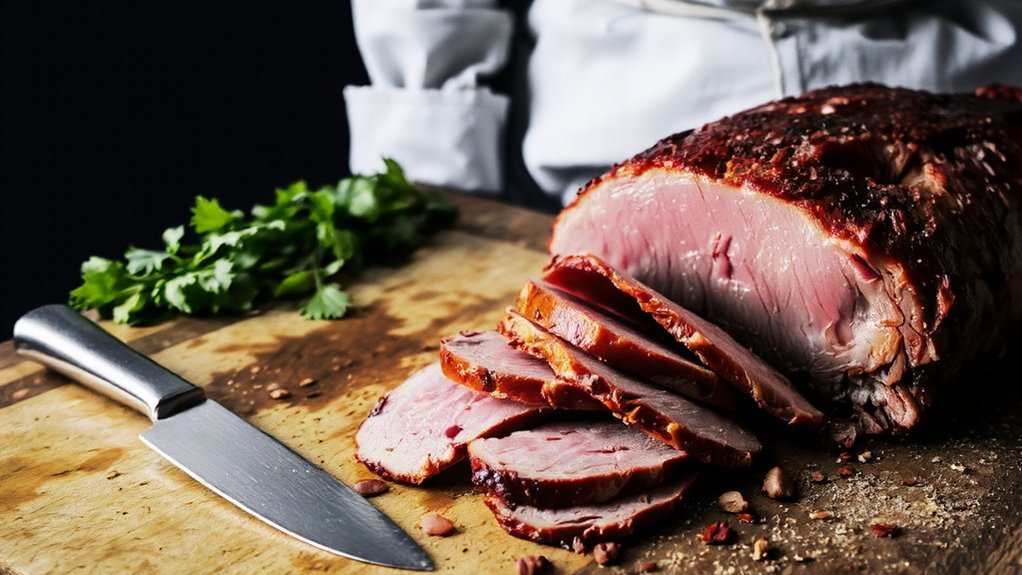
Even if you’ve never carved a brisket without sweating, the knives top chefs swear by will make you feel like a pitmaster with steady hands and swagger. You want to serve people well, so start with what they use. I asked around, listened, then sliced a few late-night test slabs. Verdict? Go long, go sharp, go steady.
Chefs point you to 12–14 inches, scalloped or granton-edged, for clean, whisper-thin ribbons. You’ll glide through bark, respect the smoke ring, and keep juices where they belong—on plates, not boards. Their brisket preparation tips: rest the meat, pat it dry, find the grain, then rotate for perfect bias. Slicing techniques? Anchor the tip, pull in smooth strokes, zero sawing. “Let the blade work,” they say. You smile, serve, and own the moment.
Key Features That Make a Brisket Knife Exceptional
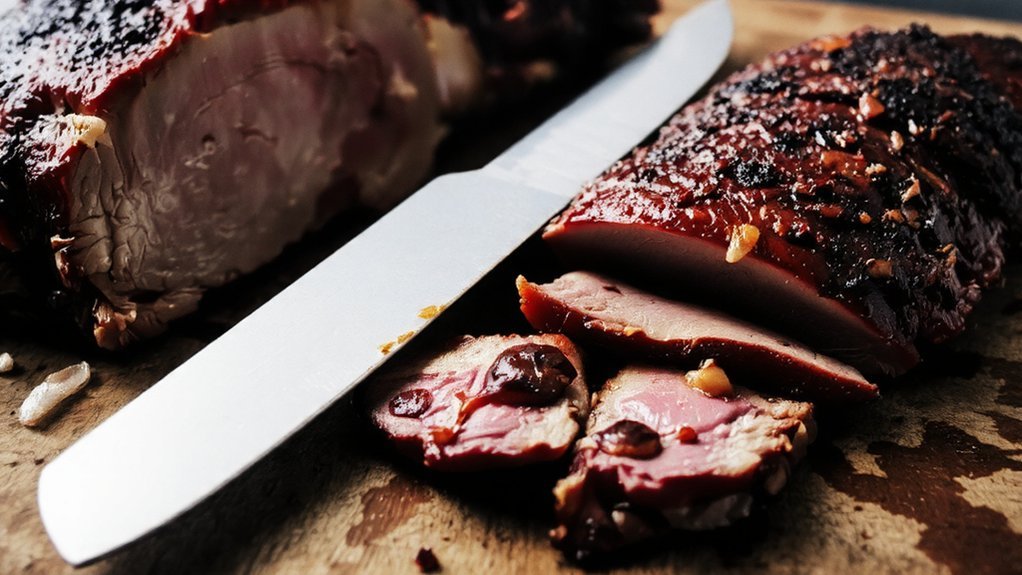
Blueprint time: an exceptional brisket knife nails three things—length, edge, and flex—then backs it up with balance and grip. You want 12–14 inches of reach, a razor that glides, and just enough bend to ride the meat’s waves, not fight them. I’m talking clean, even slices that lay like silk, not ripped denim.
Here’s your quick hits—feel, function, finish.
| Feature | Why It Matters | What You’ll Feel |
|---|---|---|
| Length | Long strokes, fewer passes | Smooth, confident pulls |
| Edge | Sharp steel, stable bevel | Whisper-thin slices |
| Flex | Controlled give | Curves around grain |
Add a handle with traction, wet or greasy, and a spine that balances in your pinch grip. Then practice cutting techniques, and commit to blade maintenance—honing often, sharpening smart—so every plate sings.
Granton Edge vs. Straight Edge: Which Cuts Cleaner?
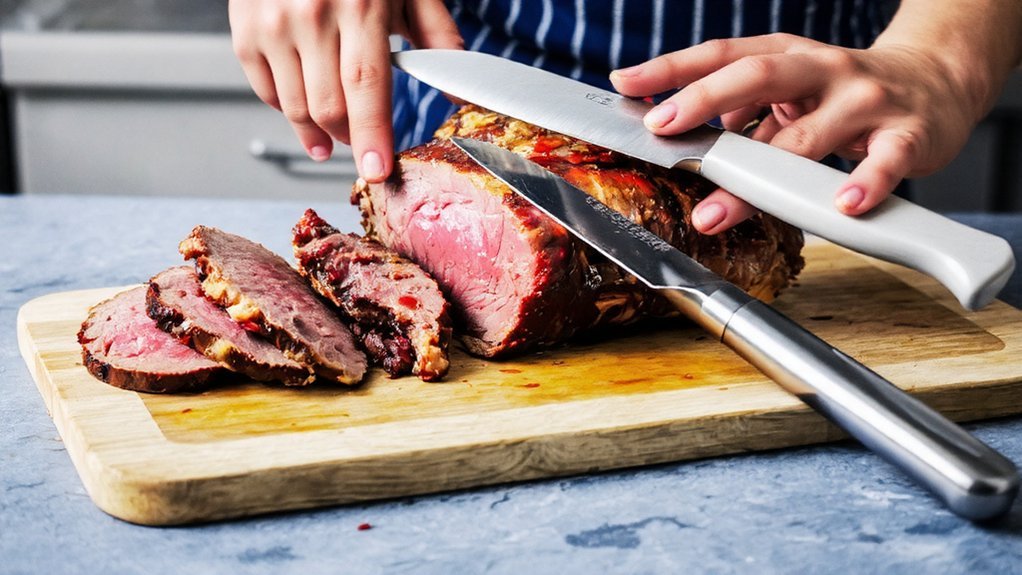
Let’s talk edges, because your brisket behaves like a slick bass on wet marble, and you need control. With a Granton edge, those hollow grooves break surface tension and cut drag, so you get smooth, uniform slices that don’t stick, don’t tear, and look showroom-ready. A straight edge brings cleaner lines when razor-sharp and well-oiled, but if you’re battling clingy bark and juicy fat, you’ll feel that extra resistance, fast.
Surface Tension Control
While your brisket rests and the juices settle like a calm lake, the battle for cleaner slices comes down to how your blade handles surface tension. You’re slicing for guests, not wrestling a roast, so let’s boost knife performance where it counts. A Granton edge, those scalloped dimples, breaks the suction between meat and steel, letting moisture escape, like tiny exit ramps for juice. A straight edge keeps full contact, great for control, but it can cling, drag, and smudge bark.
Here’s how to choose without second-guessing mid-slice:
- If the brisket’s juicy and glossy, pick Granton for less stick.
- If the bark’s delicate, a sharp straight edge preserves texture.
- If you serve fast, prioritize Granton; it cleans up your cut.
Slice Uniformity and Drag
Because perfect slices don’t happen by accident, we need to talk drag—the quiet villain that turns brisket into confetti. You’re carving for hungry people, not making mulch, so let’s cut cleaner. Granton edge knives, with those shallow dimples, trap air, reduce suction, and glide through bark and fat like skates on ice. Straight edges? They’re honest and precise, but they cling, especially on moist, sticky flats.
Now, your slicing technique matters more than your ego. Long, low-pressure pulls, tip anchored, let gravity do half the work. Wipe the blade between passes, keep the fat cap facing you, and chase even thickness, slice after slice. And please, knife maintenance isn’t optional—polished edge, 15–20° per side, stropped smooth. Sharp blades serve cleaner generosity. Drag doesn’t.
Blade Length, Flex, and Steel: Choosing the Right Specs

You want a blade long enough to sweep through a full brisket in one clean pass—think 12 to 14 inches—so you’re slicing, not sawing. Then pick your feel: a bit of flex glides along soft fat like a skater on fresh ice, while a rigid spine tracks straight through bark without wandering. Finally, choose your steel—tough, stain-resistant German for easy care, or harder Japanese for a razor edge that sings but asks for gentle hands.
Optimal Blade Length
A long, steady blade turns brisket from a wobbly roast into neat, glossy slices that flop like silk. You want length, not drama. I’m talking 12 to 14 inches, so you glide in one pass, no see-saw scars, no shredded bark. Shorter blades force choppy strokes, and guests notice. Longer gives room, control, and beautiful, even planks.
Here’s the sweet spot, fast and friendly:
1) 12 inches: versatile, ideal for most packers, easy storage.
2) 14 inches: showtime tool, cleaner single draws on full flats.
3) 10 inches: backup only, for tight boards or travel kits.
Pair your choice with a gentle slicing technique—long draw, zero pressure, let gravity sing—and steady blade maintenance. Keep it sharp, wipe between cuts, serve with pride.
Flex Vs Rigidity
Length’s sorted, so let’s talk feel—how that blade bends (or doesn’t) when it meets a wobbly, jiggly brisket. You’re carving for grateful guests, not wrestling beef, so pick your vibe. A flexible slicer glides along curves, hugs bark, saves juicy flats from ragged tears. That’s the flexibility benefits pitch: gentle pressure, long strokes, tidy slices that stack like cards.
Now the flip side. Stiffer blades track straight, punch through crust, and keep lines clean when the point fights back. Those are the rigidity advantages: control, predictability, confidence when the crowd’s watching. I’ll admit, I baby my slices, then crave authority near the tip. If you serve varied crowds, meet in the middle—moderate flex, steady spine, smooth pull cuts, applause incoming.
Steel Type Selection
Before we geek out on alloys, let’s frame the stakes: steel decides how sharp your brisket knife gets, how long it stays scary-sharp, and how much babying it demands between cooks. You’re carving for guests, not wrestling a roast, so choose steel that supports clean slices, neat plates, and calm service.
1) Carbon vs stainless: Carbon steels get razor-hungry fast, sing through bark, but rust if you blink. Stainless forgives moisture, travel, chaos, yet needs a touch more time on stones.
2) Blade hardness: Mid-high Rockwell (58–61) holds an edge for long runs. Too hard, chips; too soft, drags. Balance is love.
3) Alloys to trust: AEB-L, VG-10, 14C28N, or semi-stainless like CPM-4V. They sharpen crisp, resist abuse, and keep your brisket silky.
Handle Ergonomics and Balance for Long Slicing Sessions
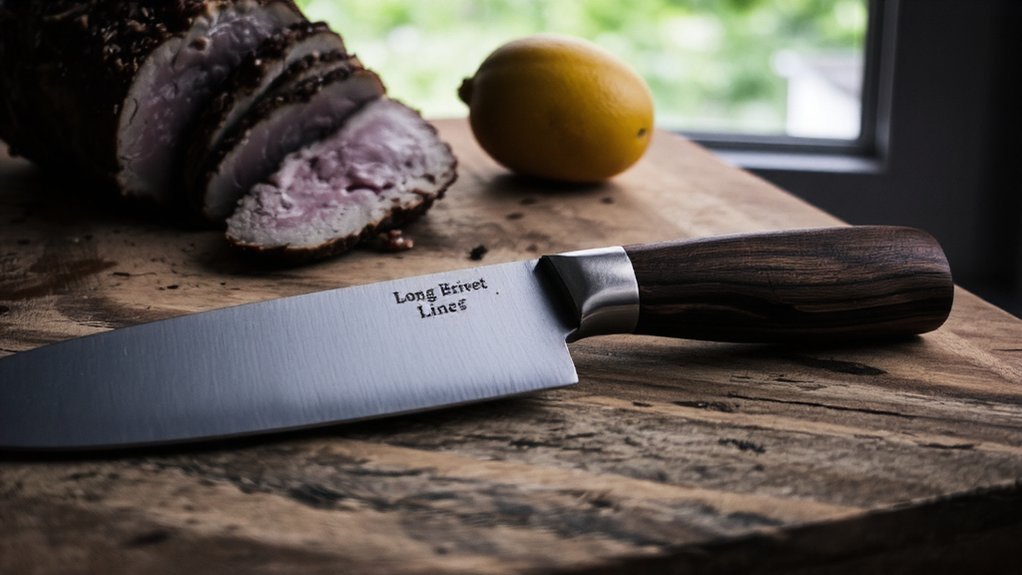
Even if your blade is razor-sharp, a clumsy handle turns brisket slicing into wrist yoga you didn’t sign up for. You need a handle that disappears in your hand so guests get silky slices, not saw marks. Start with handle materials: micarta for grippy confidence when things get saucy, pakkawood for warmth and polish, textured polymers for dishwasher-safe durability. Now, grip comfort—no hot spots, no seams, no drama.
I like a gentle palm swell, a tapered waist, and a secure butt cap that stops surprise slips. Balance matters even more: aim for a balance point just ahead of the bolster, so the blade floats and your wrist stays fresh. Test pinch grip, do ten ghost slices. If it glides, it serves.
Care, Sharpening, and Storage to Keep Your Knife Competition-Ready
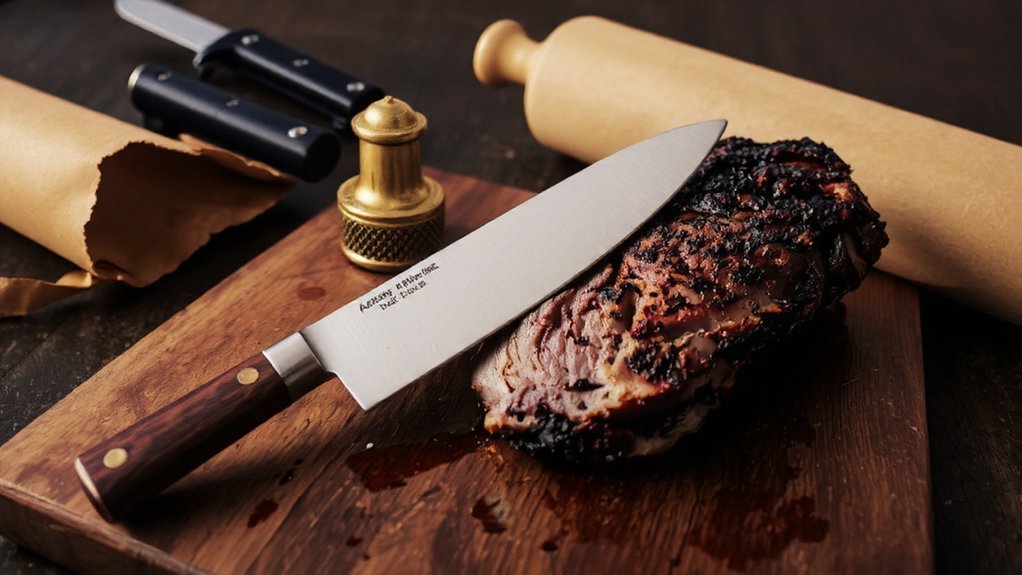
That comfy, balanced handle means nothing if the edge shows up dull and moody on brisket day, so let’s keep this slicer tuned like a pitmaster’s stopwatch. You’re feeding people you care about, so treat knife maintenance like pre-service prayer—intentional, consistent, humble. I’ll keep it simple, and yes, I’ve dinged a tip on a sink before. We learn, we sharpen, we serve.
- Sharpen smart: Use a 1000/3000 stone, light pressure, steady 15-degree angle, heel to tip. Finish with a few gentle honing strokes. Listen for that crisp whisper.
- Clean right: Warm water, mild soap, soft sponge. Dry immediately, spine to edge, no drama, no dishwasher.
- Store with blade protection: Saya, sheath, or magnetic strip with guards—no drawer chaos, no mystery chips.
Oil lightly, especially carbon steel. Then slice like you mean it.