
You’re chasing the best brisket in America, and I’m your shameless co-pilot, napkins ready. We’ll start in Central Texas, where salt, pepper, and post oak make bark that snaps, then swing through Kansas City for glossy burnt ends that melt like butter. Memphis rubs whisper spice, Carolina splashes vinegar that wakes you up, and New York carves thick, city-bold slices. Hear that knife? That’s your cue—grab a plate, because the next stop might shock you.
Central Texas Classics: Salt, Pepper, and Post Oak
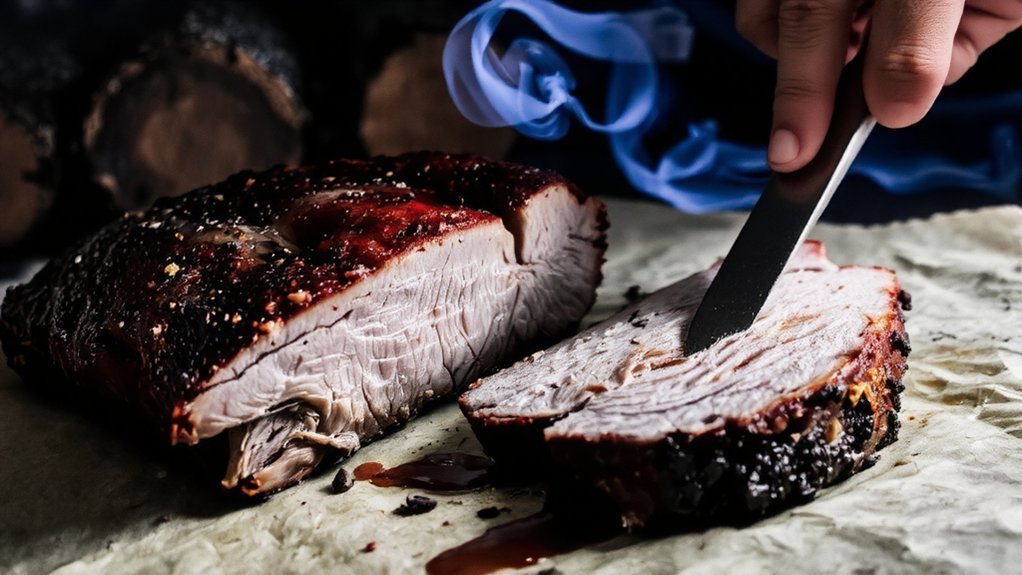
If you’ve ever chased the smell of smoke down a Texas backroad, you already know the gospel: brisket here is a three-note symphony—salt, pepper, post oak—and it sings loud. You want to serve folks well? Start simple. I’m talking brisket techniques that honor the meat, not bury it. Your seasoning secrets are honest: coarse salt, cracked pepper, maybe a wink of garlic, nothing fussy.
Dial in cooking methods: steady 250 degrees, fat cap shielding, patience doing the heavy lifting. Mind your wood selection—clean-burning post oak, split right, seasoned dry. You’ll taste regional variations within miles, but the flavor profiles stay bold, beef-forward, pepper-bright. Chase clean blue smoke, trim tight, watch for proud smoke rings. Practice competition styles last—feed hearts first.
Kansas City Cuts: Sauce, Burnt Ends, and Sweet Smoke
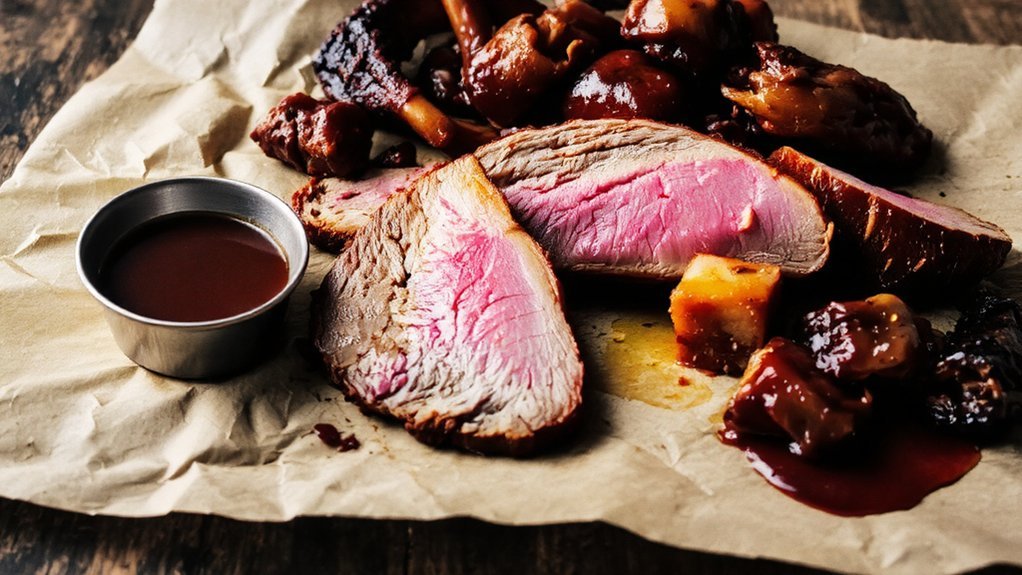
Three words set the mood in Kansas City: sauce, smoke, swagger. You’re here to feed people well, so I’ll steer you right. Start with the brisket, mahogany bark, pink halo, juices whispering, “Don’t rush.” Slice thick for plates, chop the trimmings for sandwiches, then save your cheers for the burnt ends. Little caramelized cubes, bark-forward, sweet-savory crunch, tenderness like a secret handshake.
Now, sauce variety matters. KC loves options, and your guests will too. Offer classic molasses-sweet, black-pepper heat, tangy tomato with a hint of clove, maybe a mustard-kissed wildcard. Brush lightly, don’t drown the smoke. Let folks choose, you just guide the plate.
Set the scene: warm buns, crisp pickles, creamy slaw, napkins stacked high. You serve joy, not just meat.
Carolina Influence: Vinegar Zing Meets Low and Slow
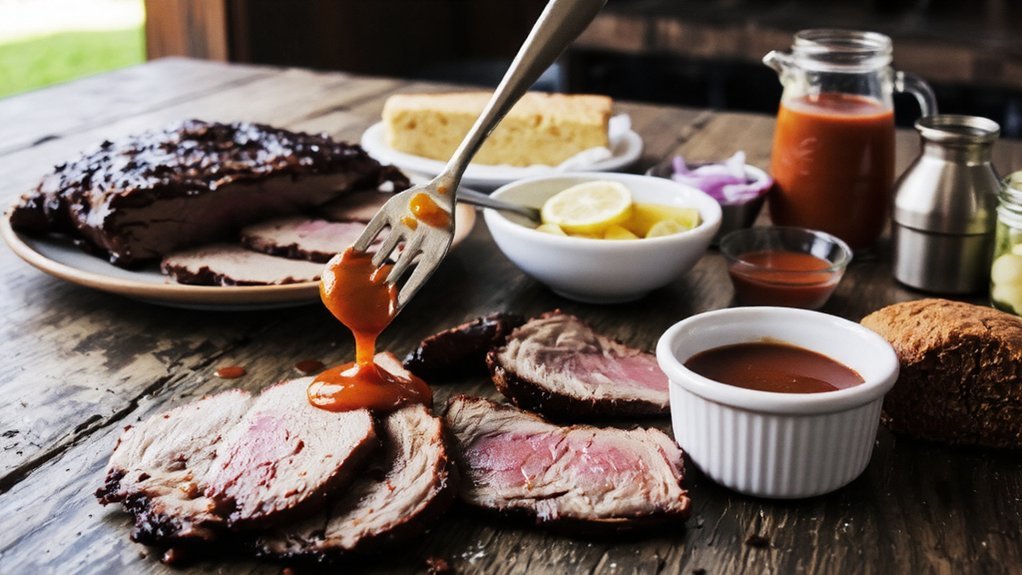
While the pit hums low and steady, Carolina steps in with a wink and a splash—vinegar bright enough to cut through a fog bank. You trim the brisket modestly, I nod, and we settle in for patience. With slow cooking techniques, you ride that 225-degree wave, steady as a choir, letting fat render, collagen melt. Then comes the zing. You mop with vinegar based sauces—thin, peppery, a little fiery—so the bark stays crisp, the bite wakes up, and the slices sing.
“Too sharp?” you ask. Trust me, it lifts the beef, doesn’t drown it. Serve generous slices, drizzle lightly, pass extra on the side. Folks feel seen, not smothered. The aroma? Tangy thunder. The texture? Tender as a favor repaid. Keep the fire honest, you’ll feed hearts.
Memphis Mojo: Dry Rubs and Dual-Wood Depth
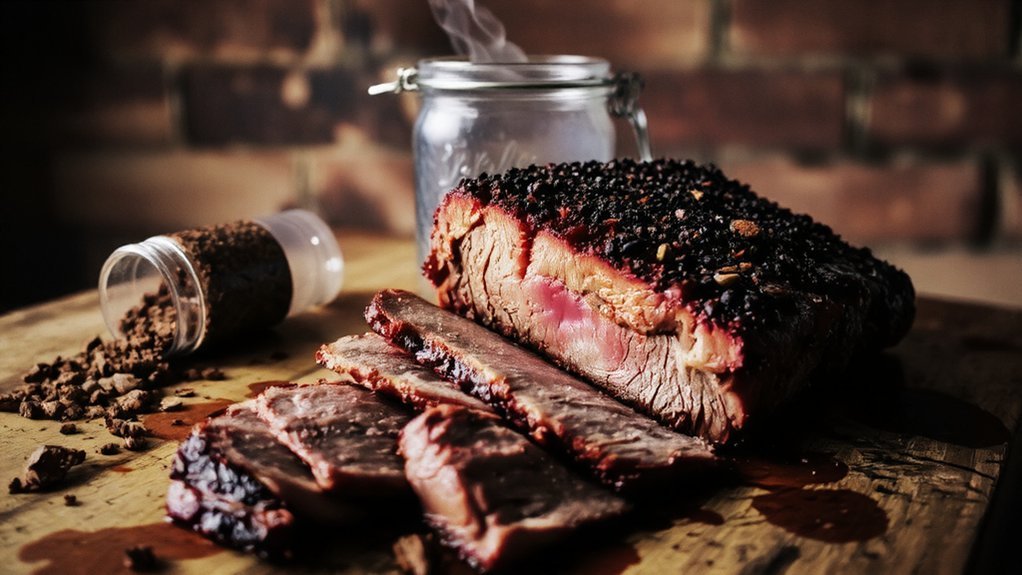
Smoke swagger, that’s Memphis in brief—dry rub first, questions later. You pat the brisket like a friend you trust, then shower it with paprika, black pepper, garlic, a little brown sugar. I nudge you toward dual-wood fire—hickory for backbone, fruitwood for perfume. The smoke kisses, never smothers. You’re cooking to serve, so you chase balance, not bravado.
| Memphis techniques | Flavor profiles |
|---|---|
| Dry rubs, no mop | Pepper heat, sweet hush |
| Dual woods, steady temps | Smoky cherry, nutty hickory |
| Resting long, slicing clean | Bark crunch, tender center |
Those spice origins? Old Delta trade routes, pantry wisdom, church-lot cookoffs. Regional variations keep you nimble: lean slices for quick service, fatty ends for hush-quiet gratitude. Keep it humble, let the bark preach, and watch plates come back clean.
The New York Slice: Urban Pits and Buttery Burnt Ends
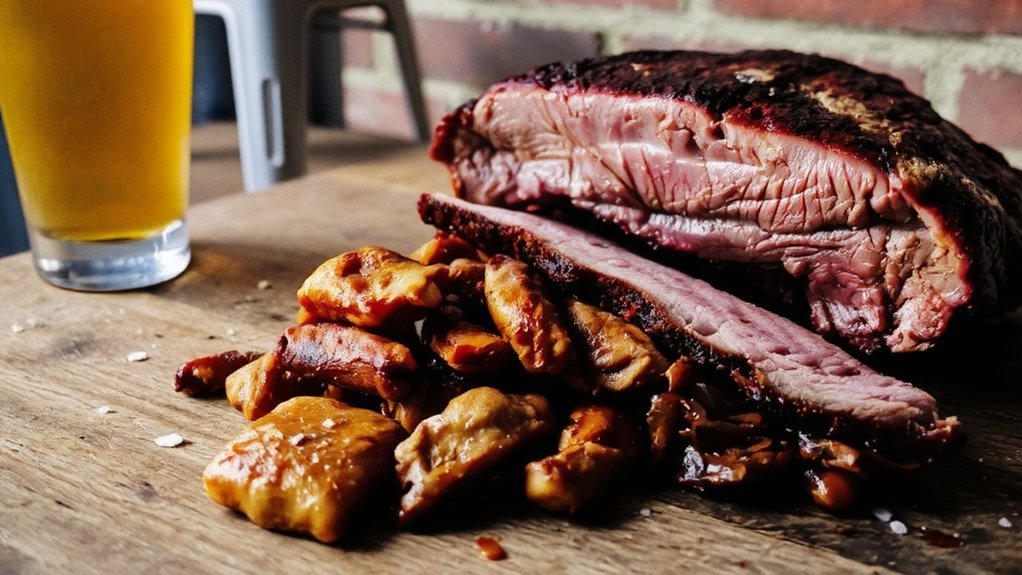
You hit Manhattan smokehouses and hear the hiss of steel doors, smell pepper and oak rushing the sidewalk, and I’m right there with you, pretending we’re not late for anything but brisket. You order buttery burnt-end bites, they land glossy and soft, edges crackly, and yeah, you nod like you just won the commuter lottery. I say, “One more,” you say, “Make it two,” and the city, noisy and nosy, politely steps aside for your next glorious chew.
Manhattan Smokehouses
Neon-and-subway grit meets oak-and-post-oak charm the moment I duck into a Manhattan smokehouse, where brisket perfume wrestles the city’s exhaust and wins by TKO. You’re here to feed people well, I’m here to tell you how. We sample, we listen, we steal a few smokehouse secrets with our eyes, then share the good news.
- You weigh brisket styles like a maître d’ with a stopwatch—Texas lean, peppered New York bark, a wink of pastrami spice, all sliced to serve, not flex.
- You mind the fire: clean blue smoke, steady draft, no drama, just patience and prayer.
- You chase the crust: salt-pepper thunder, mahogany snap, juices running bright.
- You plate with purpose: warm trays, quick hands, smiles first, meat second.
Buttery Burnt-End Bites
A paper boat lands in my hands like a hot tip, and inside, the city’s candy: buttery burnt-end bites, glossy as a deli case at noon and twice as dangerous. You want to feed people well? Start here. I pick one up, it melts, those buttery textures coating fingers, pride, the whole mood.
“Sweet heat?” the pitmaster asks. I nod, because I serve with smiles, not speeches. Smoke curls up, pepper pops, fat whispers yes. You’ll taste bark that crackles, then gives, then gushes. Burnt end variations line the counter—maple-lacquered, black-pepper brisk, chili-honey bold—so you can match guests, plates, missions.
I box a pound, okay two. You bring napkins, I’ll bring grace. We’ll share seconds, then thirds, then purpose.
California Creativity: Wine Barrel Smoke and Farmer’s Market Rubs
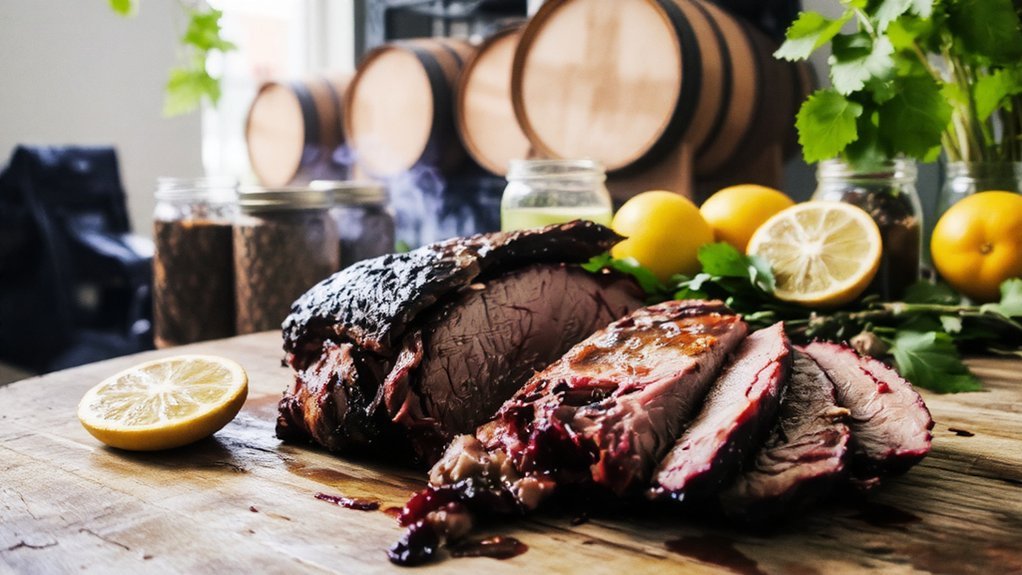
You’re about to taste brisket kissed by wine barrel smoke, it’s fruity and toasty, like a cabernet whispering secrets into the bark. I’ll nudge you toward market-fresh spice blends—coriander popping, citrus zest brightening, chilies humming—because your taste buds deserve a Saturday morning in Sonoma. Then we’ll pair it with coastal woods, a little eucalyptus lift, a hint of redwood sweetness, and you’ll say, “Yep, California’s weird, but it works.”
Wine Barrel Smoke
Though Texas purists might clutch their pearls, California strolls in with wine barrel smoke and a swagger, and I’m here for it. You light the pit, I’ll pour the Pinot, and together we’ll build a brisket that makes guests feel seen, fed, and spoiled. Wine barrel aging isn’t just romance; it’s engineering. Those staves carry deep berry notes, toasted vanilla, a hint of oak char—perfect for flavor infusion that hugs, not hammers.
- Choose staves from neutral red barrels, then trim to fist-sized chunks for steady, clean smolder.
- Run your fire at 250°F, thin blue smoke only; white clouds taste like regret.
- Layer salt and pepper, let the wine-kissed smoke do the sermon.
- Rest it long, slice it thin, pass plates fast, watch smiles land.
Market-Fresh Spice Blends
Pinot smoke’s still curling, but my hands are already in the spice bins at the Saturday market, hunting rubs that taste like sunshine and hustle. You’re here to feed people well, so let’s build a brisket rub that earns seconds, maybe thirds. I chat up the chili vendor, snag guajillo for warmth, a whisper of ancho for chocolatey bass, then lemon zest from a citrus stand for brightness. Sea salt, turbinado sugar, cracked pepper—simple, generous, balanced.
Now, seasoning techniques: toast cumin and coriander till they pop, grind while warm, inhale like it’s church. Layer salt first, wait ten minutes, then the rub, firm and even, edges included. Taste your blend dry, adjust. You’re shaping flavor profiles with intention, service, and a little swagger.
Coastal Wood Pairings
Barrels first, brisket second—that’s the coastal way. You’re cooking for people you love, so let’s lean into California creativity: wine barrel smoke, market rubs, and those sly oceanic flavors that make coastal cuisine sing. I’m right there with you, sleeves rolled, tasting as we go, pretending I’m not on my third “test” slice.
- Use Cabernet-stave chunks, they bloom with black cherry, cedar, a touch of vanilla. Your brisket inhales, exhales, relaxes.
- Add Pinot barrels for silkier smoke, then rub with fennel, citrus zest, cracked pepper—bright, friendly, generous.
- Drift subtle brine: kombu spritz or sea-salt mist, ocean-kissed, never fishy. Guests notice, they smile.
- Finish with farmers’ market herbs—rosemary, thyme—then a fig-balsamic glaze. You slice, they applaud. You pretend it’s normal.
Pacific Northwest Woods: Alder, Apple, and Rainy-Day Rests
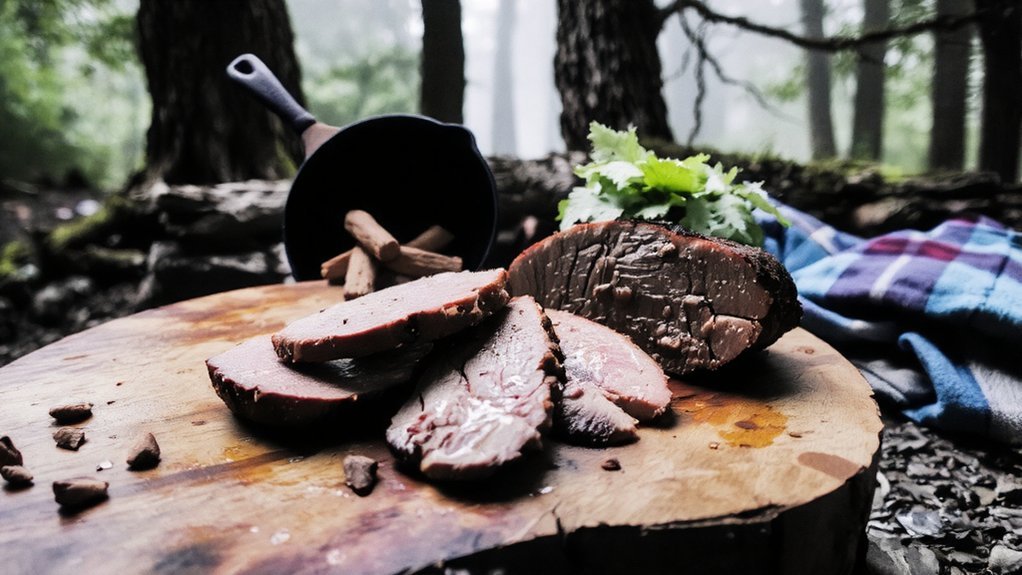
A rain-spattered afternoon in the Pacific Northwest begs for alder and apple wood, the kind that whispers smoke instead of shouting it. You’re cooking for guests, I know, so let’s keep the brisket generous, calm, and steady. Start with wood selection: alder for clean, soft alder flavor, apple for round apple sweetness. I load a small fire, then let the rain set the tempo—classic rainy day cooking. Thin blue smoke, gentle hiss, patience.
Here’s the play: low heat, steady draft, minimal poking. You want smoke infusion, not a bonfire confession. Rotate the flat, baste lightly, rest long. These flavor profiles highlight regional differences—subtle, foresty, a touch of orchard. My favorite cooking techniques here? Shorter bursts of smoke, longer rests. Serve slices warm, smiles warmer.
Deep South Detours: Gulf Coast Heat and Cajun Twists
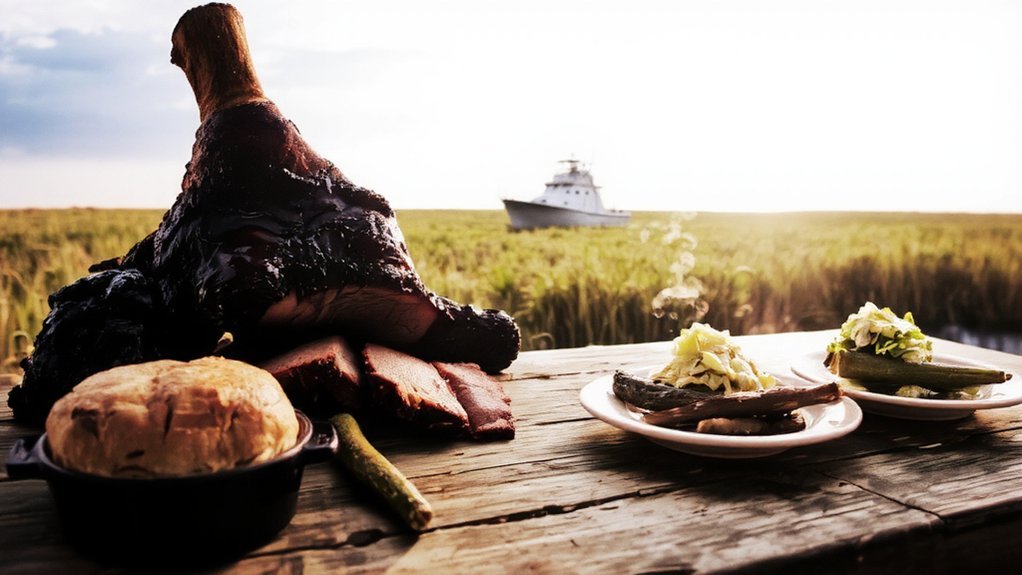
You roll into Gulf Coast smokehouses and I nudge you toward the pits where pecan logs hiss, fat crackles, and the air tastes like salty breeze kissed with molasses. “Careful,” I say, grinning, “that brisket’s got swagger,” because Cajun spice sneaks in—paprika warmth, cayenne pop, garlic and thyme—rubbing the bark until it sings. You grab a slice, I pretend restraint, and the first bite snaps with pepper heat, then melts into buttery beef, like Mardi Gras on a cutting board.
Gulf Coast Smokehouses
Two coasts, one obsession: brisket that sweats paprika and sunshine. You roll into Gulf Coast smokehouses and the air hugs you—sweet oak, salty breeze, peppered with pride. I’m here for smoky flavors you can serve with a smile, plates passed hand to hand, seconds encouraged, leftovers boxed for neighbors. You want regional variations? You’ll taste them in every slice, glossy bark, tender tug, juices pooling like tidewater. Let’s get you set to feed a crowd.
- Scout the pit: oak or pecan for mellow heat, steady as Sunday.
- Rub simply, salt-forward, a whisper of paprika, let the meat preach.
- Hold low and slow, then rest, wrapped and patient.
- Slice long, thin, across the grain, share generously, thank your pitmaster with pie.
Cajun Spice Influences
Because the bayou doesn’t whisper—it sizzles—Cajun spice hits brisket like a brass band at noon, loud, joyful, a little dangerous. You want to serve folks well? Start with Cajun flavors that honor neighbors and nourish crews. I’m talking spice blends with paprika, cayenne, garlic, thyme, a wink of mustard seed. Rub it heavy, let it rest, then chase that smoky heat low and slow.
You’ll taste cultural influences in every slice—Acadian grit, Creole swagger, backyard mercy. I mop with vinegar, a touch of cane syrup, and lemon, because balance saves souls. Hear that crust crackle? That’s hospitality singing. Offer regional twists: boudin-stuffed burnt ends, étouffée gravy on the side, pickles for lift. Bold flavor profiles, generous plates, grateful smiles—mission accomplished.
Mountain West Methods: High-Altitude Smokes and Bold Bark
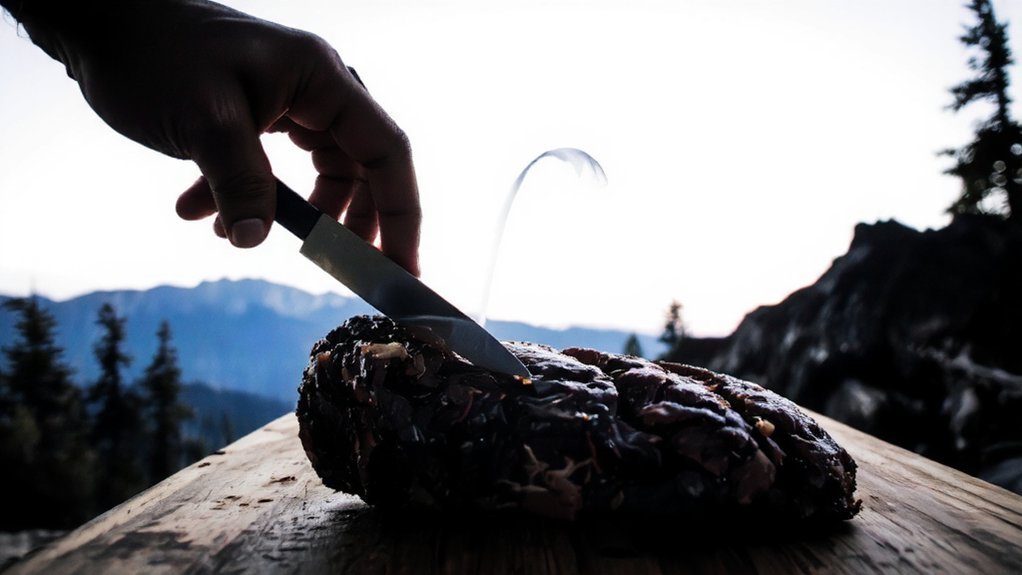
Though the air gets thin up here, the flavor doesn’t, it concentrates. You cook brisket in the Mountain West like you’re guiding guests up a trail—steady, kind, and ready with snacks. I’ll shoot you straight: high altitude techniques ask for patience, but they pay you back in applause. You’ll build heat slowly, stack moisture smartly, and chase those bold bark flavors like sunrise over red rock.
- Trim assertively, leave a modest fat shield, then season heavy—salt, pepper, a whisper of espresso—so the bark crunches, sings, serves.
- Manage thinner air with slightly hotter chambers, shorter vents, and steady water pans to hold tenderness.
- Wrap late, when the bark clicks, not before.
- Slice and serve promptly, share the smoky joy, take the smallest plate.
Pitmaster Playbook: Wood Choices, Rest Times, and Slice Tests
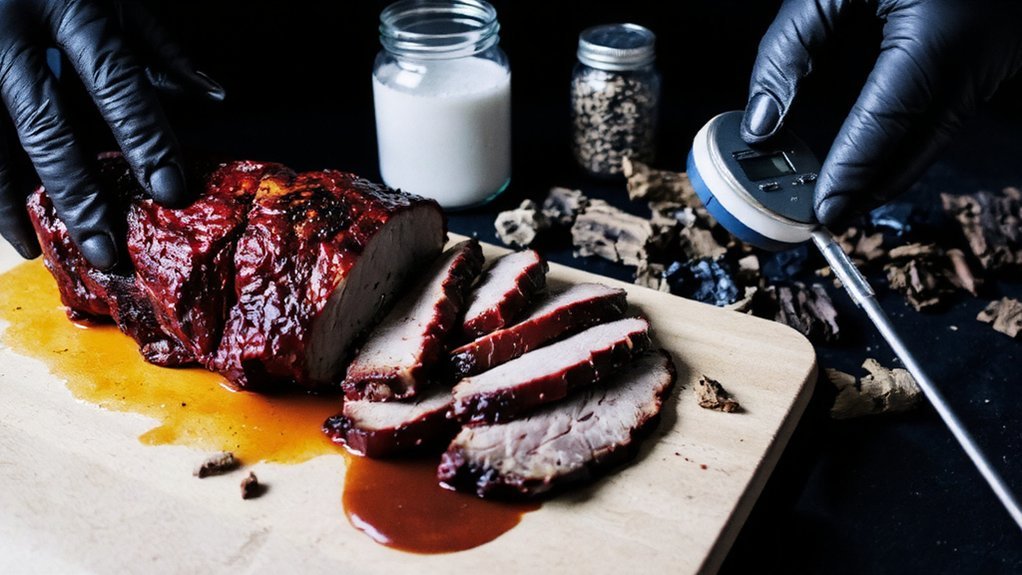
High-altitude bark in the rearview, let’s talk the gear under the hood—wood, rest, and the slice that tells the truth. You’re cooking to serve, so I’ll shoot straight. Start with wood selection: post oak steady, hickory bold, a wink of fruitwood for sweetness. Build a clean smoke profile, blue and thin, never bitter. Keep seasoning balance simple—salt, pepper, maybe garlic—so bark development sings.
Track brisket temperature by feel and probe; numbers guide, tenderness decides. When fat rendering jiggles the flat, you’re close. Now the holy pause: a generous resting period, wrapped, vented slightly, until juices calm. Time to test. Use a confident slicing technique, knife long and sharp, against the grain. The slice should bend, shine, whisper, “serve seconds.”