
Envision this: you nail a 12-hour brisket on a $300 kettle with a two-zone setup, steady 250°F, bark like asphalt, neighbors “accidentally” wandering over. You want that, without selling a kidney. I’ll show you which pellet smokers give set-and-forget ease with Wi‑Fi, which bullet rigs sip fuel and lock temps, and which budget offsets actually run clean. Grab your tongs, I’ll bring the truth—and a few hard lessons I learned the smoky way.
Top Budget Pellet Smokers for Set-and-Forget Brisket

Even if you’ve never smoked a brisket before, budget pellet smokers make you feel like a backyard wizard with a very forgiving wand. You set the temp, load the hopper, and let the auger hum while you prep sides for the crew. I love that you can choose pellet flavors—hickory for bold, cherry for sweet blush, oak when you want balance—and trust steady heat to build honest smoke rings without babysitting.
Picture it: dawn coffee, thin blue smoke, bark snapping under your knife. You spritz, you probe, you serve. Wi‑Fi control pings your phone, you nod like a pro. Cheap doesn’t mean flimsy—look for tight lids, a solid firepot, easy-clean ash cups, and a reliable controller. Your people taste patience, not panic.
Best Value Kettle Grill Setups for Low-and-Slow
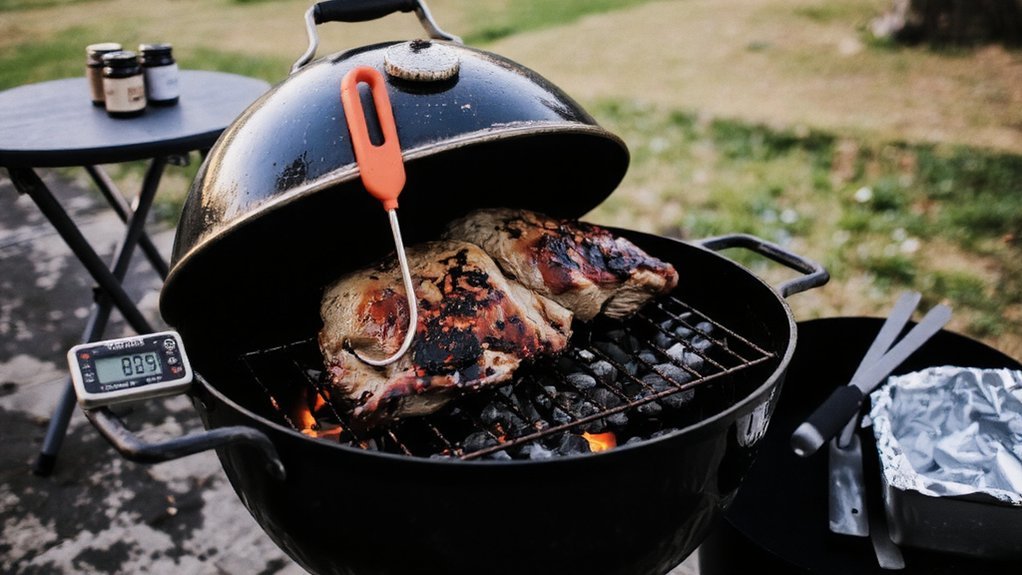
You want low-and-slow on a budget, so set up a classic two-zone charcoal layout: coals banked on one side, a water pan on the other, brisket riding the cool zone like a VIP. I’ll nudge you toward temp control accessories—charcoal baskets, lid thermometers, maybe a simple vent controller—because steady 225–250°F heat beats guesswork and cold coffee. You manage the vents, I’ll bring the pep talk, and that bark will crackle like a campfire.
Two-Zone Charcoal Setup
Two zones, one mission: turn a humble kettle into a brisket-forging furnace on one side, and a gentle spa on the other. You’re feeding a crowd, so let’s set you up to serve like a pro. Bank briquettes tight on one half—clean charcoal placement, stacked two layers deep. That’s your hot side. Leave the other half empty, your sanctuary. Now we’ve got clear heat zones.
Drop a foil pan with warm water by the edge, let it kiss the coals, not hug them. Vent wide on top, above the meat, bottom vent just a sliver. Place the brisket fat cap toward the fire, point toward danger, flat toward peace. Lid on, no peeking. It’ll smell like campfire and promise. You’ll carve gratitude later.
Temp Control Accessories
While the fire does the heavy lifting, smart temp control accessories keep your brisket ride smooth, steady, and gloriously boring—in the best way. You’re cooking to serve others, so let’s make it reliable. Clip on temperature probes at grate level, one for the brisket, one for the pit, then breathe. I like digital thermometers with bright screens, loud alarms, and easy buttons—no squinting, no guesswork.
Add a kettle controller or budget fan, and your vents stop freelancing. Set 250, hold 250. You focus on the bark, the drip, that nutty smoke hugging the meat. Cables tidy, lid steady, you’re free to prep sides, plate trays, and practice your “you’re welcome” smile. Little secret: consistency tastes like kindness, and it sells seconds.
Affordable Bullet Smokers With Rock-Solid Temperature Control
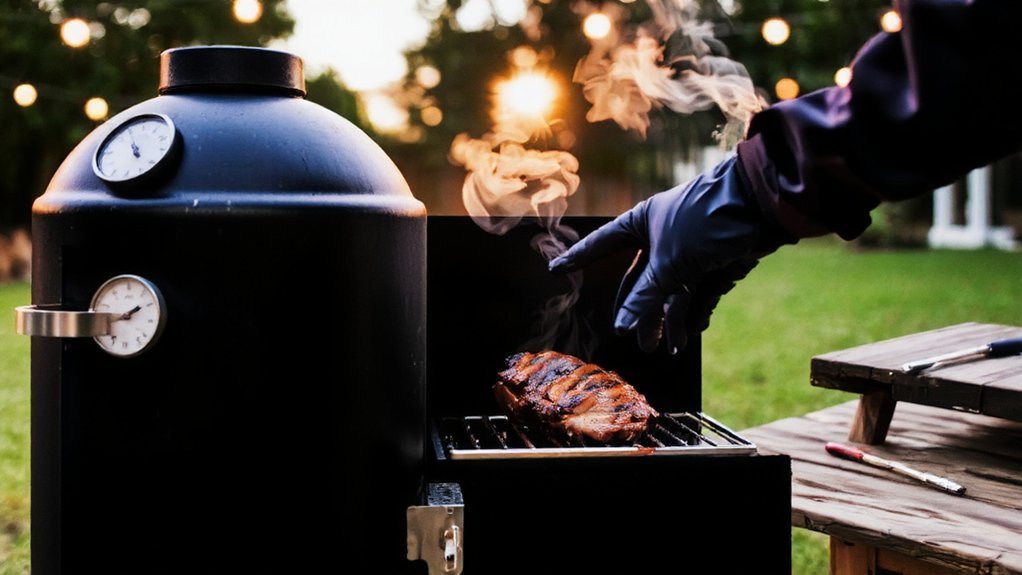
Because brisket worships steady heat, bullet smokers earn their keep by locking in temps like a stubborn mule, without torching your wallet. You want to serve a platter that hushes the table? Start here. The bullet smoker benefits are simple: tight footprint, tall chamber, and a charcoal ring that sips fuel all day. You get temperature stability with minimal fiddling, vents barely cracked, smoke rolling blue and sweet.
I load the basket, nestle a water pan, and let the dome do its quiet work. The lid thermometer steadies, 250 hums like a choir, and I mop, smile, repeat. Thin, even slices later, you’re the hero with clean hands and full plates. Budget-friendly, forgiving, and steady—this little drum turns brisket into a service mission.
Entry-Level Offset Alternatives That Deliver Clean Smoke
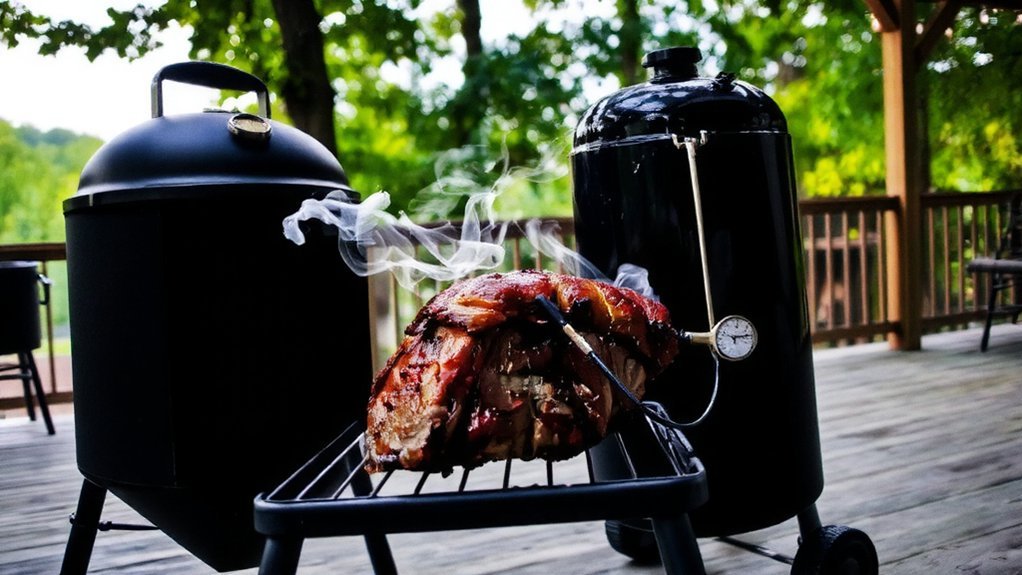
Even if you don’t have stick-burner money, you can chase that clean, blue-ribbon smoke with a smart offset alternative that won’t eat your paycheck. You want brisket that blesses a crowd, not your credit card bill. I hear you.
Look at compact offset smokers with tight seams, a real chimney, and an elevated fire grate. They burn splits or charcoal with wood chunks, delivering that honest smoke flavor without babysitting a warped door. Choose 14–16 gauge steel, not tin-can thin; heat stays steady, your bark turns mahogany, and the fat sizzles sweet.
Direct airflow matters. Line the firebox, point the stack at grate level, and keep the fire small, bright, and hungry. When thin blue curls kiss the meat, you’ve got clean smoke, and grateful guests.
Essential Accessories to Improve Brisket on Any Budget Pit
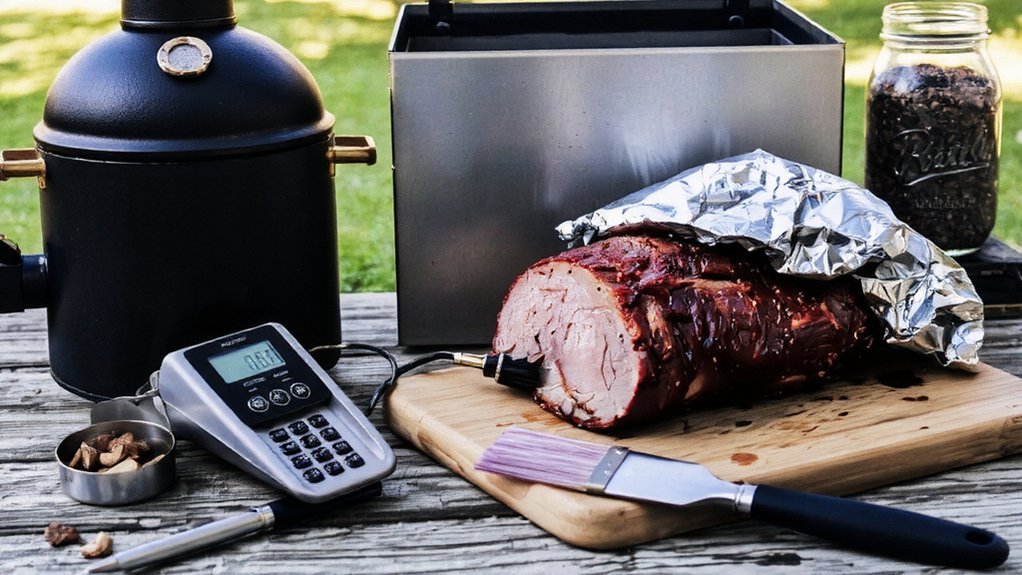
You’ve got the pit humming and that thin blue whisper rolling, so let’s gear up with a few add-ons that make brisket kinder, faster, and better. First, grab a reliable dual-probe thermometer, one for the flat, one for the grate—you can’t bless folks with great meat if you’re guessing. Add a wire rack and sheet pan for tidy trimming, plus butcher paper for that buttery bark. I lean on a cheap spray bottle—apple cider spritz keeps edges happy.
Use shallow water pans to steady temps. Stock a variety of smoking woods—post oak for classic, cherry for color, hickory for punch. Keep brisket rubs simple, heavy on salt and pepper, then adjust. Finally, heat-proof gloves and a good carving knife—service starts with clean slices.
How to Choose: Build Quality, Fuel Efficiency, and Real-World Performance
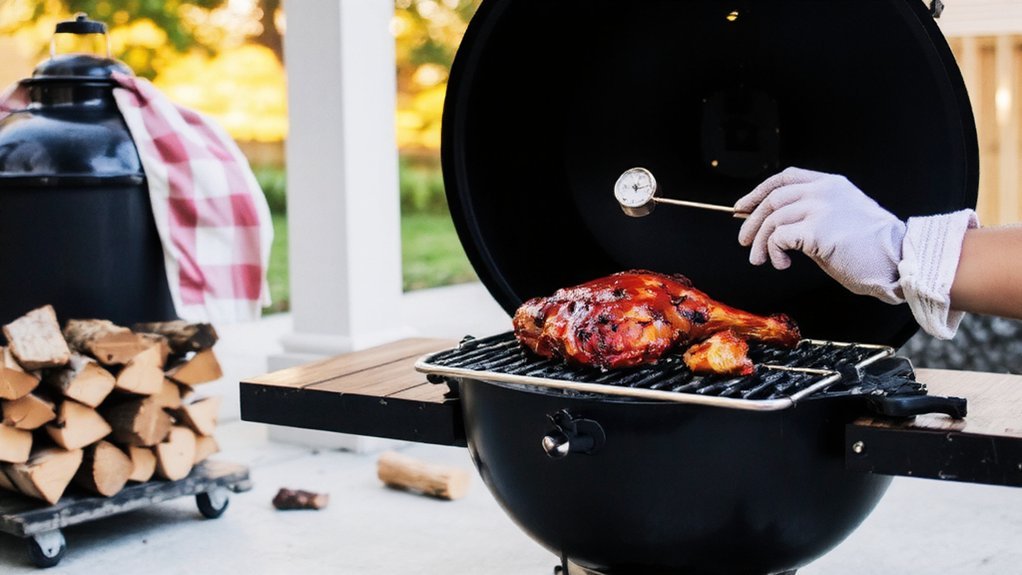
You want a pit that won’t wobble, rust, or squeak like a shopping cart—so check the materials, the welds, the lid seal, and yes, thump the metal with your knuckle. Next, watch how it holds heat—thick steel, tight vents, and a snug gasket mean less fuel burned, steadier temps, and fewer frantic lid lifts. Finally, make sure it cruises low-and-slow without drama; you should set 225°F, sip coffee, and hear that gentle sizzle, not babysit flare-ups like a short-order cook.
Materials and Durability
Now the durability factors. Look for rigid lids with sturdy hinges, solid legs that don’t wobble, and gaskets that actually seal. Check ash pans that slide smoothly, latches that bite, paint that doesn’t bubble. Fuel doors should open one-handed, even gloved. If it feels flimsy, it’ll cook flimsy.
Heat Retention Efficiency
Although brisket rewards patience, it hates temperature drama; heat retention is the quiet hero that keeps your cook steady, your bark crisp, and your nerves intact. You want steady metal, tight seams, and insulation materials that shrug off wind. I’m watching your lid like a hawk—no flutter, no panic, just calm coals and predictable heat. Less fuel burned, more love served.
Here’s your quick scout’s map:
| Factor | What To Look For |
|---|---|
| Body Gauge | Thicker steel, fewer temp dips |
| Lid Seal | Tight fit, minimal smoke leaks |
| Insulation Materials | Ceramic fiber, double-wall panels |
| Vent Tuning | Smooth, repeatable adjustments |
Aim for double-wall cook chambers, felt or gasketed lids, and sturdy vents. Your brisket gets rhythm, you keep your sanity, guests get seconds.
Consistent Low-And-Slow Performance
Steady heat’s the heartbeat; consistent low-and-slow is the full circulatory system. You’re cooking for people you care about, so your grill has to hold 225–250 like a champ. Look for tight seals, thick steel, and a steady exhaust—build quality you can feel when you shut the lid and it thunks, not clanks.
Now fuel efficiency: you want long burns, minimal babysitting. A snug firebox, good gasket, and a small, clean fire mean fewer refuels and cleaner smoke. Your wood or charcoal should whisper, not shout.
Real-world performance? Test with a cheap chuck roast. Track temps, note airflow, smell the sweet blue haze. You’ll taste it later—deeper smoke ring, buttery meat tenderness, clean bark. Serve, smile, pretend it was effortless. I won’t tell.