
Fun stat: collagen starts melting into juicy gelatin around 160°F, and you’re about to ride that glide path all night. You’ll pick the right brisket, rub it hard, tuck it in, then let low heat do slow magic while you sleep. Wake to a bark that crackles, a kitchen that smells like victory, and slices that practically apologize for past dry roasts. Curious how to nail moisture, bark, and safety without babysitting?
Choosing the Best Brisket Cut and Size
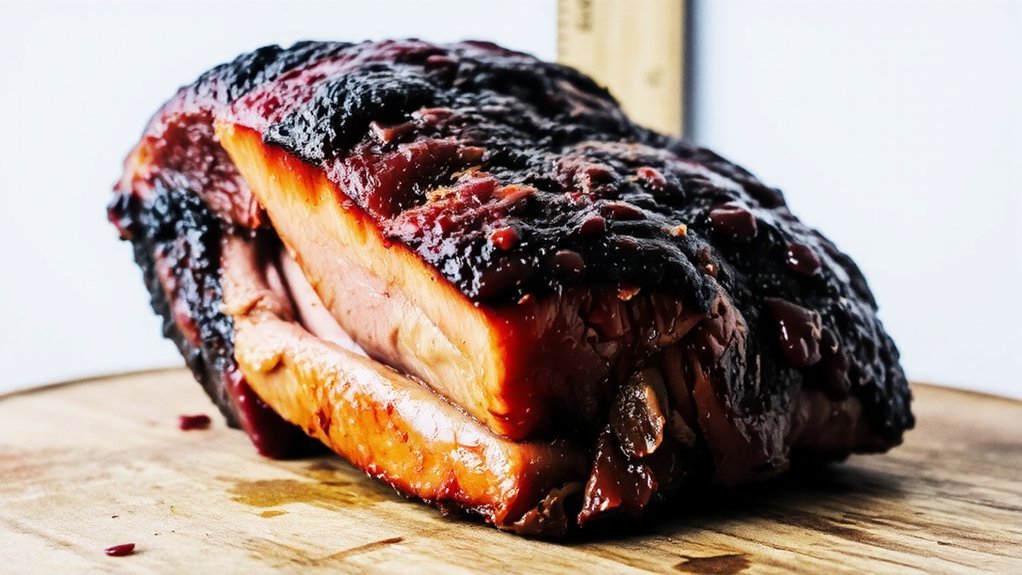
Most great briskets start with one simple choice: whole packer or pretty little half. If you’re feeding a crowd, go packer—point and flat together, fat cap intact, ready to baste itself all night. Smaller group, tighter budget, or less fridge space? Grab a half, usually the flat, leaner, tidy, still generous. Now, peek at brisket grades. Prime’s got lush marbling, melts into velvet. Choice works great, especially overnight. Select? You’ll babysit moisture, but it can sing.
Run your fingers over the fat, look for creamy white, about a quarter inch. Bend the brisket—looser means tender later. Match cut to cooking methods: low-and-slow roasts love the packer; gentler temps suit lean flats. Choose with your guests in mind, then cook like you mean it.
Essential Gear and Setup Options
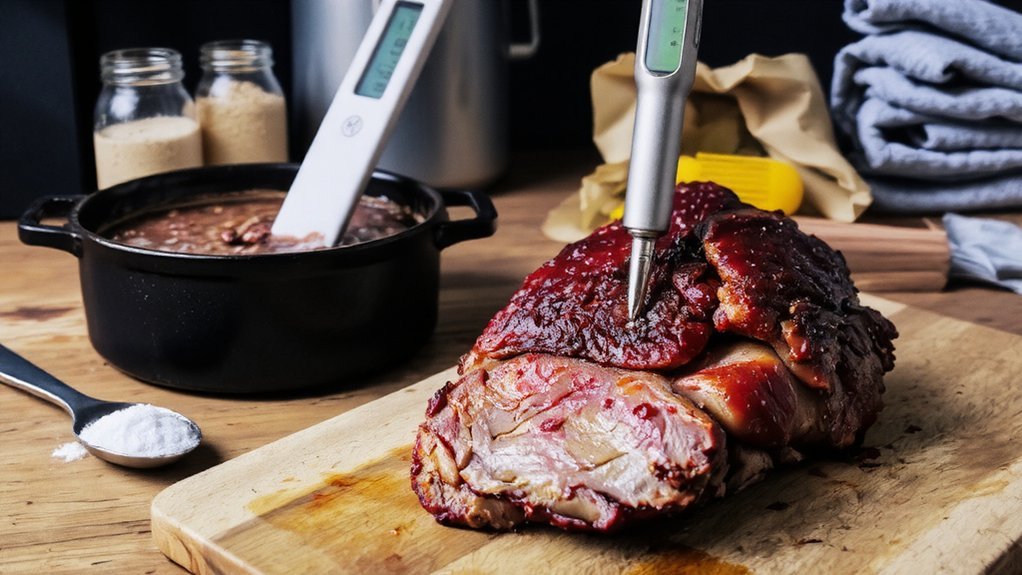
Toolbox first, heroics later. You want dependable brisket tools that make overnight cooking calm, safe, and generous. Start with a reliable smoker or oven, steady heat beats bravado. Add a dual-probe thermometer—one for the meat, one for the pit—so you serve confidence, not guesses. Use a sturdy sheet pan, wire rack, and foil, plus a water pan to keep the cooking environment humid and forgiving.
I like a charcoal chimney, heat-resistant gloves, and a good flashlight for 2 a.m. check-ins. Wood chunks, not chips, for smooth, steady smoke. A small spray bottle—plain water—keeps bark from scorching. Keep tongs long, cooler clean, towels ready for resting. Final touch: a surge protector and timer. Because power blips happen, guests still show.
Flavor-Building Rubs and Marinades
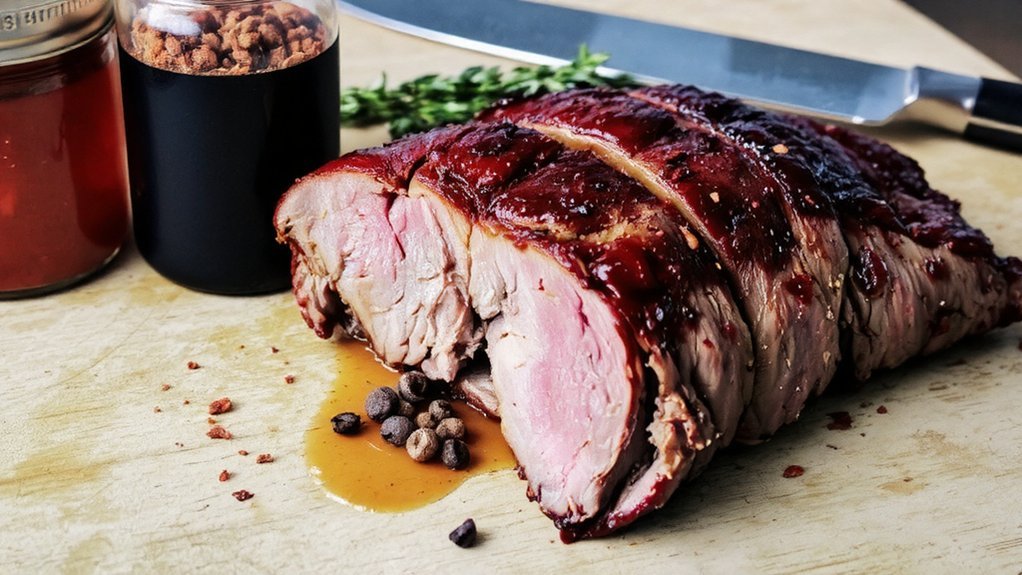
You’re about to build flavor like a pro—start with a smart salt-sugar balance that locks in juice, adds bark, and whispers sweet heat instead of clobbering it. Then layer spices in stages—base notes like paprika and pepper, a bright hit of garlic and mustard, and a bold finisher, because your brisket deserves a chorus, not a solo. Finally, marry acid and fat in your marinade—think cider vinegar and olive oil—so the meat wakes up, the smoke sticks, and your overnight magic actually tastes like it.
Salt-Sugar Balance
When the brisket’s on deck, I start with a simple truth: salt makes meat juicy, sugar makes bark dreamy, and the magic lives in their ratio. You’re cooking for people you love, so let’s honor the meat, and their time. Salt first, always. It pulls in moisture, builds tenderness, and sets your flavor profile. Sugar follows, not shy, but respectful—enough to caramelize, never enough to scorch.
- Start with a 1:1 salt-to-sugar rub, then adjust to taste.
- For overnight curing, a 6% brine ratio keeps slices plush, not mush.
- Use coarse salt; it dissolves slow, seasons deep.
- Pick light brown sugar for toasty notes, clean finish.
- Pat dry before rubbing, then rest, uncovered, for tacky bark.
Spice Layering Strategy
Though salt and sugar set the stage, spices write the plot, and we want a thriller, not a mushy rom-com. Start with a dry rub, light but intentional: black pepper for bite, paprika for warmth, garlic and onion for savory swagger. Aim for spice balance, not a confetti cannon. I like a 3-2-1 rhythm—pepper, paprika, aromatics—then a whisper of cayenne. You’re cooking for guests, so think comfort and clarity.
Toast whole seeds—coriander, cumin—until they pop and smell nutty, then grind. That bloom wakes flavor. Use smart seasoning techniques: layer a base rub now, a bolder dusting right before the overnight rest, a final touch just before the cook. Pat it in, don’t rub like a spa day. Clean edges, generous heart, unforgettable bark.
Acid-Fat Harmony
Because brisket loves contrast, I bring acid and fat to the party like a power couple—bright, rich, and a little dangerous. You want tenderness that hosts well? Marry sharp, mouth-wakening acidic accents with a lush fat balance, then let time do the romancing. I whisk, taste, adjust, because you’re cooking for people you love, not a scoreboard.
- Splash apple cider vinegar, whisper of lemon, just enough to make beef sit up.
- Fold in olive oil or melted tallow, silky, glossy, clingy.
- Add Dijon for tang and grip; it emulsifies like a polite referee.
- Honey or brown sugar, a teaspoon, to round the edges, not mask them.
- Soy or Worcestershire, deep bass notes that make everything hum.
Coat brisket, rest overnight, serve smiles.
Prepping the Brisket the Night Before
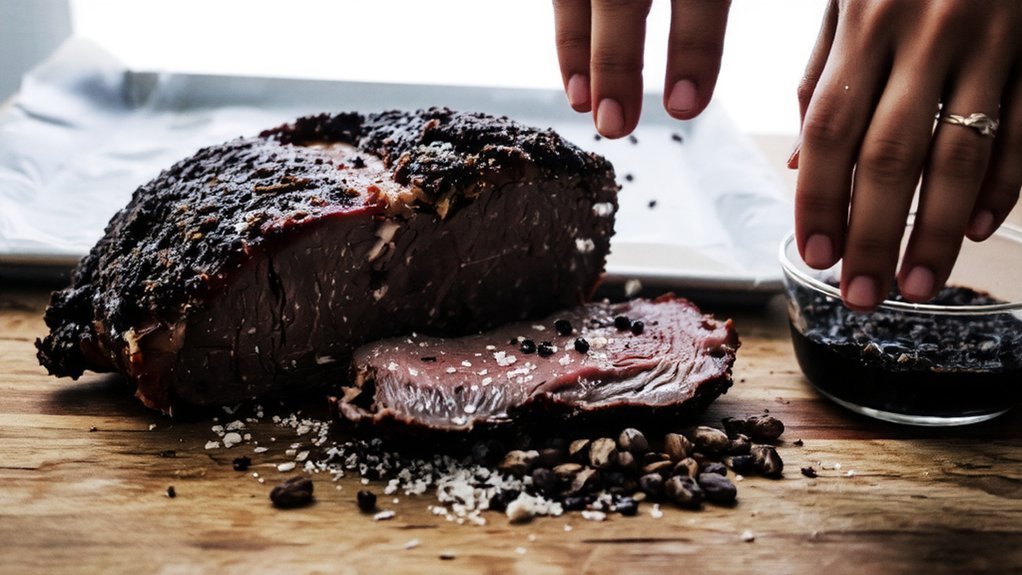
Before we even touch heat, we set the stage, like roadies before a rock show. You pull the brisket out, pat it dry, and get honest with the fat cap. I’m cheering you on—clean, confident brisket trimming shows you care about every bite your guests take. Trim thick hard fat to a quarter inch, leave the soft, silky stuff. Now, overnight seasoning. Salt first, then pepper, garlic, a whisper of brown sugar. Rub it in like you mean it, edges too. Wrap snugly, let it rest cold, flavors mingling while you sleep.
| Step | Action | Sensory Cue |
|---|---|---|
| 1 | Trim fat cap | Smooth, pliable edges |
| 2 | Season generously | Pepper pops, sweet hush |
| 3 | Wrap and rest | Clean aroma, quiet confidence |
Oven, Slow Cooker, and Smoker Methods
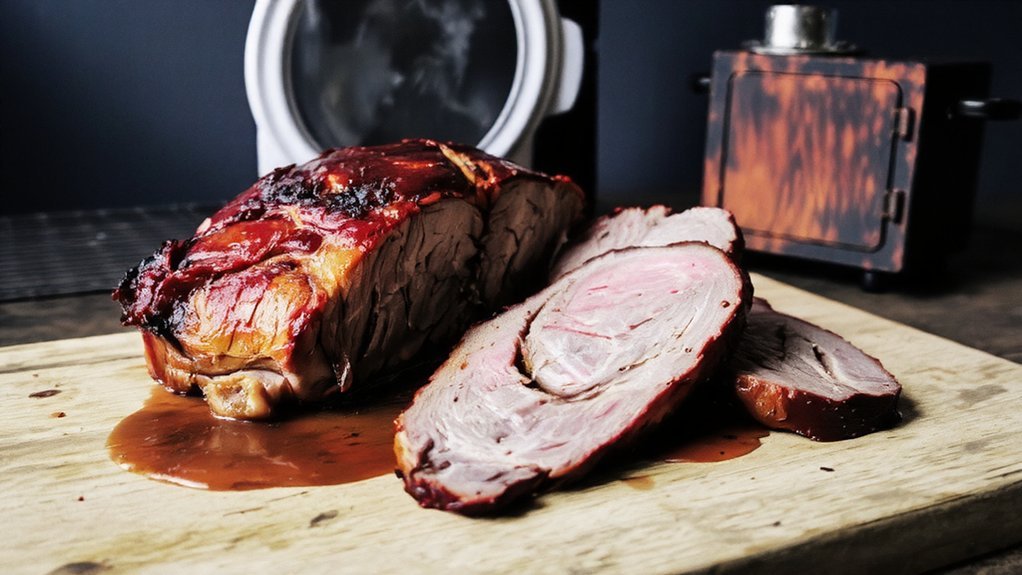
Once that seasoned brisket wakes up, you get to pick your stage: oven, slow cooker, or smoker—three paths, one juicy destiny. I’ll steer, you serve. Match brisket types to cooking techniques, and you’ll feed a crowd like a legend.
Pick your stage: oven, slow cooker, or smoker—three paths, one juicy destiny.
- Oven: tuck it in a roasting pan, foil tent for moisture, pan juices ready for drizzling tableside.
- Slow cooker: fat cap up, snug fit, aromatics underneath, lid on, hands free for setting the table.
- Smoker: clean smoke, steady draft, water pan humming, bark building like applause.
- Combo play: smoke for color, finish covered in the oven, guests think you’re a wizard.
- Slicing plan: rest, then carve across the grain, point richer, flat leaner—serve both, watch smiles bloom.
Your stage, your service, their happy plates.
Low-and-Slow Temperatures and Timing
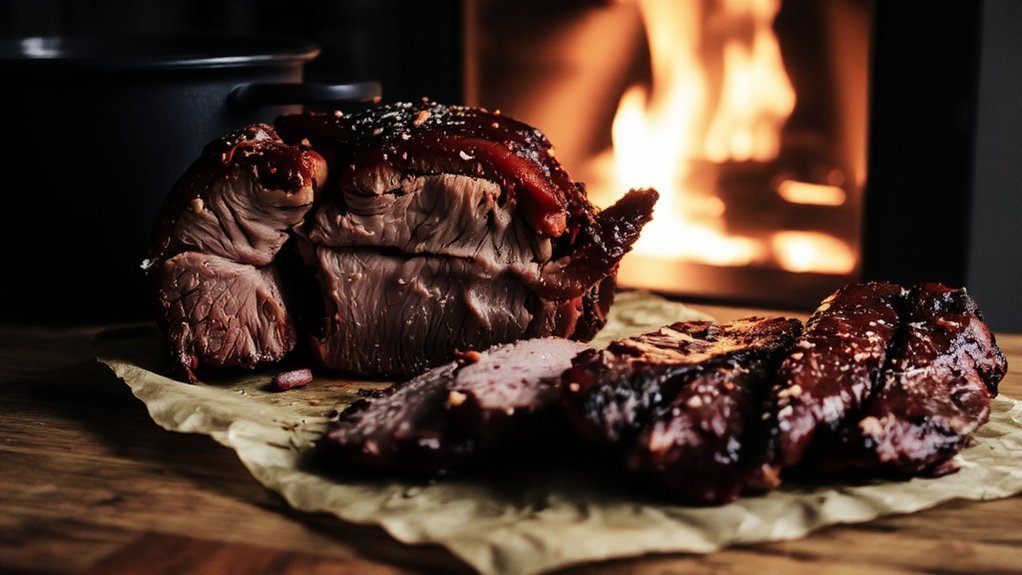
If patience has a temperature, it’s 225°F, and your brisket loves living there. You’re cooking for people you care about, so give it the calm, steady heat it deserves. Low temperatures melt collagen slowly, turning tough fibers into buttery slices that make late-night volunteers swoon.
Here’s the rhythm. Set the pit at 225–250°F, stay consistent, don’t chase the needle. Plan generous cooking times: about 1 to 1.5 hours per pound at 225°F, a touch faster at 250°F. Twelve to sixteen hours isn’t unusual for a full packer, and yes, your shoes might fall asleep first. Check internal temp, not the clock—target the mid-190s to low-200s°F for tenderness. Probe like warm butter? You’re close. Take your time, you’re feeding hearts as much as plates.
Managing Moisture, Bark, and Smoke
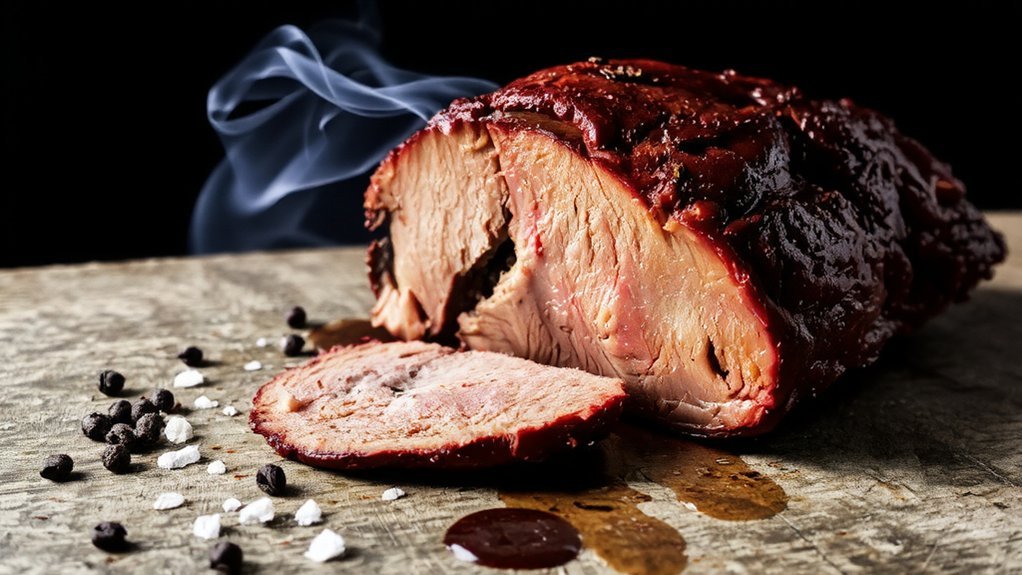
Though the fire does the heavy lifting, you’re the moisture manager, bark boss, and smoke whisperer. I’m right there with you, pacing the patio, coffee in hand, pretending we’re calm. Aim for a steady cooking environment, clean smoke rolling thin and blue, not billowing white. That’s how smoke infusion sings, not shouts. Moisture management keeps slices juicy, while bark development builds that peppery, crackly armor guests rave about.
Be the moisture manager, bark boss, and smoke whisperer—chasing thin blue, calm and steady.
- Keep the pit at a consistent temp; swings wreck bark and sap moisture.
- Spritz lightly after the rub sets, apple cider or water, no sugar rush.
- Manage airflow; thin blue smoke equals flavor, thick smoke equals regret.
- Place a water pan for stable humidity and heat.
- Wrap only when bark is set, not before.
Overnight Safety and Peace-of-Mind Tips
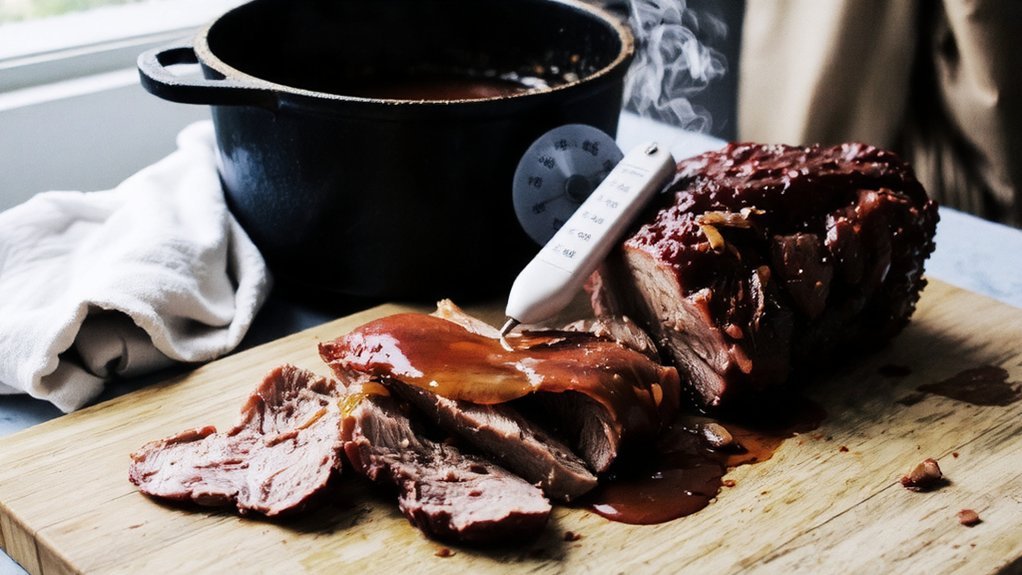
You want to sleep like a rock while the pit hums, I get it, so let’s set smart safeguards—clean probes, fresh batteries, a steady fuel bed, tight vents, and a remote thermometer that pings your phone before anything gets spicy. Lock in safe targets: grate temp steady in your chosen range, brisket cruising through 140°F in four hours, then riding to 195–205°F for tenderness, with the cooker never dipping into the danger zone. Do that, and you’ll wake to wood-sweet air, a calm phone, and a bark that snaps like a good comeback.
Set-And-Forget Safeguards
Because a brisket nap shouldn’t turn into a pitmaster panic attack, let’s build your set-and-forget safeguards so you can sleep like a well-fed baby. You’re cooking to serve others, so we’ll stack safety tips, common sense, and a little humor. I’ll keep it simple, you keep it steady, and the brisket pays us back in butter-soft slices.
- Set your cooker on a sturdy, heatproof surface, clear the clutter, give cords space, no wobble, no worry.
- Use fresh fuel, dry wood, clean vents, and a reliable controller, then lock your settings.
- Place a drip pan with water, catch the fat, tame flare-ups, keep humidity happy.
- Route probes neatly, label them, avoid pinching, verify readings before bed.
- Prep food storage containers, foil, and gloves, so resting and holding stay smooth, tidy, safe.
Night lights on, lid down, dreams queued.
Safe Temperature Targets
If we’re going to sleep while the brisket does its slow tango, we set numbers, not vibes. You’re serving people you care about, so we lock in food safety first. Set the pit to a steady 225–250°F, clean smoke, stable draft. Probe the flat, dead center. We want internal temperatures through the danger zone fast: from 40°F to 140°F within four hours. That’s the non-negotiable.
Once you hit 150–160°F, relax into the stall; hold steady heat, don’t panic-spritz. When bark looks like dark toffee and feels firm, wrap tight. Cruise to 195–203°F internal, then test. Not with hope, with a probe—like butter? You’re there. Pull, vent five minutes, then rest, wrapped, in a dry cooler to 150–165°F. You’ll sleep, they’ll swoon.
Resting, Slicing, and Serving Like a Pro
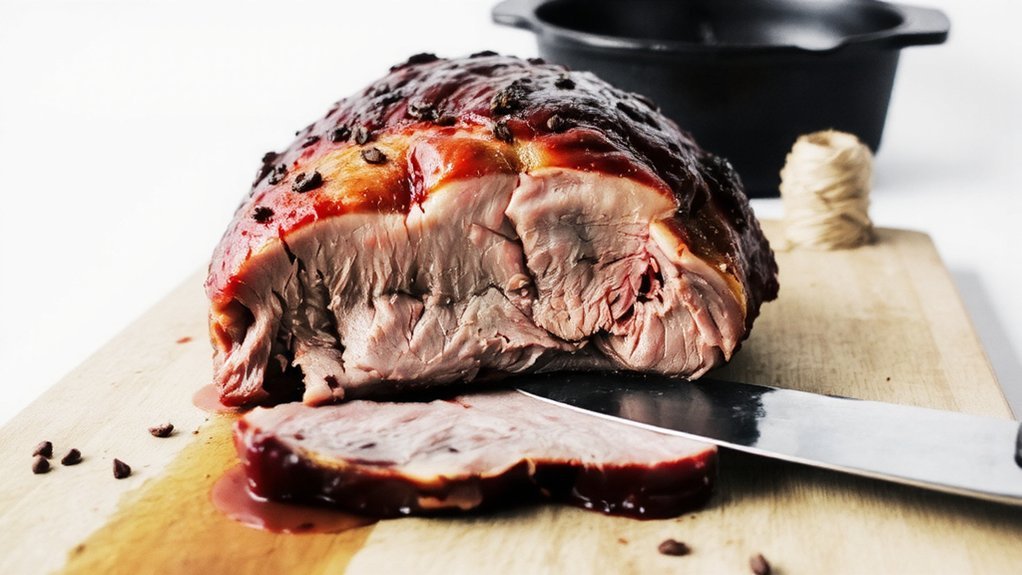
While the pit still whispers and the bark crackles like cellophane, we hit the brakes—hard—because brisket glory happens off the heat. You’ll serve better when you pause. Wrap the slab loosely, hold it warm, and let the juices stroll back home. I know, waiting hurts. But generosity tastes better when it’s juicy, not dry and sorry.
Here’s how we dial in resting techniques and slicing methods that make you look like a hero:
- Tent in butcher paper, rest 45–90 minutes in a dry cooler.
- Vent steam for a minute, save that liquid gold.
- Separate point and flat, then rotate to find the grain.
- Slice the flat pencil-thick against the grain; point a touch thicker.
- Wipe the blade often, serve immediately with quiet confidence.
Make-Ahead, Reheating, and Leftover Ideas
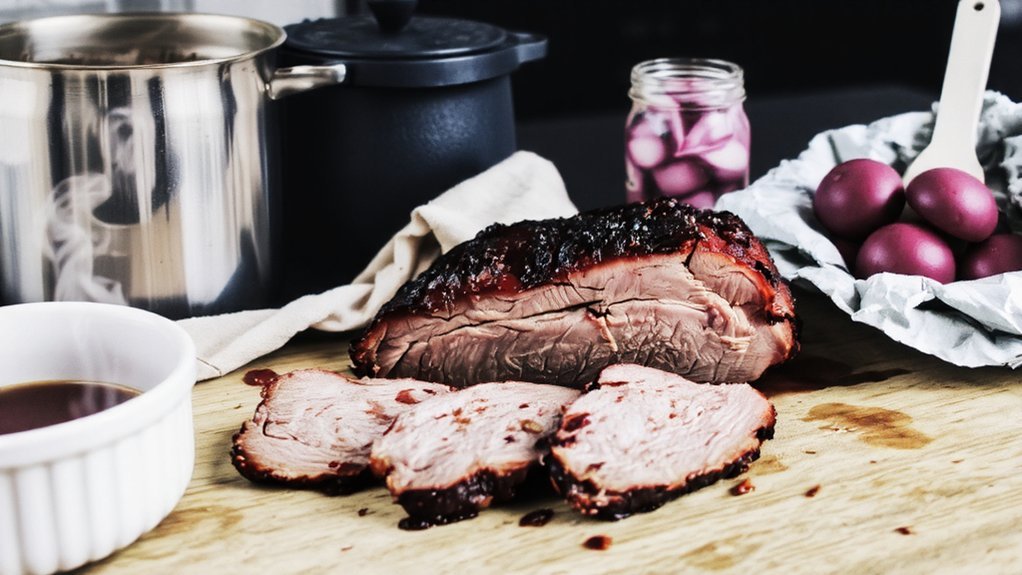
You’ll win tomorrow’s dinner tonight with a smart prep-ahead seasoning plan—salt, pepper, garlic, a little brown sugar, rubbed in until your hands smell like a smokehouse. After the cook, chill the whole slab overnight, slice it cold into neat, tender planks, then reheat gently with a splash of broth so the fat melts, the edges glisten, and the kitchen smells like applause. Leftovers? You’ve got brisket tacos, cheesy hash, ramen boosters, grilled cheese with smoky beef, even brisket fried rice—call it a second show with a louder encore.
Prep-Ahead Seasoning Plan
Because brisket rewards patience, we’ll front-load the flavor now and coast later. You want generous, even seasoning, so the meat sings when you serve it. I’m thinking smart prep time, zero panic. Grab your rub, breathe, then work like you mean it: salt first, then the rest. Press, don’t pat. The brisket should smell toasty, peppery, a little sweet. You’re setting tomorrow’s victory plate, today.
- Choose seasoning options: classic Texas (salt, pepper), coffee-cocoa, garlic-herb, ancho-brown sugar, or mustard-maple.
- Trim fat thoughtfully, leave a protective cap for moisture and flavor.
- Salt 12–24 hours ahead, then add the rub right after; simple, effective.
- Wrap tight, refrigerate, label with time and weight.
- Plan reheats: broth splash, low oven, gentle, loving.
Your guests will taste your calm.
Overnight Chill and Slice
After the cook, let that brisket exhale, then tuck it in for the night—chilled, snug, and smug. I’m serious: overnight chilling is your secret sauce for clean slices and calm hosting. Cool it to room temp, wrap tight with its juices, refrigerate flat. Tomorrow, you’re the hero.
Set the pan on low heat, let the gelled drippings melt into liquid gold. Warm slices in that, not dry air. Now, slicing techniques: trim excess fat while it’s cold, find the grain, then cut against it, quarter-inch for sandwiches, pencil-thin for platters. Keep your knife long, sharp, unapologetic.
Serving a crowd? Slice only what you need, keep the rest chilled, then rewarm gently. Leftovers stay juicy two to three days, wrapped, labeled, ready to serve.
Creative Leftover Transformations
Cold brisket in the fridge isn’t leftovers, it’s potential—stacked, marbled, ready to perform. You’re hosting tomorrow, so let’s make it sing. Slice while cold, reheat gently—pan with a splash of broth, low heat, lid on, patience. I’ll coach, you’ll shine.
- Warm, then sear edges in a hot skillet, instant bark revival, applause incoming.
- Toss chopped brisket with salsa verde, quick brisket tacos, limey, oniony, gone in minutes.
- Build barbecue sandwiches, soft buns, pickles, slaw, sauce whispering smoke and molasses.
- Fold into creamy grits, shower with scallions, black pepper, a hug in a bowl.
- Brisket fried rice—ginger, garlic, soy, peas—fast, fragrant, heroic Tuesday.
Make-ahead win: portion, vacuum-seal, freeze. Reheat sous-vide or simmer-bag, then crisp. You’ll feed many, effortlessly.