
You’ve got leftover brisket, and you’re terrified it’ll turn into chew-toy jerky—fair. I’ve been there, fork in hand, hope in my eyes. The trick? Gentle heat, trapped steam, and a little flavor insurance. Think low oven, fat side up, a splash of broth, tight foil, patience. Or go sous vide and make your future self proud. Slices need speed, whole slabs need time. Want it juicy, bark intact, and smoky as day one? Here’s the playbook.
Why Brisket Dries Out and How to Prevent It
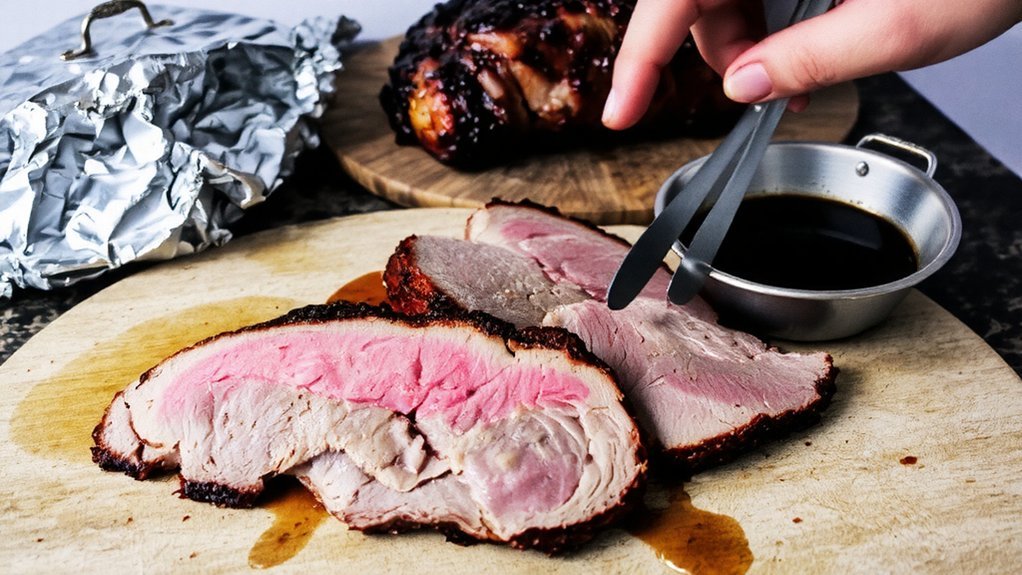
Even though brisket looks like a juicy dream when it’s fresh, it dries out fast because it’s a tough, lean-heavy cut that only behaves when its fat and collagen stay moist and melted. You’re feeding people you love, so let’s guard moisture retention like it’s the crown jewels. Brisket’s fibers are dense; push them past ideal temps, and the juices sprint away. Slice too soon, they escape again. Oxygen and time? Thieves.
Here’s the play: keep it wrapped, keep it sauced, keep it calm. Rest the meat, tented, so juices redistribute. Save the drippings, add a splash of stock, whisk in a little gelatin—instant insurance and upgraded meat quality. Slice against the grain, thinner for sandwiches, thicker for plates. You serve comfort, not sawdust.
The Best Way to Reheat Brisket in the Oven

Because the oven gives you steady, gentle heat, it’s your best shot at reviving brisket without turning it into kindling. Set the oven temperature to 300°F, not roaring, just patient. Slice thick, or leave big chunks if you want drama. Splash in beef broth or reserved jus, a modest quarter cup. Cover tightly with foil. Now, brisket placement matters: pan center, middle rack, fat side up if possible. You’re building a tiny steam spa.
I listen for a soft simmer, then wait, 20–30 minutes, until it hits 155–165°F. Pull it, rest five. It smells like Sunday.
| Step | Cue |
|---|---|
| Preheat | 300°F oven temperature |
| Arrange | Center rack brisket placement |
| Rewarm | 20–30 mins, 155–165°F |
Serve warm, sliced across the grain, with pride.
Low-and-Slow Sous Vide Reheating Method
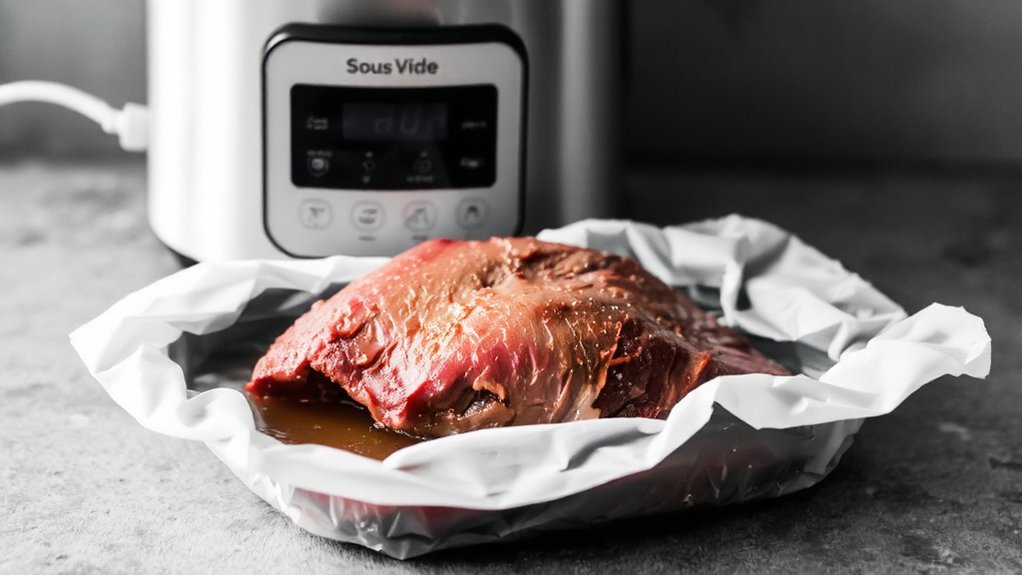
While the oven is great, sous vide is your secret time machine, slipping brisket back to peak tenderness without breaking a sweat. Bag your chilled slices or whole hunk with a splash of jus, seal it tight, then sink it into a 150°F bath. That temperature control is the magic—steady, gentle, predictable.
Now wait. Not impatient waiting—intentional waiting. You’re freeing collagen, not boiling memories. Two to four hours for slices, longer for a thick slab. The meat warms edge to center, juices stay put, and you look like a hospitality wizard. That’s the headline of sous vide benefits: precision without drama.
Pull the bag, pat it dry, and breathe in that rich, smoky perfume. Tender? Yup. Juicy? Absolutely. Guests smiling? Mission accomplished.
Quick Skillet or Griddle Reheat for Slices
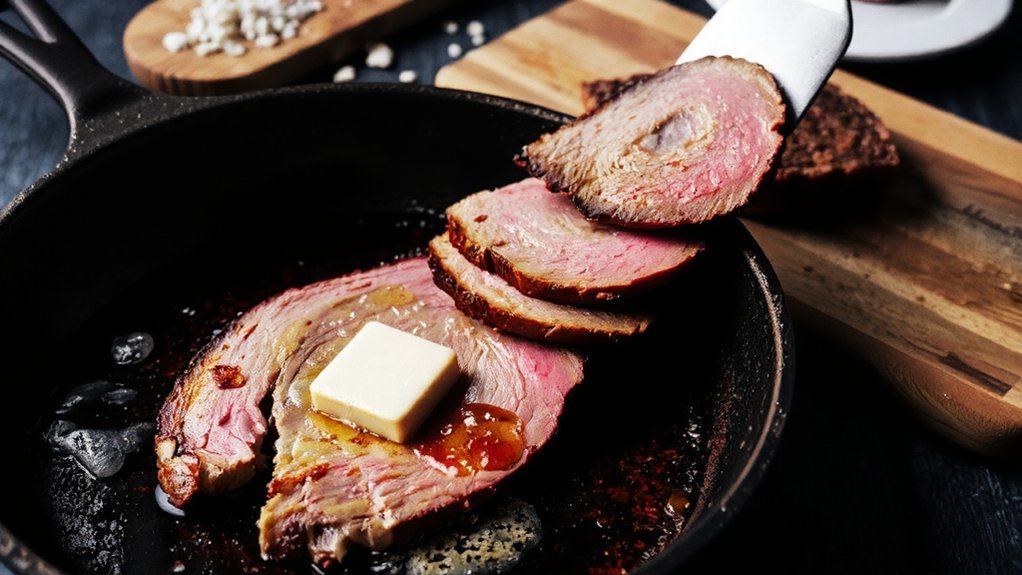
Grab a heavy skillet or a flat griddle—cast iron if you’ve got it—because you want even heat and those faint, sizzly edges. Preheat it hot-but-not-scorching, add a thin shimmer of oil or a swipe of beef fat, and let the aroma smack you in the face like a friendly hello. Lay in the slices, 45–60 seconds per side, flip once with confidence (tongs, please), and pull them the moment they glisten and loosen—blink, and you’ll overshoot.
Choosing the Right Pan
Not every pan treats brisket slices like the royalty they are, so let’s pick your throne wisely. For quick skillet or griddle reheat, pan types matter, a lot. I reach for cast iron when I want deep browning and steady heat, the kind that kisses edges and wakes up the smoke. Stainless works too, especially if you like quick responsiveness. Nonstick? It’s gentle, but it won’t deliver that proud sear.
Let’s talk material considerations. Heavy bottoms hold heat, thin pans scorch, and nobody applauds burnt bark. A flat, roomy surface keeps slices from crowding, so every piece gets its moment. Griddle or wide skillet, both shine for feeding a crew. Handle comfort counts, so you can slide, flip, serve, and look like you meant it.
Preheating and Oiling
Two minutes of patience now saves ten later, so let’s heat that pan like you mean it. Slide the skillet on medium-high, let it warm until a drop of water skitters like it’s late for choir practice. That’s your cue. You’re not scorching, you’re building a gentle sizzle runway for those brisket slices.
Now, oiling options. Use a thin sheen, not a puddle—enough to glisten. I like high-smoke oils: avocado, canola, or refined peanut. Butter smells dreamy, but it burns fast; mix a dab into neutral oil if you crave that nutty note. Want extra moisture for guests? Brush the meat lightly with beef tallow or a touch of stock-infused oil. Smart preheating techniques plus a sensible slick of fat keep edges crisp, centers juicy, and plates grateful.
Timing and Flipping Technique
While the pan hums, you’re on the clock: brisket slices reheat fast, so think minute-one side, minute-the-other, then quick checks. Here’s how I roll: lay slices flat, don’t crowd, listen for a gentle sizzle, not a shout. Your goal is heat-through with a kiss of crust, not jerky cosplay.
Use precise timing techniques: set a 60-second timer, flip, give 45–60 seconds more. Now tap the slice with tongs—soft, steamy, bendy? You’re golden. Still cool in the middle? Ten more seconds per side, tops.
Flipping strategies matter. Slide the spatula under the fat cap, lift, turn toward you, keep juices in the pan. Drizzle a teaspoon of stock, cover for 20 seconds. Serve hot, stack neatly, accept applause, pretend you’re humble.
Moisture Boosters: Drippings, Broth, and Foil
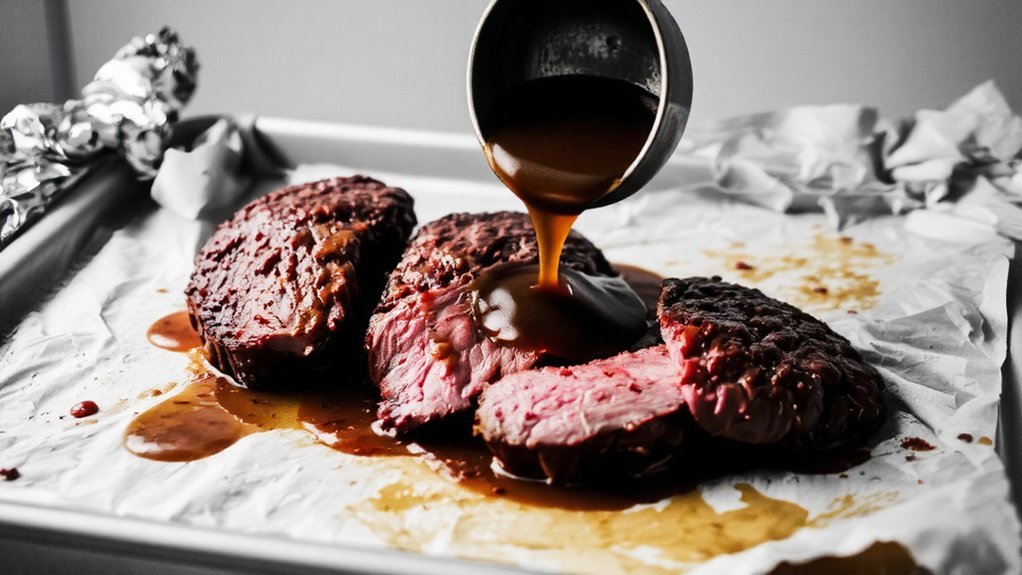
You kept those glorious drippings, right? Spoon a little over the brisket, splash in beef broth if you’re short, then wrap it tight in foil like a care package from your future self—steam builds, fat melts, and the meat sighs back to life. Pop it in the oven low and slow, and you’ll pull out slices that are glossy, jiggly, and shamelessly juicy.
Save and Use Drippings
First things first, don’t toss those brisket drippings—treat them like liquid gold. You’re cooking to care for people, and this is how you keep every slice tender, glossy, and worthy of seconds. Skim the fat while it’s warm, save both layers: the clear fat for searing, the dark jus for reheating. That’s where the drippings benefits kick in—built-in moisture, natural gelatin, and instant flavor enhancement.
When you reheat, splash a few tablespoons of the jus over the meat, let it hug the fibers, then warm gently. Hear that soft sizzle? That’s your cue. If the drippings are chilled, melt them, whisk with a touch of warm broth, and create a quick baste. Brush, flip, baste again. You’re not reheating; you’re reviving. Guests will notice. You’ll grin.
Foil-Wrapped Reheat Method
Next comes the foil fix—simple, sealing, and wildly forgiving. You’ll cradle that brisket like it’s the guest of honor, then I’ll nudge you: add drippings first. No drippings? A splash of warm beef broth works. Think cozy blanket, not swimming pool. Lay slices in a shallow pan, drizzle, then tuck tight with heavy-duty foil sealing for maximum moisture retention and minimum drama.
Slide it into a 275°F oven, low and slow, about 20–30 minutes for slices, longer for a hunk. Don’t peek. Steam is flavor’s Uber—open early, it cancels. When it’s hot, rest five minutes, still wrapped, to calm the juices. Reveal the brisket like a magician. It glistens, smells smoky-sweet, and cuts like butter. Your guests? Quiet, then grateful.
Reheating Whole Brisket vs. Sliced: Key Differences
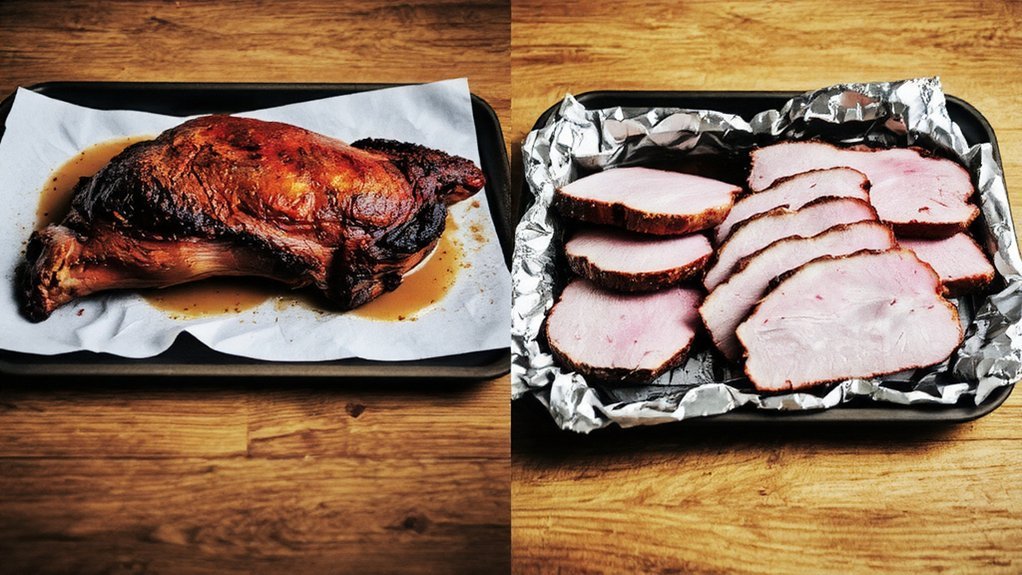
Although both end up juicy if you treat them right, reheating a whole brisket and reheating slices are two different games with different clocks. With a whole brisket, you’re warming a roast, not a sandwich stack. It needs gentle heat, time, and a moisture buffer, so guests get tender bites, not sad jerky. With sliced brisket, you’re chasing quick, even heat, so every slice lands glossy, fragrant, and ready to serve.
- For a whole brisket, reheat low and slow, wrapped snug, with a splash of broth to wake the bark.
- For sliced brisket, stack slices, moisten lightly, cover, then warm fast but careful.
- Probe for 155–165°F, not blazing hot.
- Rest both briefly, then plate like you mean it.
Storage, Cooling, and Reheat Safety Tips
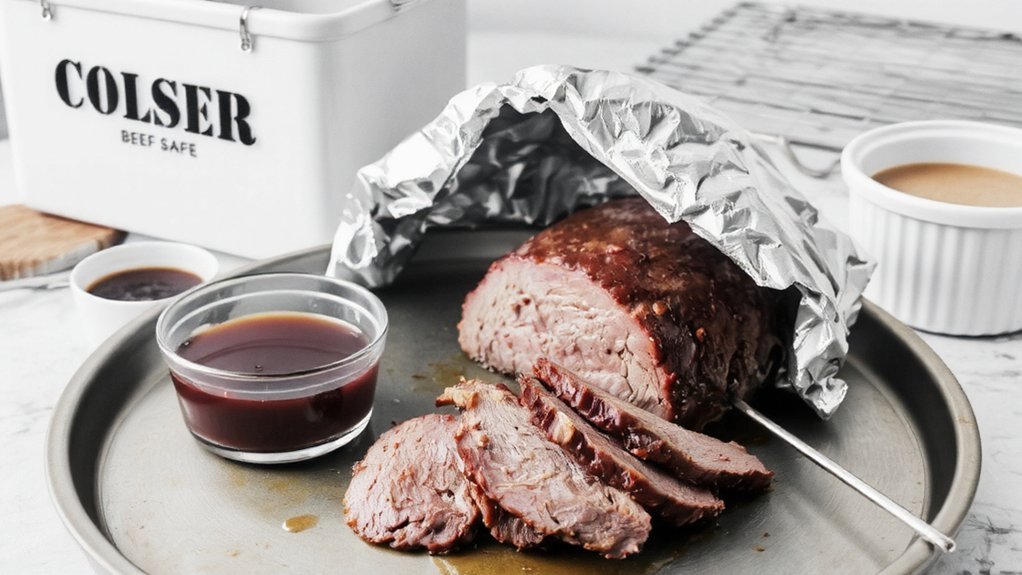
Before you chase that smoky high again, lock in safety like a pit boss with a stopwatch. Cool brisket fast, serve folks well, sleep easy. Slice thick, spread on sheet pans, and use quick cooling techniques: shallow layers, fans off, fridge on. You’re racing the 2-hour rule, friend, and bacteria sprint.
Pack it right. Choose airtight storage containers, label date and cut—future you will applaud. Keep juices, they’re liquid gold for reheating. Fridge at 40°F or below, freezer for longer stints, flat and stackable for tidy shelves and happy volunteers.
Reheat gently. Add reserved jus or broth, wrap tight, 250–300°F oven till 165°F internal. No guessing—thermometer time. Stir slices, rotate pans, keep it moist. If it smells off, doesn’t pass. Your guests deserve safe, tender glory.