
Last Saturday, you slid a pepper-crusted brisket into a low oven, set it to 225°F, and crossed your fingers—smart move. You’ll choose the right cut, rub it like you mean it, then let slow heat melt collagen into buttery bites, while butcher paper locks in that smoky, beefy perfume. In the morning, you’ll rest it, slice against the grain, and—yeah—own brunch. But first, there’s one step most folks skip, and it changes everything.
Choosing the Right Brisket Cut
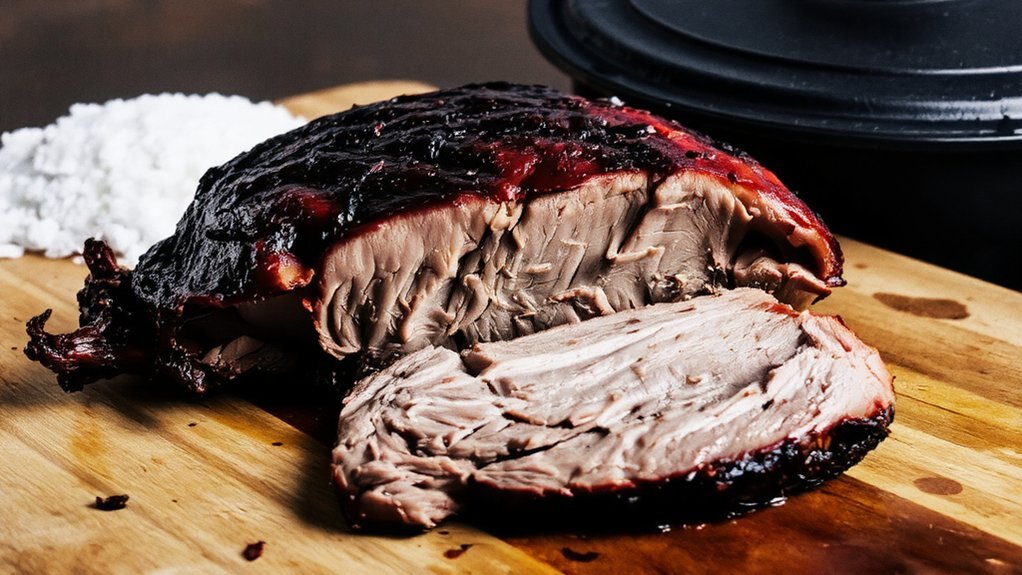
Here’s the secret no one tells you at the butcher counter: not all brisket is created equal. You’re cooking to care for people, so pick a cut that treats them right. Start with brisket grades: Prime brings rich marbling, tender slices, and grateful guests. Choice works great too, especially for an overnight cook. Skip Select unless your budget insists, then lean on technique.
Now zoom in on cut variations. The point, thick and fatty, melts into juicy shreds—crowd-pleasing, saucy, forgiving. The flat, lean and tidy, slices beautifully for platters, sandwiches, and seconds. If you can, ask for a whole packer, 12–16 pounds, fat cap intact, even thickness end to end. I’ll nudge you: choose even marbling, flexible feel, clean beefy aroma, and consistent shape.
Essential Seasoning and Rub Basics
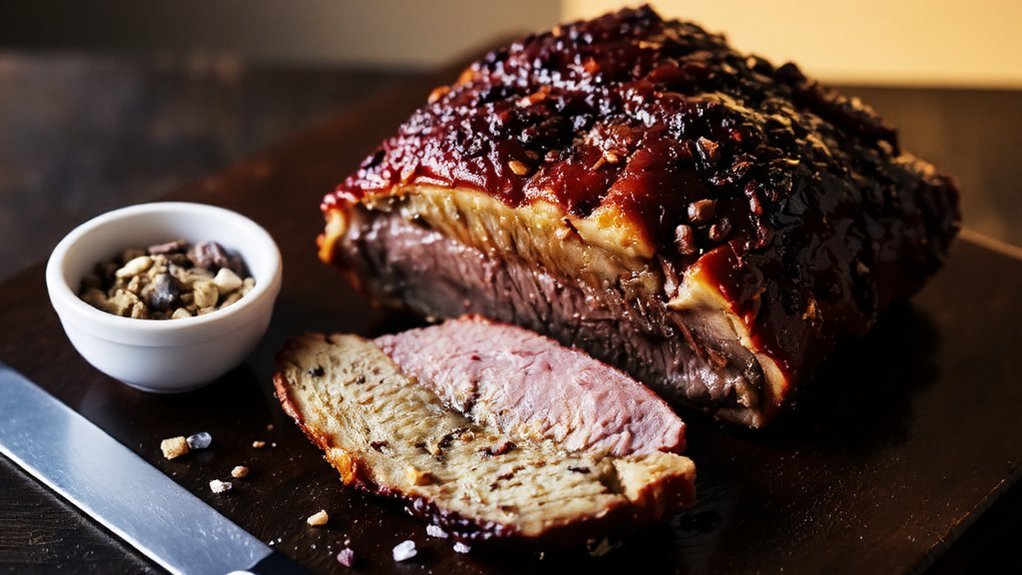
You’ll nail brisket flavor by locking in a smart salt-to-meat ratio first—think even coverage, coarse grains, a light snowfall that melts into the fat. Then we balance the spice rack: bold pepper, earthy paprika, a little garlic and onion for backbone, maybe cumin for that warm, smoky whisper—measured, not mayhem. Finally, play sugar and heat like a duet—brown sugar for bark and caramel notes, chili and cayenne for kick—so your crust sings, not scorches.
Salt-To-Meat Ratio
Most great briskets start with a simple math problem: about 1/2 to 3/4 teaspoon of kosher salt per pound of meat, evenly spread and confidently rubbed in. You’re seasoning for your guests’ first bite, not just the bark, so measure, don’t guess. I favor kosher for grip and control, but let’s talk salt types: kosher, flaky sea, fine table. They weigh differently, so stick to teaspoons per pound, not pinches per mood.
Salt opens the door for meat absorption. Sprinkle high, rain evenly, then massage like you mean it. Give it time—at least an hour, overnight if you can. The salt pulls moisture out, dissolves, then rides back in, carrying flavor. You’ll taste it in every slice, edge to center. Simple, generous, dependable.
Spice Balance Guide
Why do some rubs sing while others mumble? Because balance, my friend. You’re feeding people you care about, so build a steady chorus, not a loud solo. Start with a base: black pepper for bite, garlic and onion for savory hum, paprika for color and gentle warmth. I stir, sniff, rub between fingers—aroma tells truth.
Think flavor profiles like a map. Earthy (cumin), citrusy-bright (coriander), herbal lift (thyme), and a whisper of smoke (smoked paprika). Combine, then taste a pinch on your tongue. Adjust. If it feels flat, add brightness; if it’s shouty, anchor it with something earthy.
Keep your spice combinations consistent across both sides of the brisket, edges too. Coat evenly, press it in, then let it rest. Patience wins. Your guests notice.
Sugar and Heat
Spice choir tuned? Good, because sugar and heat need harmony if you’re cooking to care for others. You’re building a crust that sings, not a candy shell that screams. Aim for a gentle sweetness balance: turbinado or brown sugar for sturdy crystals, paprika and cayenne for a warm, steady burn. I like a 3:1 ratio of sugar to heat, then taste, adjust, breathe.
Here’s the play: rub brisket dry, oil lightly, rain on the mix. Press, don’t pat. Sugar fuels caramelization effects, giving you mahogany bark, toffee whispers, smoky edges. But watch the line—too hot, too fast, and sugar scorches. Keep temps low overnight, let spice oils bloom, let time do its quiet work. You’ll serve slices that melt, not apologize.
Overnight Slow-Cook Time and Temperature
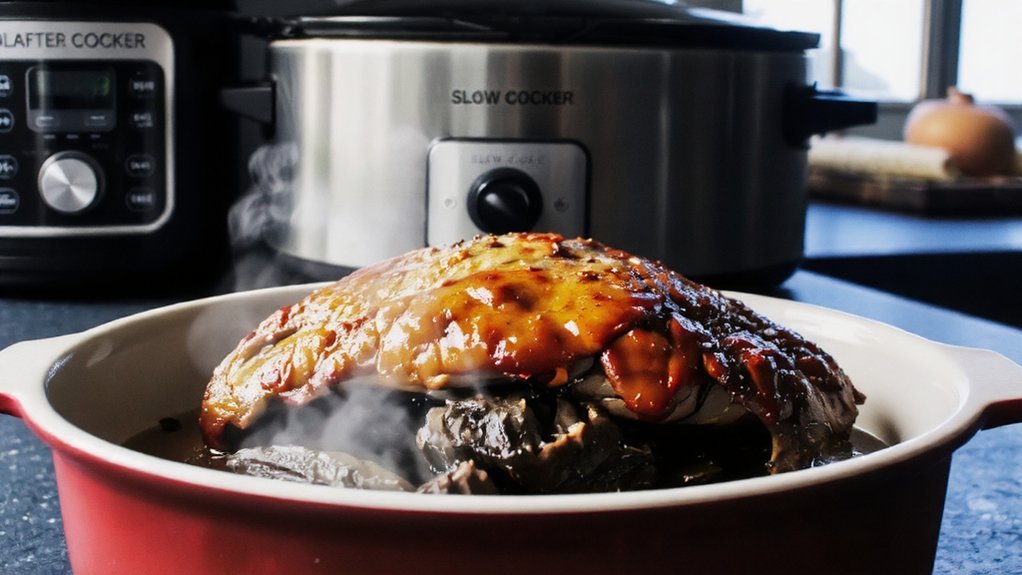
You’ll set this brisket for an overnight stretch—think 8 to 12 hours—so it hums along while you sleep, house smelling like a smoky campfire you didn’t have to clean up. Keep the temp low and steady, 200–225°F, so the collagen melts, the bark builds, and you wake up to meat that sighs when you touch it. When it’s done, park it in a warm, safe resting window—wrapped, 150–170°F—for an hour or two, let the juices calm down, and pretend you planned it this perfectly.
Ideal Overnight Hours
Although the clock does most of the work, you still need a plan: set your brisket to cruise at 200–225°F and give it 8–12 hours overnight, depending on thickness and marbling. Now, let’s serve your people well. Aim for 8 hours on smaller flats, 10–12 on hefty packers, because patience turns bark crackly, fat silky, and slices napkin-worthy. I like a midnight start, lights low, kitchen quiet, you in control.
Here’s the rhythm: trim, season, tuck it in, then let time and gentle heat do the heavy lifting. You’ll wake to perfume-in-the-hallway levels of aroma, a sweet perk of overnight benefits. These cooking techniques honor your guests, and your sleep. If it’s wiggly like Jell-O, you nailed it. If not, give it another hour.
Low-And-Slow Temperature
Because brisket rewards patience, we lock in a low-and-slow lane: 200–225°F, steady as a lullaby, all night long. You’re not racing; you’re shepherding flavor, quietly, lovingly. This gentle range melts collagen into velvet, keeps juices where they belong, and prevents a crust from burning while the center naps.
Here’s the play: set your cooker to 215°F as a midpoint, then trust but verify. Use tight temperature control—probe at grate level, another in the thickest flat. If your pit drifts, nudge vents or bump a single degree; tiny moves, big payoff. The low and slow benefits show up in the morning—bark mahogany, fat rendered, slices tender yet intact. You’ll carve like a hero, serve like a saint, and smile like you meant it.
Safe Resting Window
Once that brisket hits probe-tender and the bark sings, we slide into the safe-resting window—no drama, just control. You’re cooking to serve, so we guard juices, texture, and time. Hold at safe temperatures, 150–165°F, wrapped in butcher paper, tucked in a dry cooler or warm oven. I like 155°F—steady, gentle, loyal. Aim for a resting duration of 2–6 hours; overnight holds demand vigilance, a probe alarm, and a backup plan. If it drops under 140°F, reheat above 165°F before serving. Not heroic, just smart.
| Resting Target | What You’ll Notice |
|---|---|
| 150–155°F | Slices stay plush, juices linger |
| 160–165°F | Firmer bark, still supple |
| 2–3 hours | Prime for slicing and plating |
| 4–6 hours | Catering comfort, zero panic |
| Overnight | Use alarms, keep it safe |
Moisture Management and Wrapping Methods
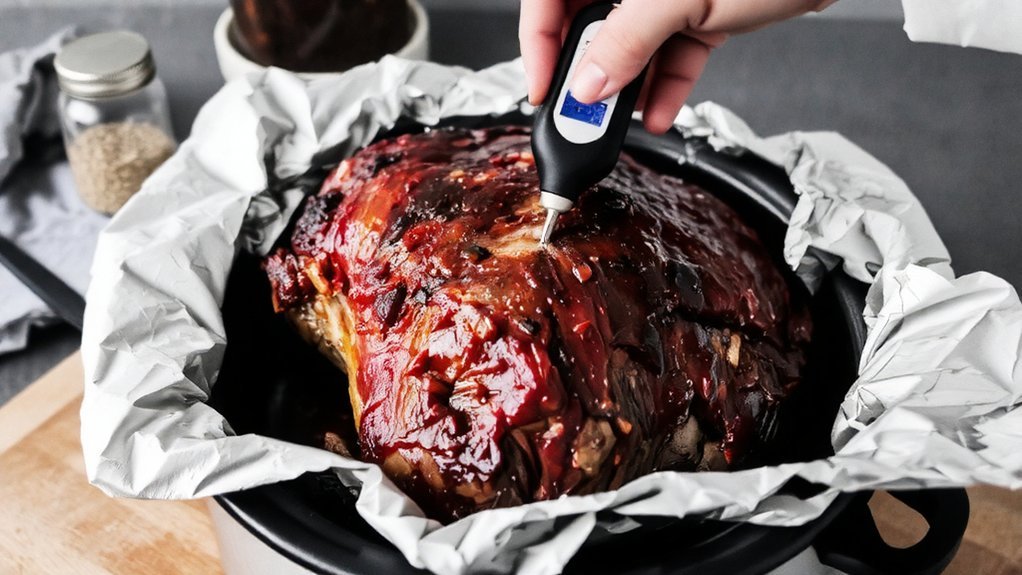
Even as the brisket hums along low and slow, moisture is the game you’re secretly coaching from the sidelines. You want juicy slices for grateful plates, so think moisture retention first, bark second, and balance both like a benevolent boss.
Here’s the play: once the bark sets—dry to the touch, deep mahogany, fat bubbling—wrap. Choose your wrapping techniques with intent. Butcher paper breathes, keeping bark crisp while holding steam in check. Foil locks it down, super juicy, slightly softer crust, faster cook. Combo wrap? Foil first, paper outside, best of both worlds.
Before wrapping, spritz lightly—apple cider and water, nothing sticky. Trap that humble humidity, don’t drown it. Tuck the edges tight, seams down, thermometer through the side, then let the pit purr.
Morning Finish: Resting, Slicing, and Serving
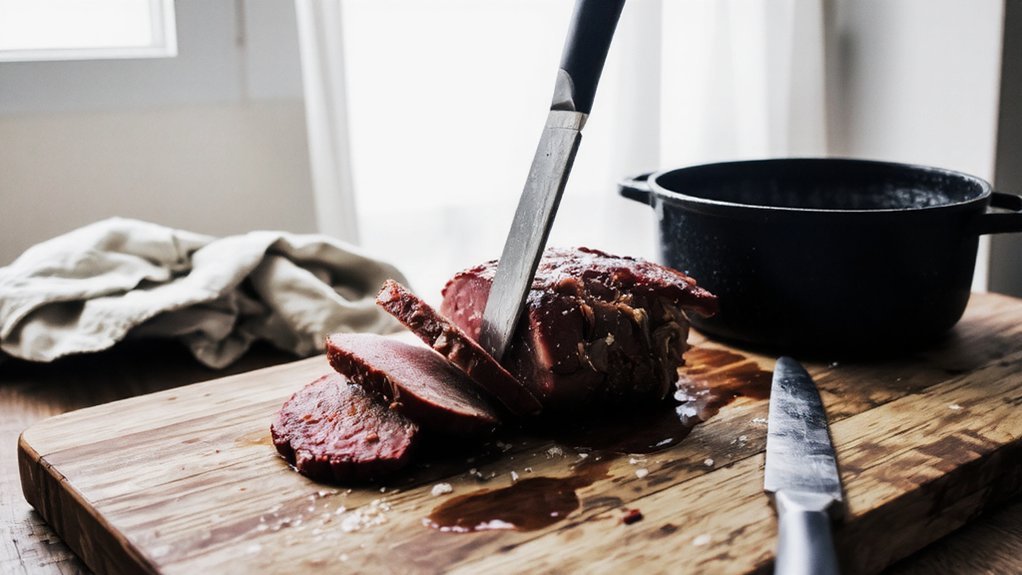
When the sun rubs its eyes and your brisket finally taps out, don’t rush the victory lap—respect the rest. Keep it wrapped, park it in a dry cooler or warm oven, and let juices calm down. I like 45–90 minutes; the bark stays proud, the fibers relax, your guests get the best you. That’s service.
Now, set your board, grab a sharp slicing knife, and breathe. Identify the flat and point, spot the grain like little highways, then turn the meat so you cut across them. That’s tenderness on a plate. Use patient, quarter-inch slices for the flat, thicker cuts for the point. Wipe the blade between passes. These resting techniques and slicing methods keep juices where they belong, not on your board, but in every grateful bite.
Storage, Reheating, and Make-Ahead Tips
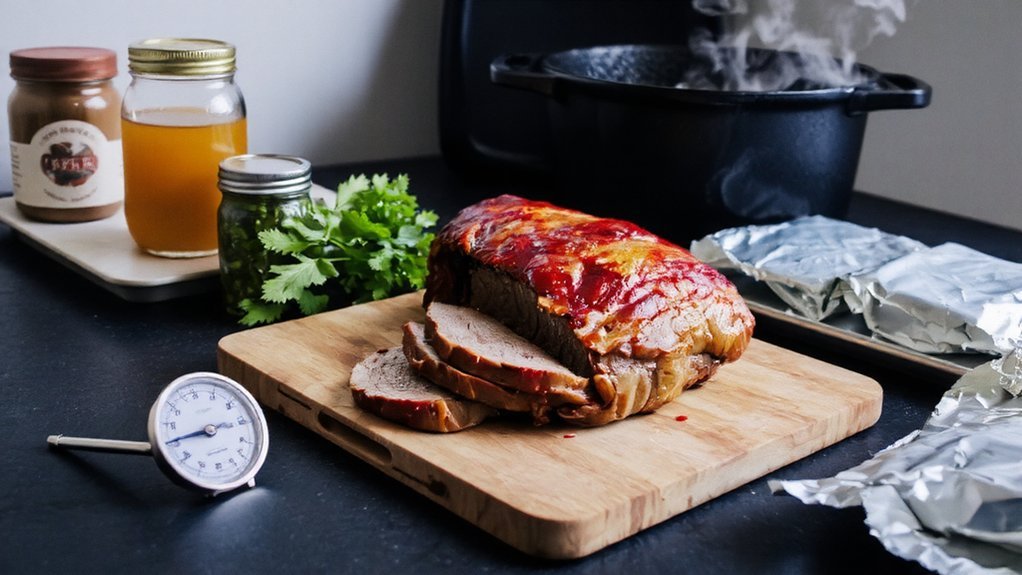
You nailed the slice, now let’s protect your hard-won juiciness from the sad fridge fade. Slide brisket into shallow, airtight storage containers, bathe it in its juices, label, chill fast. I’m bossy because dryness is a thief. For make ahead preparation, hold whole or sliced meat in its liquid, up to four days, or freeze two months, wrapped tight, double-bagged, no freezer funk.
Reheating methods matter: low oven, 275°F, pan covered, splash of broth, 20–30 minutes; or stovetop simmer, gentle and glossy; or sous vide, 150°F, foolproof. Microwave? Sure, short bursts, sauce guard on duty. Serve warm platters, ladle the drippings, bask in applause. Leftover ideas: brisket grilled cheese, taco nights, hash with eggs, ramen booster, shepherd’s pie, midnight sandwich.