
You want brisket that’s juicy, tender, and not a sad pot roast, right? I’ve got you. You’ll watch temps, feel for buttery tenderness, and judge that bark like a talent scout. We’ll talk probe tests that glide, a jiggle that screams set Jell-O, and what to do when the stall shows up like a bad guest. I’ll even fix the flat-vs-point drama. Grab your thermometer—your brisket’s about to confess its secrets.
Target Internal Temperatures and What They Mean
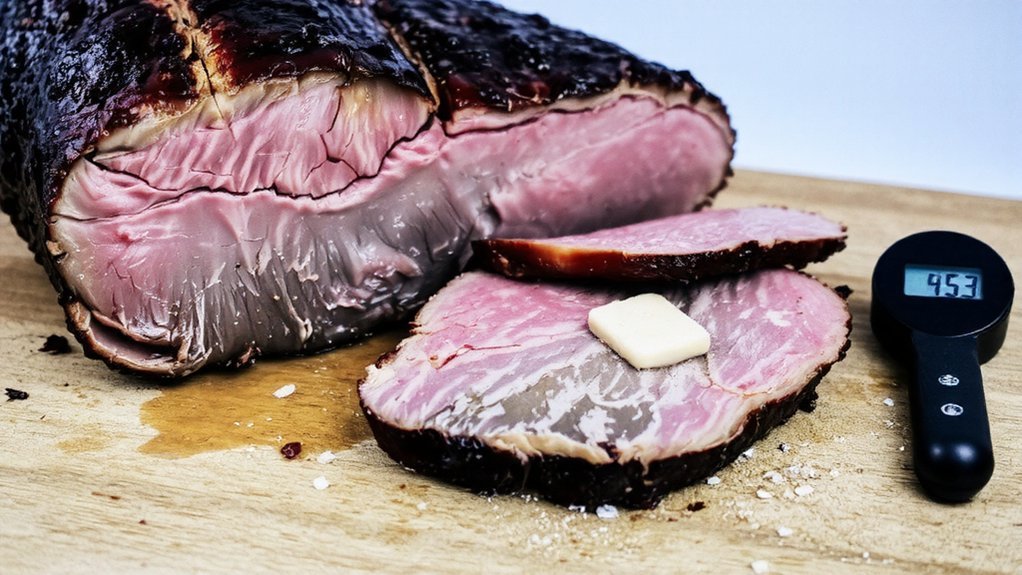
Even if you swear you can “feel” when brisket is done, the thermometer tells the truth. You’re cooking for people you care about, so let meat science, not bravado, guide you. Slide a clean probe into the thickest part, away from fat pockets. Now, the target temperatures: at 150–160°F, you’re in the stall, collagen clenching, bark forming, patience thinning. Push through. Around 175–185°F, connective tissue starts melting, juices glisten, aromas turn deep and nutty. The sweet spot for slicing? Typically 195–203°F. That’s where fibers relax, slices hold shape, and plates come back empty.
Pull it when it hits your goal, tent with butcher paper or foil, and rest 45–90 minutes. Let juices redistribute. Then slice across the grain, serve generously, accept applause.
The Probe Test: Feeling for Butter-Like Tenderness
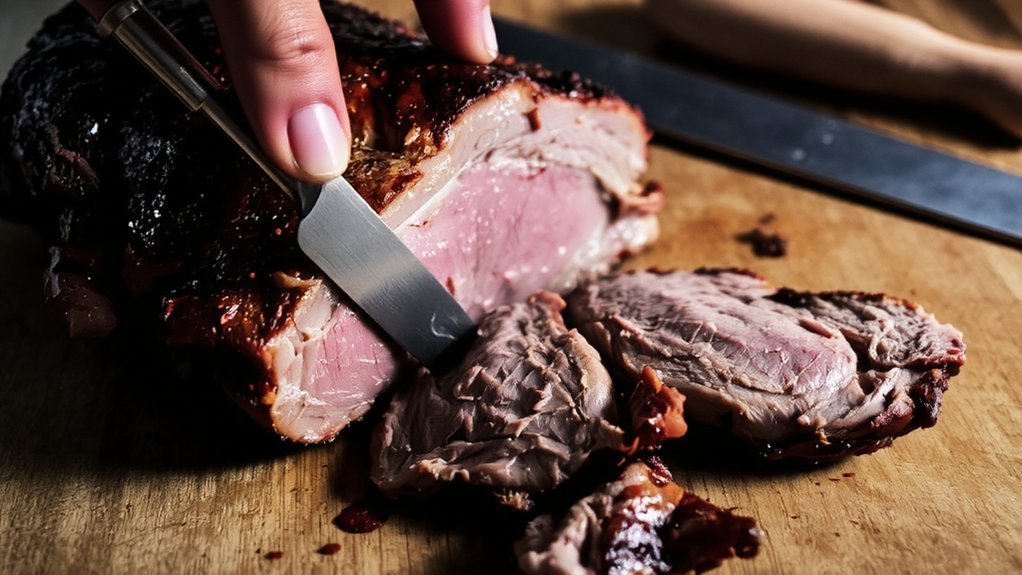
How do you know it’s not just hot meat but truly tender? You do the probe test, friend. Take a thin thermometer or skewer, steady your breath, and go for gentle probe insertion along the grain. Don’t jab, glide. If it slips in like warm butter, you’ve got community-pleasing brisket. If it snags, keep cooking, then rest, then try again. I’m rooting for you, and yes, I’ve missed before—my probe once bounced like it hit a trampoline.
| Spot | Feel | Action |
|---|---|---|
| Point | Slight resistance | Wait 20 minutes |
| Flat | Smooth slide | Begin resting |
| Edge | Firm tug | Keep smoking |
| Thick center | Butter-soft | Pull and rest |
| Across grain | Gritty drag | Not ready |
This is your tenderness check, not a number game. Serve with care, confidence, and a grin.
Visual Cues: Bark Development, Jiggle, and Juice Color
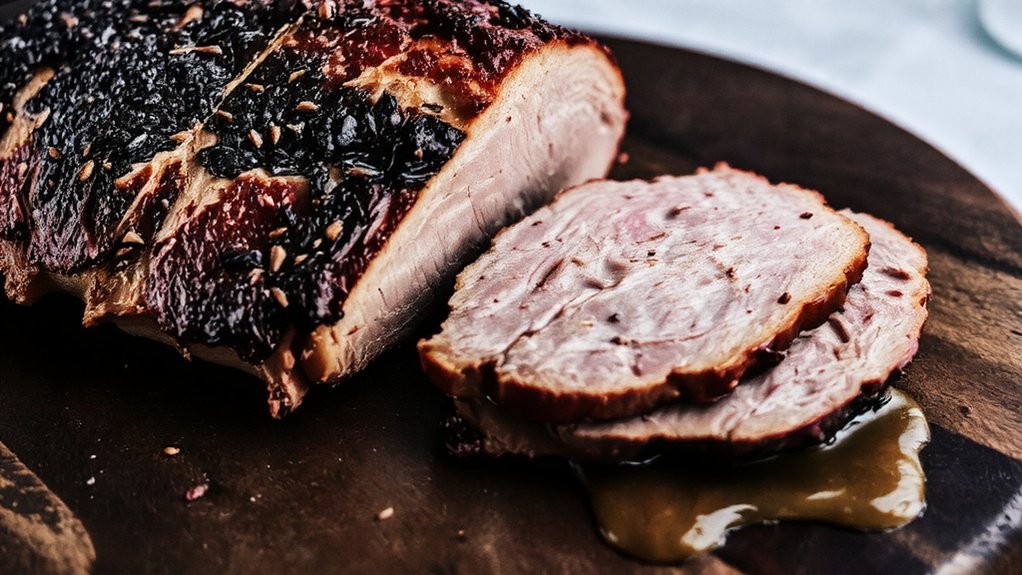
Bark first, always. You’re cooking for people you care about, so let the bark lead. Look for a deep mahogany crust, tight and dry to the touch, not sandy. I want you to scratch it lightly; that bark texture should resist, then crumble a whisper. Now, give the brisket a gentle shake. Does it shimmy like set Jell-O, not like a trampoline? Good. That jiggle says the collagen surrendered.
Next, check juice clarity. Pierce near the flat’s thick end, wipe, then press. You want glossy drips, tinted tea-brown, not milky, not bloody. If it runs clean and slow, you’re close. If it gushes pink and thin, keep going. Step back, breathe in smoke and spice, then smile—this brisket’s nearly ready to serve.
Managing the Stall and When to Wrap
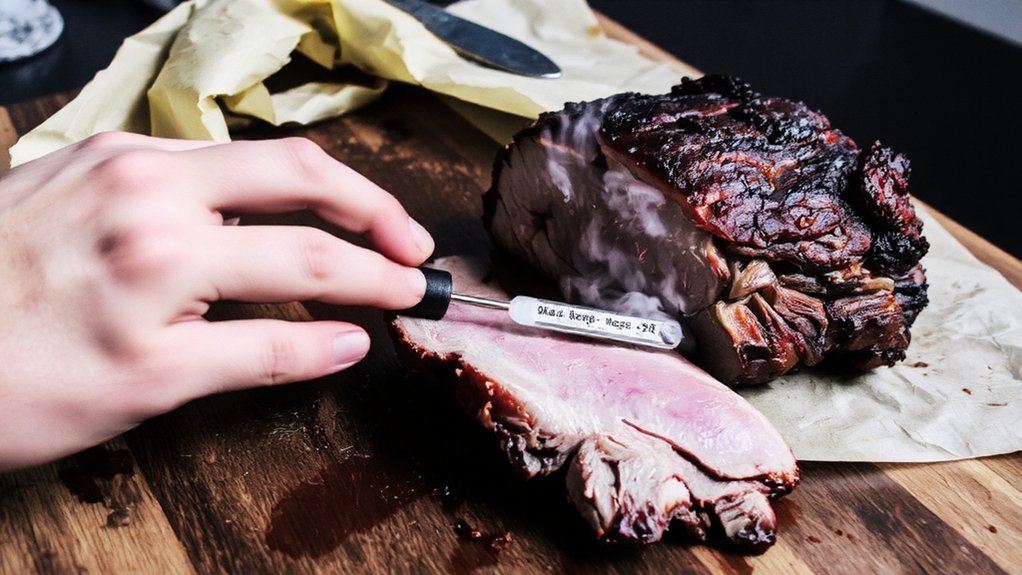
You’ve got bark that bites back and juices that run tea-clear, so now the stall shows up like a nosy neighbor at dusk—uninvited, stubborn, and not leaving. Breathe. This is where stall management turns chaos into calm. I watch temp hover around 160–170°F, then decide: ride it out, or wrap to serve guests on time.
| Trigger | Action | Result |
|---|---|---|
| Temp stalls 30+ min | Wrap in butcher paper | Preserves bark, steady climb |
| Guests due soon | Foil wrap, tight | Fast push, softer crust |
| Bark too dark | Add a layer of paper | Shields, saves flavor |
| Moisture dipping | Spritz, then wrap | Juicy slices, grateful smiles |
Use wrapping techniques with purpose, not panic. Probe tender? Unwrap, rest, bless your table.
Point vs. Flat: Doneness Differences by Muscle
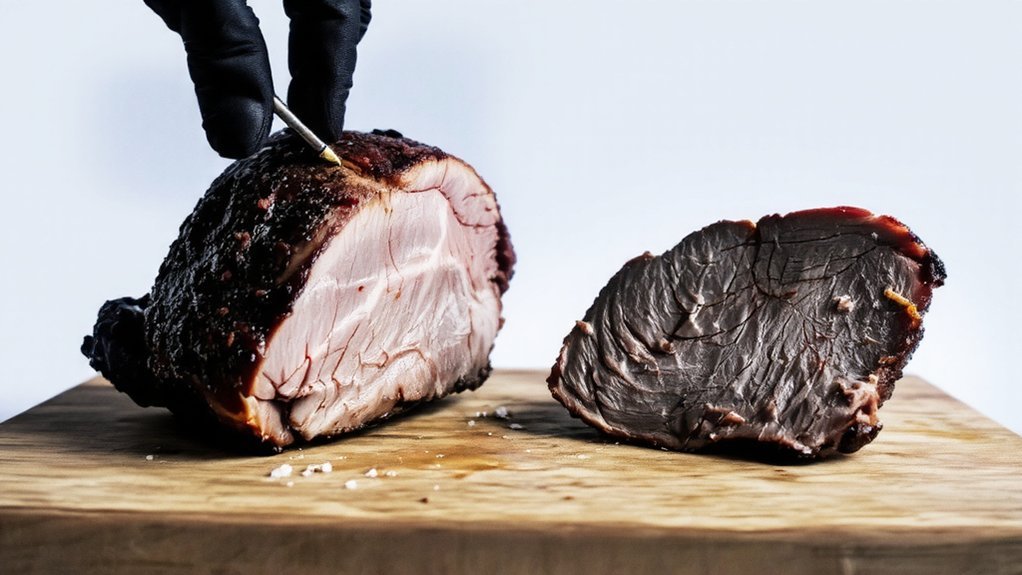
Two muscles, two personalities, one brisket drama. You’re cooking to bless a crowd, so read the room—well, the meat. The point’s rich and marbled, the flat’s lean and honest. I probe both, smile when they each sing a different note, then guide them toward harmony.
1) Aim for point tenderness: slide a probe in, feel buttery resistance, like warm peanut butter. If it grabs, it’s not there.
2) Judge flat texture: seek a soft, sliceable feel, not mushy, not squeaky. Think tender roast, tidy slices.
3) Check bend and jiggle: the point should wobble with joy; the flat should flex, then yield.
4) Taste test a corner: point bursts juicy and beefy; flat whispers clean, deep, steady.
Serve the right slices to the right plates, hero mode activated.
Resting and Holding: Timing for Maximum Tenderness
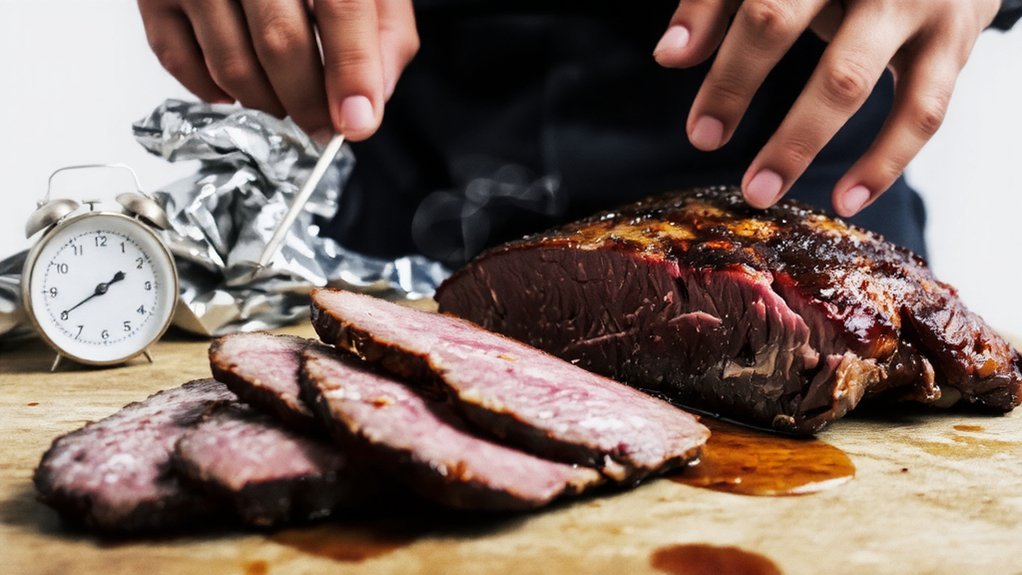
Even after the temp hits perfect, the brisket’s not done—it’s thinking. Let it rest, and you’ll serve slices that sigh apart, not crumble. I know, the crowd’s hungry, but patience is love with a timer. Aim for a resting time of 45 to 90 minutes, wrapped, vented briefly so the bark stays proud, then tucked back in.
Now the hold. You’re the steward of tenderness. Park it in a dry cooler or a warm oven, holding temperature around 150–165°F. Collagen keeps relaxing, juices redistribute, flavors marry like an anniversary dance. I check for that soft, jiggly feel, and yes, I grin every time. When you finally slice, go pencil-thick, across the grain, and watch plates empty. You didn’t rush—you cared.
Common Mistakes That Make Brisket Seem “Done” Too Early
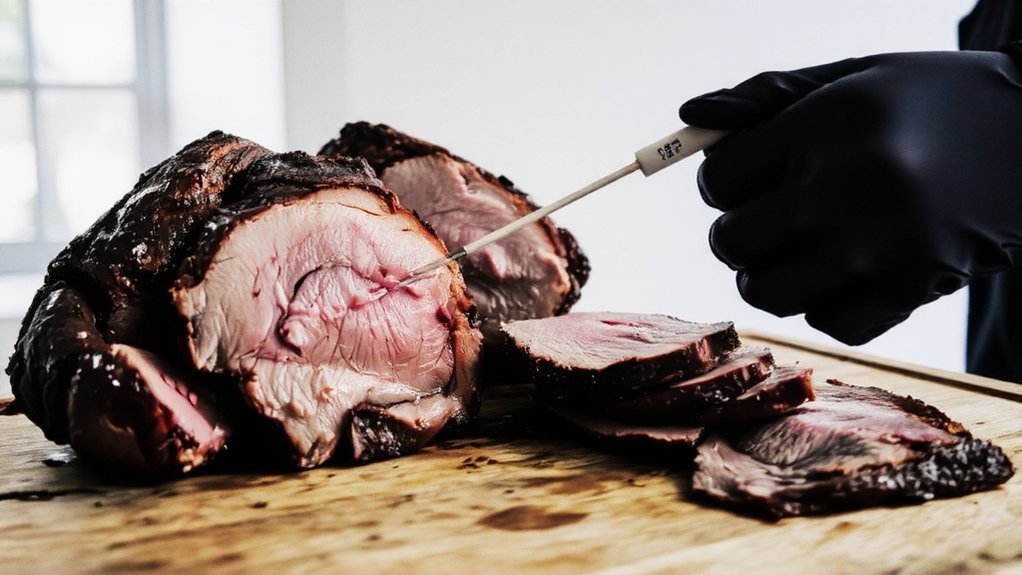
Resting’s handled, the bark’s still smug, now let’s talk traps that make brisket look “done” before it actually is. You’re cooking to serve people well, so let’s dodge the sneaky stuff. I’ve blown this before, smiled too soon, then carved regret. Here’s how you stay hero, not hurried.
1) Temperature misjudgment: Probe in the thickest flat, not the fat seam. Check multiple spots. Trust feel—like warm butter, gentle slide.
2) Bark bias: Dark crust lies. If the slice bends and crumbles, it’s dry; if it tears, it’s tight. Wait for soft, juicy slices.
3) Steam fake-out: Opening the pit spikes heat, then drops it—classic overcooking issues. Keep steady, stay patient.
4) Clock worship: Time’s a rumor. Cook by probe tenderness, then rest, wrapped, until relaxed.