
Like a slow dance with smoke and patience, you’re about to make brisket that actually melts. You’ll pick the right cut, trim that stubborn fat cap, shower it with salt and pepper, then let it think about its life choices. I’ll walk you through steady 250°F heat, the dreaded stall, the wrap that saves the day, and the rest that seals the deal. Fair warning: once you taste it, your weekends change. Ready?
Choose the Right Brisket Cut and Size
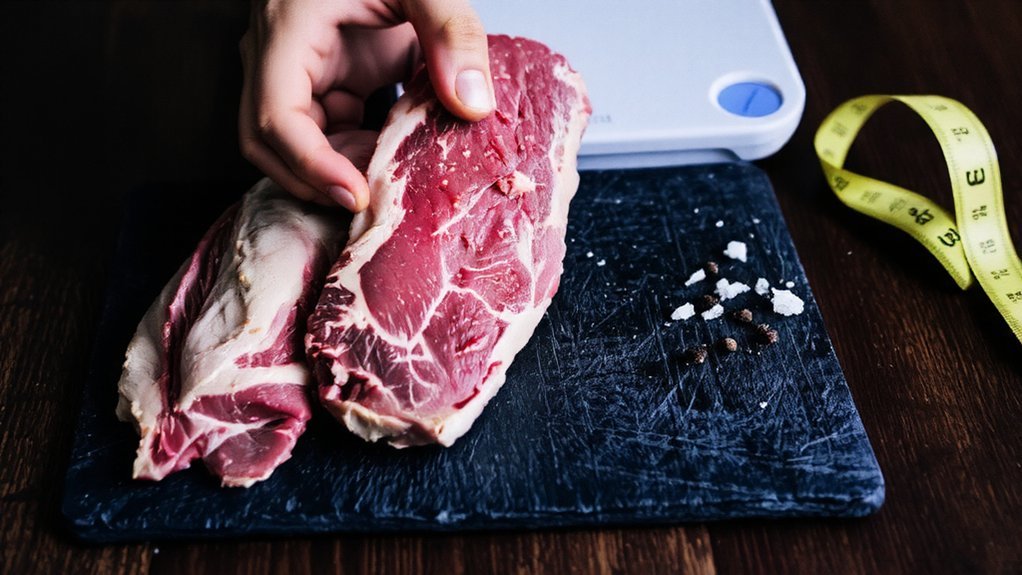
Here’s the thing about brisket: the cut you pick decides your destiny. If you’re cooking to bless a crowd, choose wisely. Two main brisket types rule the game: packer-cut, and its two halves, point and flat. The point’s marbled, juicy, forgiving. The flat’s leaner, slices neat, feeds the punctual uncle who loves order. Hosting a big table? Grab a full packer, 12–16 pounds, plenty of bark-to-bite ratio. Cooking methods matter, too—low and slow loves fat; lean cuts need steady heat, careful pacing.
Picture it: you cue the oven or smoker, lift that hefty slab, feel the chill, smell the clean beefiness. Hear me now, hero—you’re matching cut to mission. Small family dinner? A 5–7 pound flat. Church picnic? Packer, no regrets.
Trim, Season, and Prep for Cooking
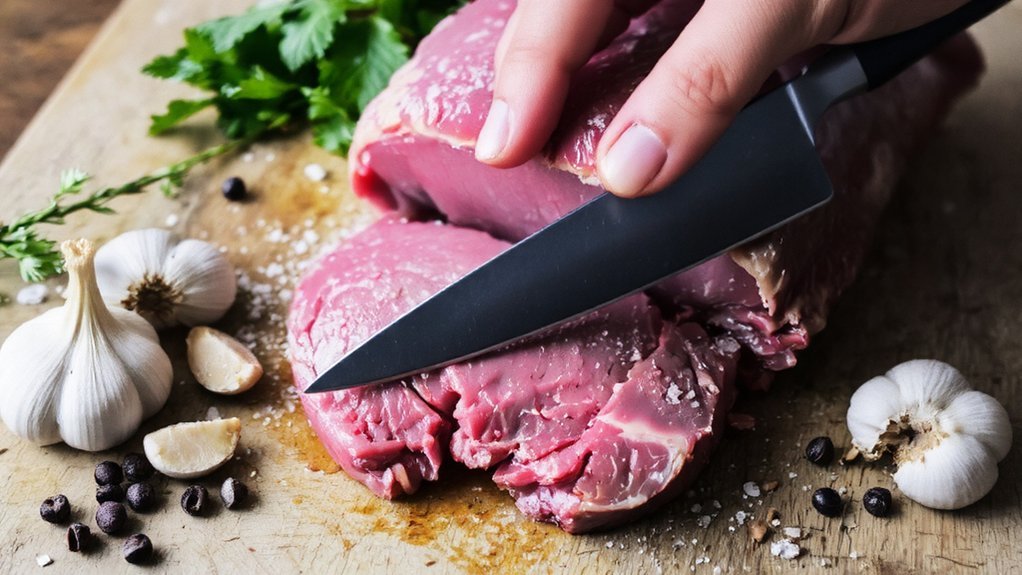
Two tools, one mission: make that brisket look sharp and taste louder. Grab a sharp boning knife and a steady cutting board. Trim the fat cap to about a quarter inch—enough to baste, not smother. Shave off hard, waxy bits; they won’t render, they just sulk. Square ragged edges, tidy the deckle, and breathe—brisket preparation is care, not panic.
Now, seasoning techniques. Pat it dry, then oil lightly, like sunscreen, not a slip-n-slide. Salt first, generously, to bless every slice your guests will meet. Follow with black pepper, garlic, maybe paprika for color. Keep it bold, simple, honest.
- Run your hand for hidden silver skin, trim clean.
- Mix rub in a bowl, taste it.
- Season all sides, edges too.
- Rest, uncovered, to tack up.
Set Up Your Smoker or Oven for Steady Heat
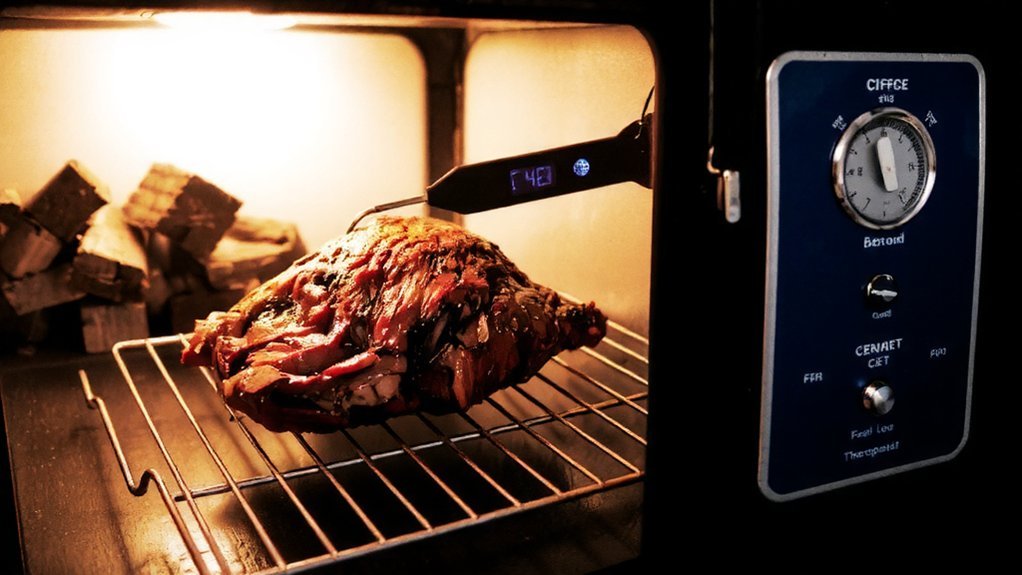
Although the meat’s the star, steady heat is the stage crew that makes the magic happen, so let’s dial your rig in before the brisket ever sees it. Start with clean grates, a dry firebox, and plenty of fuel. I like simple: set smoker temperature to a steady 250°F, then breathe. In an oven, same target, convection on if you’ve got it.
Place a water pan near the heat, it evens heat distribution and humidity. Build a small, clean-burning fire, add wood in fist-sized chunks, not panic handfuls. Now, map your hotspots. Hold your hand at grate level, feel the warmth, then stagger probes left, right, center. Adjust vents a hair at a time, wait five minutes, check again. Stable? Great. You’re ready to host greatness.
Cook Low and Slow, Then Wrap at the Stall
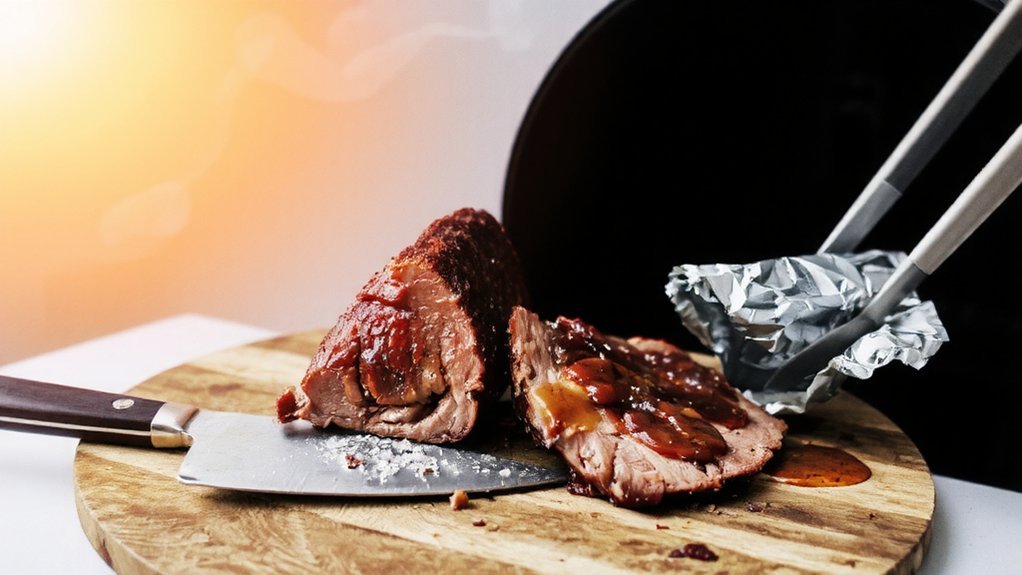
When patience finally beats impatience, that’s when brisket gets good. You’ll ride gentle heat, 225–250°F, letting fat slowly render, bark darken, and neighbors sniff the air like bloodhounds. I watch temperature control like a hawk, because these brisket techniques reward calm hands. Around 160–170°F, the stall hits. Moisture evaporates, cooling the meat, progress crawls, and your timer sulks. That’s your cue: wrap.
- Use unwaxed butcher paper for breathability, or foil for speed.
- Add a splash of broth, tallow, or apple cider, just a kiss, not a bath.
- Wrap tight, seams down, to keep juices where they serve best—inside.
- Return to heat, maintain steady temps, and let collagen surrender.
Low and slow wins hearts. The wrap, friend, wins schedules.
Rest, Slice Against the Grain, and Serve
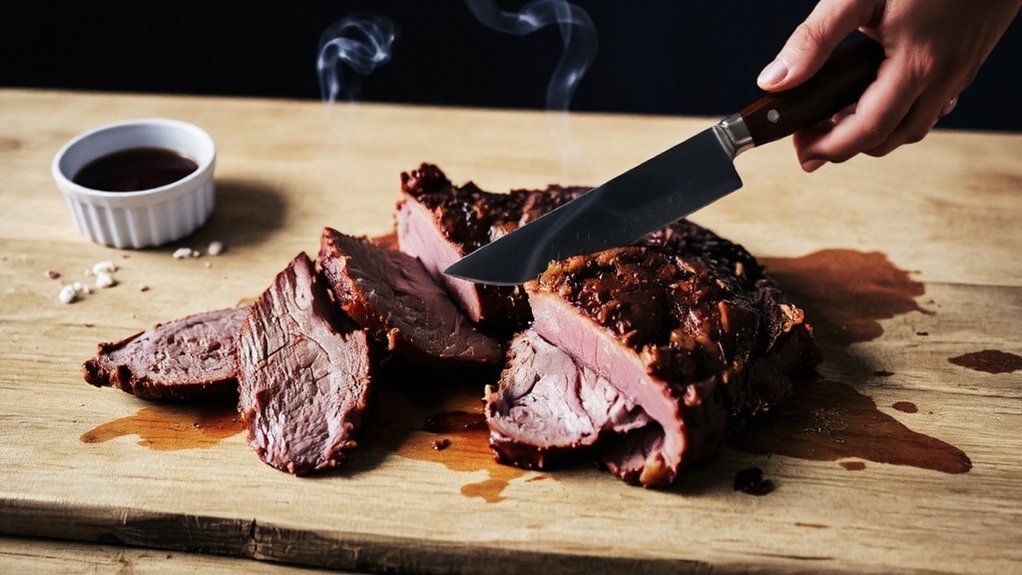
Soon as that brisket hits tenderness—probe slides in like warm butter—you don’t sprint, you park it. Pull it, vent the foil for two minutes, then tuck it into a dry cooler or a warm oven, 150–165°F. That pause is ministry. Resting techniques let juices relax, fibers unclench, flavor settle. Give it at least an hour, two if folks can wait. I’ll stall the mob with pickles.
Now, the show. Separate point from flat, find the grain, rotate the meat so you slice across it, not with it. Thin slices for the flat, thicker for the juicy point. Wipe the knife, keep strokes long, confident. Those are your slicing tips. Plate with quiet pride, drizzle rendered jus, pass napkins, then watch smiles land like confetti.